Teatro Alfonso Rendano is one of the most important cultural venues in the heart of Calabria, located on the picturesque Piazza XV Marzo in Cosenza. This historic theatre, officially inaugurated in 1909, is not only a venue for operatic performances but also a key centre of cultural life in the region. With its richly decorated neoclassical interior and a wide repertoire of events, Teatro Rendano attracts art lovers and travellers keen to step inside one of the most interesting stages in southern Italy.
Table of Contents
- The Legacy of Teatro Alfonso Rendano – History and Culture in the Heart of Cosenza
- The Magic of Opera in the Heart of Calabria – Performance Schedule at Teatro Rendano
- An Architectural Masterpiece of Cosenza – Harmony and Elegance of Teatro Rendano
- The Importance of Teatro Rendano in Cosenza – Heart of Culture and Art
- Practical Information
The Legacy of Teatro Alfonso Rendano – History and Culture in the Heart of Cosenza
The historical and cultural significance of Teatro Rendano is hard to overstate, as it is the only Teatro di Tradizione in the Calabria region. Teatro Alfonso Rendano in Cosenza, situated on Piazza XV Marzo, is a venue for cultural events and a witness to socio-cultural transformations. Since its founding, the theatre has become an important stage for operatic and symphonic performances, drawing audiences from across the region.
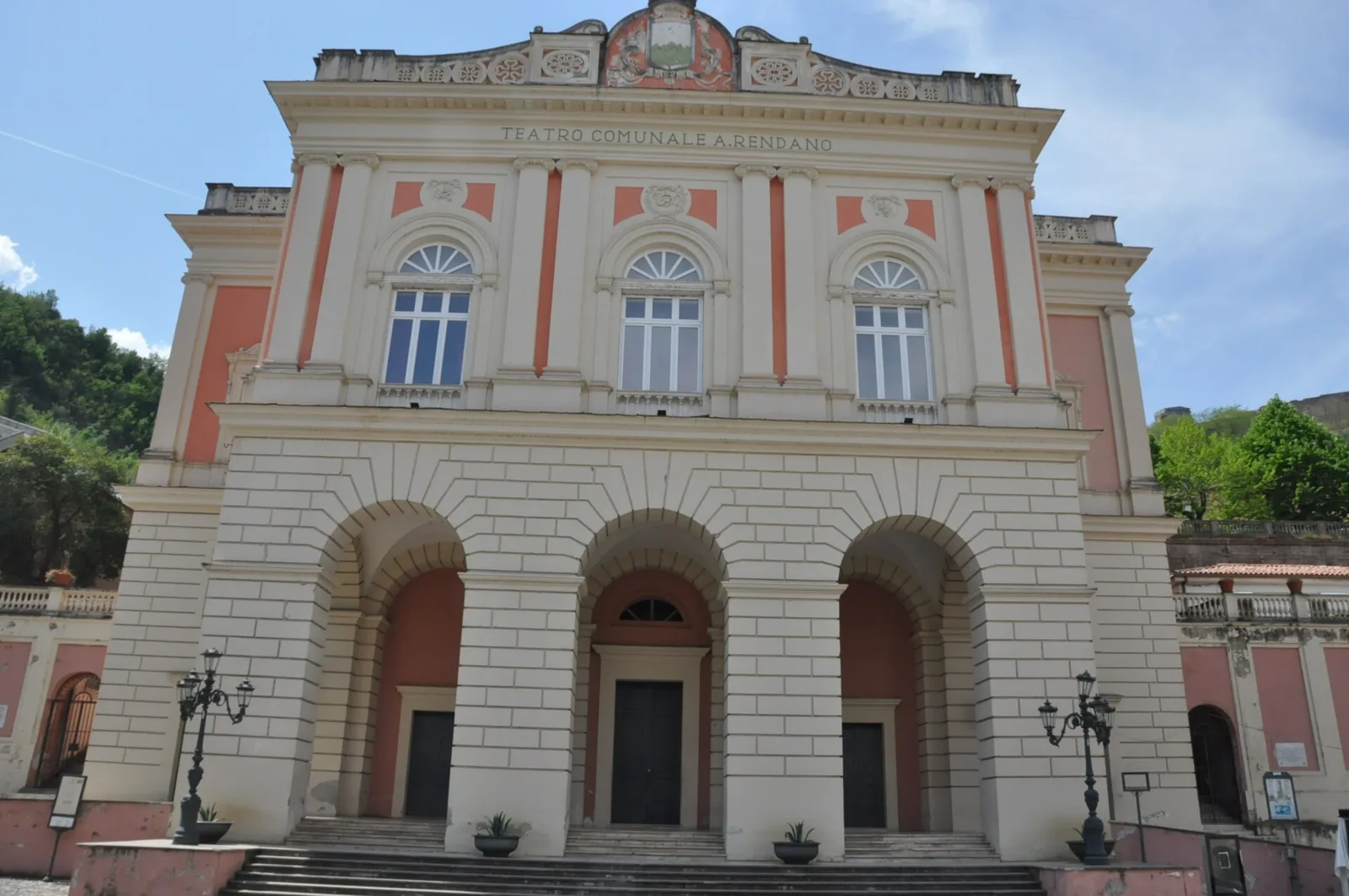
The status of Teatro di Tradizione is an official category in the Italian theatre and music system, granted to stages with an established operatic tradition and strong local roots, recognised by the Italian state. Teatro Alfonso Rendano was recognised as a Teatro di Tradizione by ministerial decree on 16 November 1976. The justification cited its qualified cultural and artistic activity and its stimulus for local artistic and musical traditions.
The theatre, known for its neoclassical architecture and rich interior decoration, represents the Italian type of theatre hall with a horseshoe layout, three tiers of boxes and a gallery. With a spacious interior and good acoustics, it remains one of the most important venues for opera and art lovers in Calabria.
History and Architecture – from Murat's Projects to the Present Day
The first formalised musical experiences in Cosenza date back to the Renaissance, yet the road to the creation of the present building was long and winding. In 1810, plans for a theatre appeared in the context of the Murat era, and the Teatro Real Ferdinando was completed in 1830, though it was dismantled just 23 years later. Before Rendano was built, the role of a stage was played by a wooden "Baraccone," renamed Teatro Garibaldi in 1860 in honour of the general entering the city.
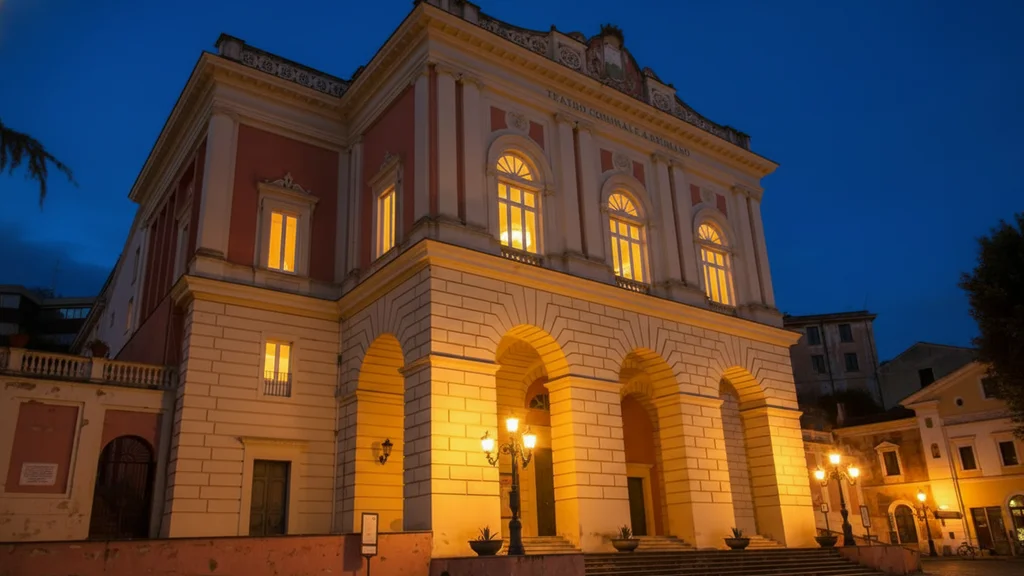
The present building was designed by architect Nicola Zumpano. In municipal sources, the stages of its creation are clearly separated: first the municipal theatre design was approved, then construction began, followed by the finishing works, with the official inauguration taking place on 20 November 1909. This sequence best explains why different dates appear in the building's history: from the decision of 1877 to the construction period dated in the heritage catalogue to 1887–1909 and the inauguration in 1909.
| Year of Creation | Building Name | Characteristics and Significance | Fate of the Building |
|---|---|---|---|
| 1830 | Teatro Real Ferdinando | First masonry royal theatre | Dismantled in 1853 |
| before 1860 | Baraccone | Private wooden construction | Renamed Teatro Garibaldi in 1860 |
| 1877 | Teatro Comunale | Design by architect Nicola Zumpano | Multiple work suspensions |
| 1909 | Teatro Comunale / Teatro Massimo | Inauguration with Verdi's “Aida”; since 1937 the theatre has been named after Alfonso Rendano | Exists to this day |
The theatre's name comes from Alfonso Rendano, an outstanding pianist and composer associated with Calabria. The final opening took place on 20 November 1909, marked by a performance of Giuseppe Verdi's “Aida,” which sparked numerous debates due to the scale of the ceremony. The building is an example of 19th-century eclecticism in its neoclassical form, typical of the Umbertine style that dominated Italian architecture of the period.
Contemporary Significance and Post-War Reconstruction
Today, Teatro Rendano is not only a venue for music and theatrical performances but also a centre for cultural and educational events. During World War II, the building was damaged in an air raid, with the destruction affecting part of the roof, ceiling, decorations and the auditorium itself. Reconstruction was completed with the theatre's reopening on 7 January 1967.
Today, Teatro Rendano is one of Calabria's principal opera stages, and its significance for regional identity is underscored by the historic curtain (sipario storico). It depicts the solemn entry of Louis III of Anjou into Cosenza in 1433, so it refers directly to the city's history, not merely to theatrical decoration. Such painted curtains were a prestigious feature of Italian theatres at the turn of the 19th and 20th centuries.
Watch on YouTube
The Magic of Opera in the Heart of Calabria – Performance Schedule at Teatro Rendano
The Opera Season and a New Three-Year Vision
Teatro Alfonso Rendano remains one of Cosenza's most important cultural stages, regularly hosting opera, concerts and theatrical events. According to Art Bonus / MiC, the theatre is carrying out a development project for 2025–2027. For the 2026 opera season, the programme identifies Beaumarchais' Figaro trilogy: “Il Barbiere di Siviglia” by G. Rossini, “Le nozze di Figaro” by W.A. Mozart and “La madre colpevole” by D. Milhaud. The expected cost of the “Stagione Lirica 2026” intervention is 100,000 euros.
Repertoire for March and April 2026
In practice, the Teatro Rendano stage combines a classical operatic repertoire with guest concerts and performances. As part of the Rassegna L’Altro Teatro 2025–2026, the programme includes, among others, Cristina Comencini's “I turni” on 1 March 2026, “Aggiungi un posto a tavola” with Lorella Cuccarini and Giovanni Scifoni on 7–8 March, and Eduardo De Filippo's “La Grande Magia” on 15 March. In April, the programme includes Harold Pinter's “L’Amante” on 10–11 April and Carlo Buccirosso's “Qualcosa è andato storto” on 24–25 April.
Plans for the Coming Months and Education
Alongside major productions, the theatre also invests in educational activities and collaboration with the local academic community. It is an important venue not only for visiting audiences but also for Cosenza's residents, who regard Rendano as a fixture in the city's cultural calendar.
When planning a visit to Teatro Rendano, it is best to book tickets in advance through the TicketOne platform or at the “In Prima Fila” outlet. The programme, times and ticket prices change seasonally, so current information should be checked on the official Teatro Rendano website, through Comune di Cosenza channels or with authorised sellers such as TicketOne.
An Architectural Masterpiece of Cosenza – Harmony and Elegance of Teatro Rendano
The Facade and Interiors of Teatro Rendano – Mastery of Detail
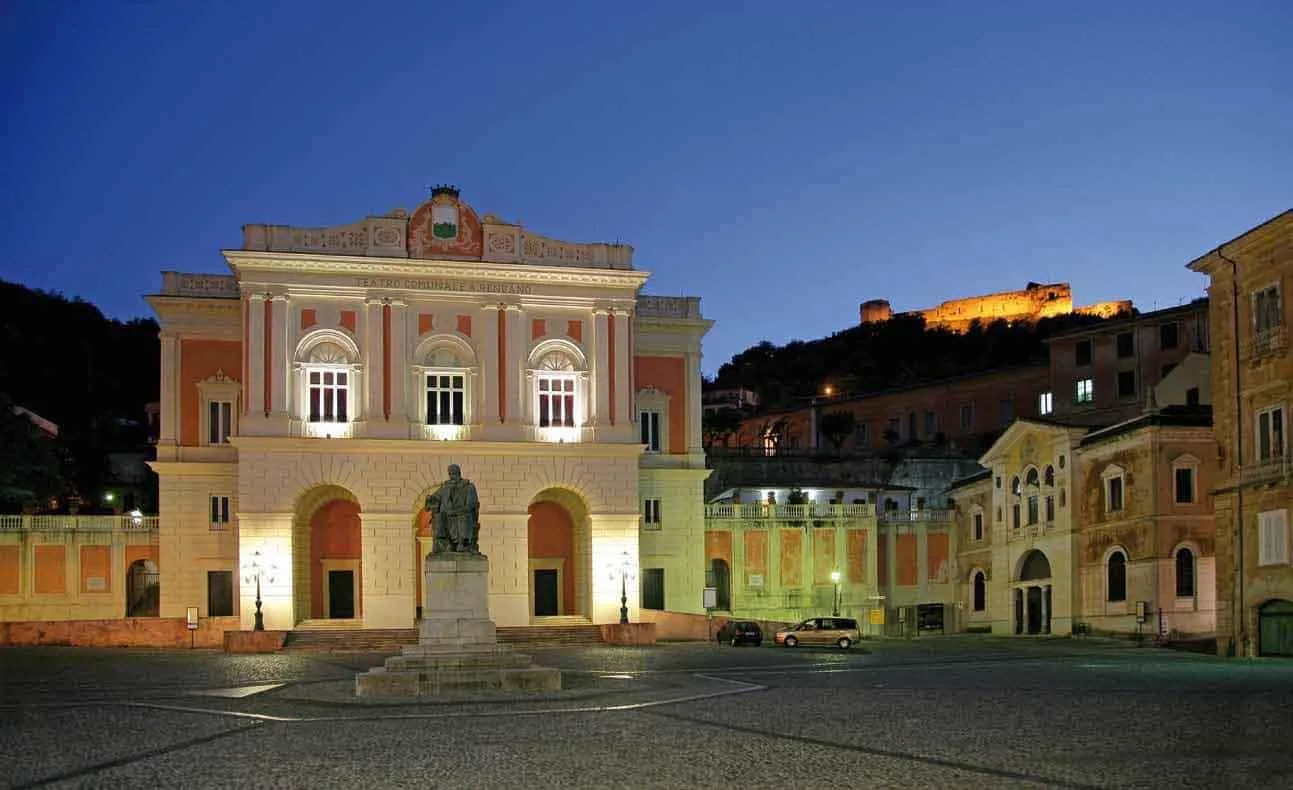
Teatro Rendano is an important example of neoclassical architecture at city and regional level, with a symmetrical facade and a portico supported by massive pillars. The central pediment is adorned with the coat of arms of Cosenza, while the upper storey is ordered by a system of double pilasters that set the rhythm of the balconies. The stage depth of 14 metres and the fly tower height of 19 metres allow demanding operatic productions to be staged.
| Structural Element | Parameter / Description | Functional Significance |
|---|---|---|
| Total capacity | 802 seats | Regional-scale theatre |
| Hall shape | Horseshoe (Italian theatre) | Acoustic optimisation |
| Foyer space | Used for accompanying events | Meetings and chamber concerts |
| Orchestra pit | Present | Full-scale lyrical productions |
The theatre interiors were designed in the classic horseshoe layout, ensuring good visibility from each of the three tiers of boxes. Monumental marble staircases lead to the auditorium, where coffered and gilded vaulted ceilings create the character of the interior. The historic curtain also remains an important artistic element, linking theatrical splendour with the memory of Cosenza's history.
Contemporary Significance and Preservation of Tradition
Teatro Rendano maintains its historical identity while introducing modern technical solutions needed by a contemporary stage. Renovations carried out under the supervision of the cultural heritage authorities allow this theatre to continue serving as one of the most important venues for artistic life in the historic centre.
The Importance of Teatro Rendano in Cosenza – Heart of Culture and Art
Cosenza is inseparably linked to its theatre, which plays a key role in building the identity of Calabria's residents. Alfonso Rendano, the theatre's patron, lived from 1853 to 1931, was born in Carolei in the province of Cosenza and was a pianist and composer associated with the Italian musical tradition. He studied at the San Pietro a Majella Conservatory in Naples and was respected both as a performer and as a teacher.
Historical Roots and Social Bonds
The present theatre matured over many years, from administrative decisions and design to a long construction process completed with the inauguration in 1909. From the outset it attracted important figures from the world of music and to this day remains one of the main reference points for cultural life in Cosenza.
Collaboration with local institutions, such as the University of Calabria, helps broaden access to culture, which is of great importance in the southern Italian region. The theatre offers workshops, meetings and accompanying events that make it a living centre of dialogue, not merely a historic opera stage.
Practical Information
Location: Piazza XV Marzo, Cosenza (centro storico), a few minutes' walk from the Duomo and Corso Telesio
Getting there: From Cosenza/Vagliolise station, the journey usually takes around 10–15 minutes by car or taxi; walking from the new centre takes considerably longer because of the theatre's location in the historic part of the city
Driving and parking: The old town has traffic restrictions and ZTL zones, so plan to park outside the narrowest part of the centro storico
Guided visits: By prior reservation
Performance tickets: The official theatre website lists sales at the In Prima Fila outlet at via Marconi 140 in Cosenza; the theatre box office opens 2 hours before the performance starts, and the online channel is TicketOne
Discounts: Reduced tickets cover Over 70 and Under 25 categories
Visit duration: Rules and possible visiting times should be confirmed directly with the theatre; for a performance, it is best to arrive early
Nearby: Combine with a walk around Piazza XV Marzo, Palazzo della Prefettura, Villa Vecchia and Cosenza's historic centre
Capacity: 802 seats
Frequently Asked Questions
What is the history of Teatro Rendano in Cosenza?
The theatre's history dates back to the 19th century, but the current building was inaugurated on 20 November 1909 with a performance of “Aida.” After wartime damage during World War II, the theatre was rebuilt and reopened on 7 January 1967. Today it remains the only Teatro di Tradizione in Calabria.
Can you visit Teatro Rendano outside of performances?
Yes, visits to the theatre are possible by prior reservation. During occasional visits, you can see part of the theatre spaces, but the current rules, scope and visiting times should be confirmed directly with Teatro Rendano.
What events take place at Teatro Rendano?
The theatre hosts a wide range of events: from classic operas and symphonic concerts to theatrical performances and educational initiatives. The repertoire changes seasonally, so check the current programme before visiting.
Who was Alfonso Rendano, the theatre's patron?
Alfonso Rendano was an outstanding pianist and composer from Carolei, in the province of Cosenza. He lived from 1853 to 1931, studied at the San Pietro a Majella Conservatory in Naples and was respected as both a performer and a teacher.
How many seats does the auditorium have?
The main auditorium of Teatro Rendano has 802 seats. It is a classic Italian theatre in the horseshoe layout, with stalls, boxes and a gallery.
Last updated: