Located in the historic centre of Cosenza, on Triglio hill, Palazzo Arnone is one of the most recognisable Renaissance buildings in the city. Today it houses the Galleria Nazionale di Cosenza, where visitors can explore collections of Neapolitan and Calabrian art. The building itself also has a long history of serving as a seat of judicial institutions and a prison, before being restored and adapted for museum purposes.
Table of Contents
- The Majesty of the Renaissance – Architectural Treasures of Palazzo Arnone
- The Significance of Galleria Nazionale di Cosenza in Promoting Southern Italian Art
- Thematic Exhibitions at Palazzo Arnone – A Treasury of Calabrian Culture
- Cultural Events and Local Collaboration – The Strength of Galleria Nazionale di Cosenza
- Practical Information
The Majesty of the Renaissance – Architectural Treasures of Palazzo Arnone
Palazzo Arnone: Harmonious Symmetry and Baroque Additions
Palazzo Arnone in Cosenza, one of the most important examples of Renaissance architecture in southern Italy, combines a calm, symmetrical composition with later transformations visible in the details and interior layout. The building was constructed at the beginning of the 16th century as a noble residence of the Arnone family. Today it is the seat of the Galleria Nazionale di Cosenza and remains one of the most important addresses for those interested in art in Calabria.
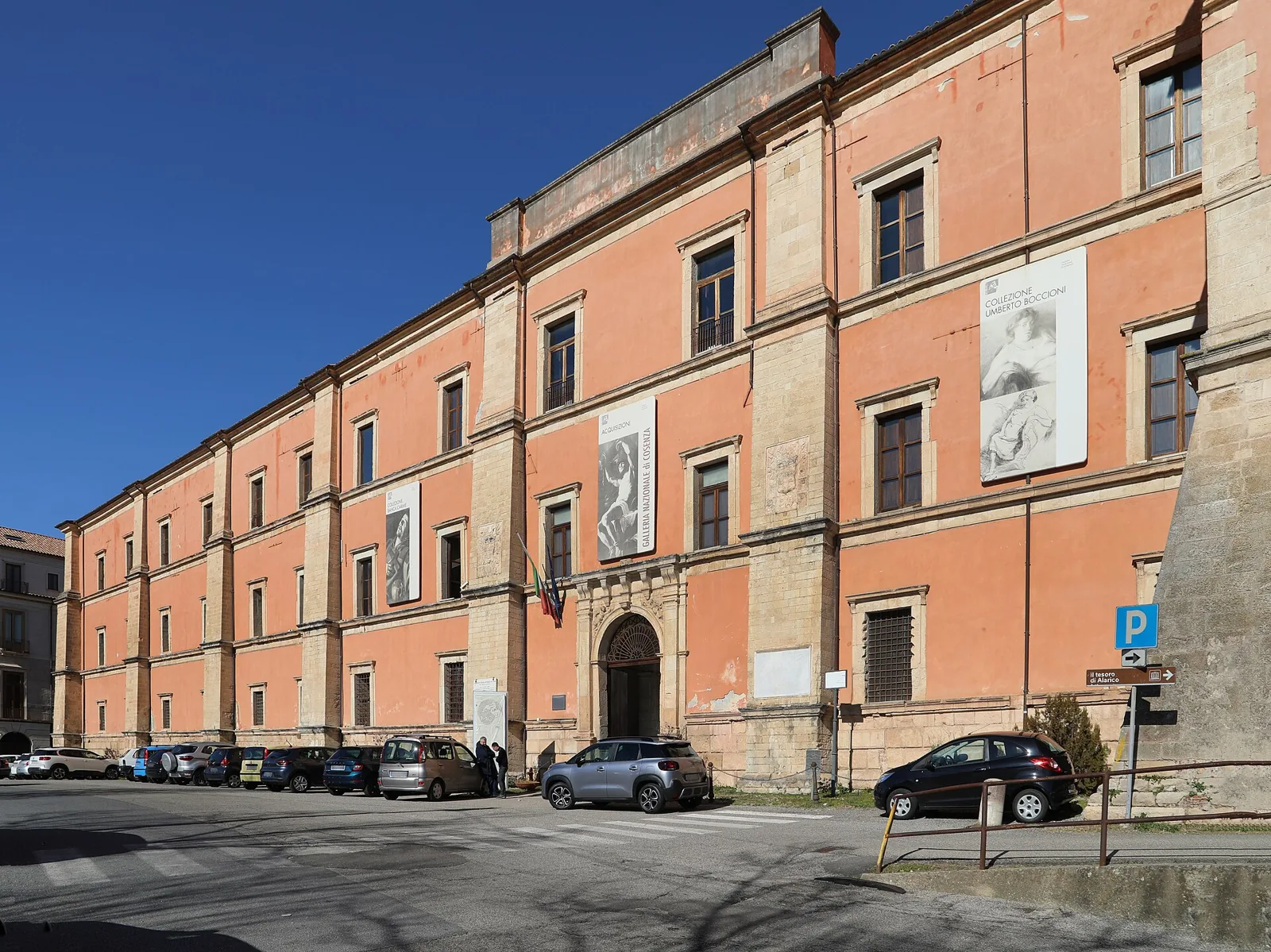
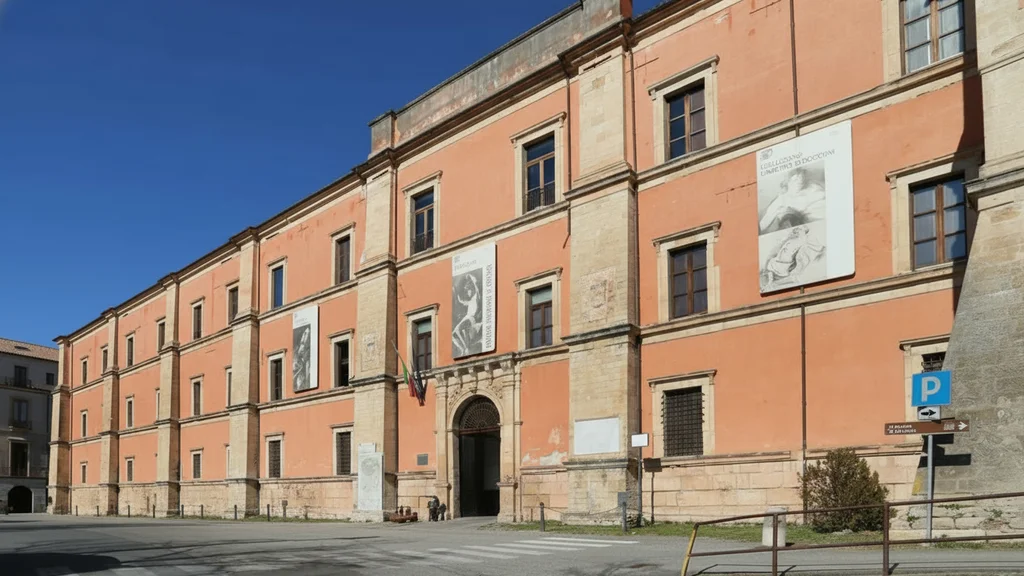
The Renaissance style of the building is best seen in the ordered facade and the use of classical architectural motifs, such as pilasters and arches. A characteristic element is the 16th-century stone portal with two lesenes, a round arch and decoration with figures of victories. In the 17th century the building was expanded with a corner bastion on the right side of the facade, and in the 18th century construction began on the higher blocks and the side wings were enlarged. As early as 1558, the building was purchased by the Fisco Regio and assigned as the seat of the Regia Udienza and the Presidio della Calabria Citeriore; its function as a prison is confirmed by documents from 1585.
Palazzo Arnone stands on the altura di Triglio, in the upper part of the old town, not far from Castello Svevo. This location was no accident – on the elevated ground the building gained both a representative character and better control over the surroundings. From the main streets of the historic centre, it takes a walk uphill, usually a few to several minutes depending on the chosen route.
| Historical Phase | Building Purpose | Administrator / Owner |
|---|---|---|
| Early 16th century | Private noble residence | Arnone family |
| From 1558 – 20th century | Seat of the Regia Udienza, Presidio della Calabria Citeriore and prison | Fisco Regio / public functions |
| 20th century | End of penitentiary function, restoration and adaptation | Conversion to museum purposes |
| Present day | Galleria Nazionale di Cosenza | Ministry of Culture |
Tradition and Modernity in the Heart of Cosenza
Over the centuries, Palazzo Arnone underwent several significant modernisations, including after devastating earthquakes. Despite this, its Renaissance character was preserved, supplemented by later interventions and adaptations resulting from the repeatedly changing function of the building. The process of transforming the former judicial-prison complex into a museum required careful restoration and adaptation of the spaces for exhibition needs.
In the 20th century, the palace ceased to serve its penitentiary function and was subsequently subjected to conservation work and adapted for museum activities. Today's gallery makes use of the historic interiors, but the experience is entirely different from before – instead of a closed public institution, an open space for visitors focused on the art of the region has emerged.
The Significance of Galleria Nazionale di Cosenza in Promoting Southern Italian Art
The Galleria Nazionale di Cosenza, housed in Palazzo Arnone, plays an important role in presenting the art of southern Italy. Calabrian art is one of the pillars of the collection, effectively presenting local cultural identity and the artistic traditions of the region. The holdings include works by creators associated with Calabria, alongside paintings produced in the wider southern Italian circle.
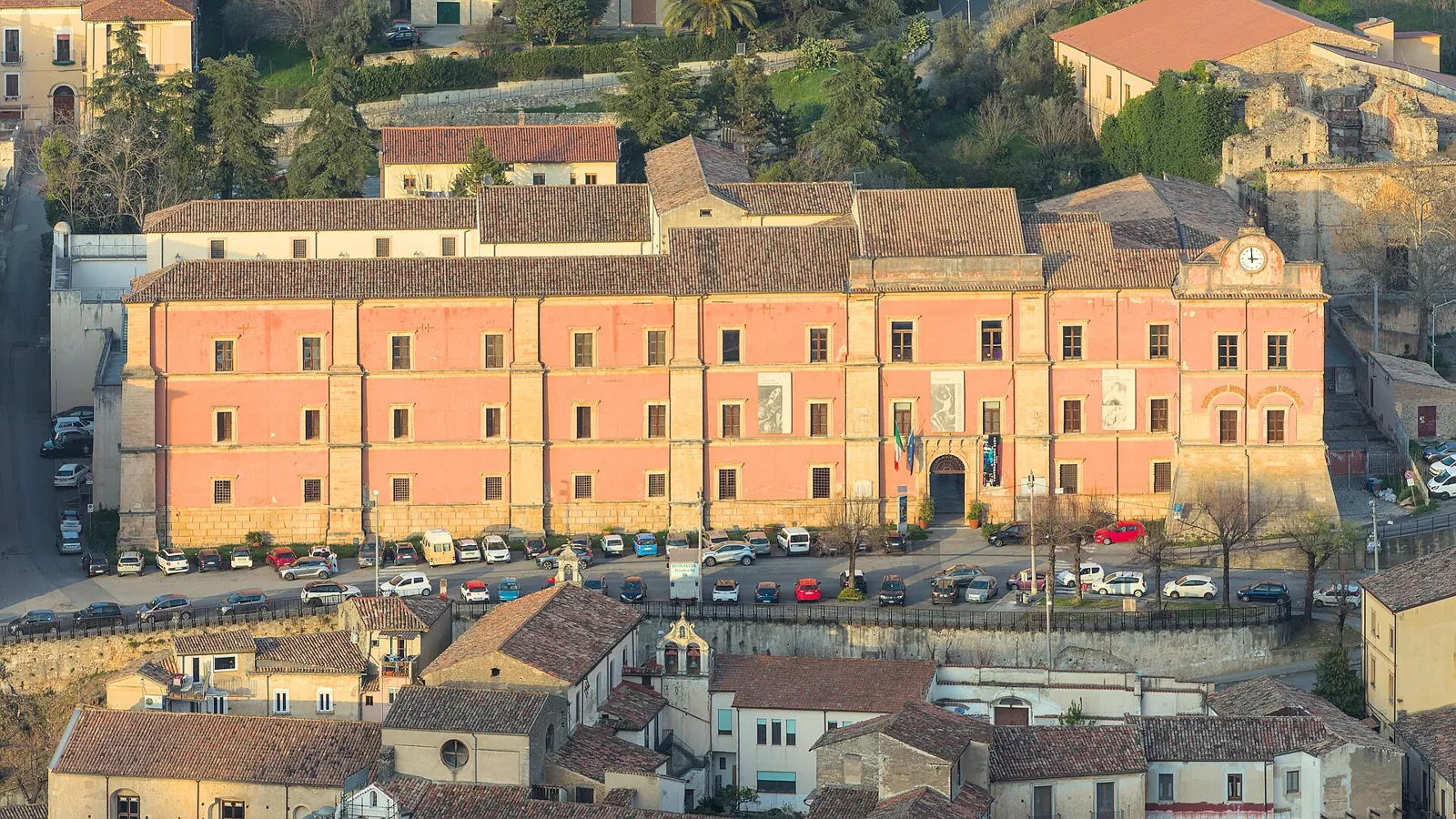
The presence of Neapolitan art in this gallery is no accident. Calabria for centuries belonged to the Kingdom of Naples, and later to the Kingdom of the Two Sicilies, so local painting and patronage were strongly linked to Naples as the main artistic centre of the south. This context explains well why alongside works connected to Calabria one also sees Neapolitan painting here, particularly from the 17th and 18th centuries.
In the context of Neapolitan art, the gallery serves as a cultural bridge between Calabria and Naples. The presence of Neapolitan influences in the collection, represented by such masters as Luca Giordano and Fabrizio Santafede, underscores the historical relations of the region with the southern artistic centre. Baroque occupies an important place, including creators associated with Calabria, whose works show how strongly local art was embedded in the wider southern Italian artistic circulation.
The museum undertakes activities promoting knowledge of local and southern Italian art. Publications and collection studies help to better understand Calabria's place on the artistic map of the south. Thanks to this, Palazzo Arnone is not just the seat of a gallery, but also an important reference point for the art history of the region.
Thematic Exhibitions at Palazzo Arnone – A Treasury of Calabrian Culture
Palazzo Arnone in Cosenza combines historic architecture with an exhibition that presents Calabria's multi-layered culture. Within the interiors of Palazzo Arnone is the Galleria Nazionale di Cosenza, whose display presents mainly southern Italian art from the 16th to the 19th century, with important additions also covering works from the Quattrocento to the Novecento. Southern Italian and Calabrian art is most strongly represented here, with particular emphasis on the Baroque era and artists associated with the region.
This arrangement of the collections gives the visit a clear rhythm – from earlier modern realisations to mature Baroque painting. It is precisely this part of the collection that best shows how Calabria participated in the wider artistic circulation of southern Italy. Alongside the main core of old southern Italian painting, later collections also occupy an important place, including works on paper by Umberto Boccioni and pieces from the Intesa Sanpaolo collection, covering the period from the Quattrocento to the Novecento.
Among the permanent groups in the collection is the Collezione Acquisizioni, with works by Mattia Preti, Luca Giordano, Jusepe de Ribera, Massimo Stanzione, Andrea Vaccaro, Francesco Cozza and Pietro Negroni. A separate group is the Collezione Grafica Umberto Boccioni, comprising 65 drawings and prints from 1906–1915. The Collezione Intesa Sanpaolo consists of 38 works on deposit, spanning chronologically from the Quattrocento to the Novecento.
The cultural significance of these exhibitions lies in the combination of the regional perspective with a broader Italian context. Palazzo Arnone does not close itself within locality, but shows Calabria as part of a larger art history. This approach works well in a place with such distinctive, historic architecture.
Watch on YouTube
Cultural Events and Local Collaboration – The Strength of Galleria Nazionale di Cosenza
The Galleria Nazionale di Cosenza is a cultural institution that combines a collection of Italian art with activities aimed at residents and visitors. Beyond the exhibition itself, it is also significant that Palazzo Arnone remains one of the most important points on the cultural map of historic Cosenza. In practice, it is a place best visited not only for individual works, but also for the very experience of the building and its context.
Collaboration with the local environment and presence in city life strengthen the gallery's role as a public institution. The historic building, for centuries associated with administration and the judiciary, now operates in an entirely different rhythm – as a space for engagement with art and the heritage of the region. This is one of those transformations that you can really feel on site in Cosenza.
Practical Information
Location: Via Gian Vincenzo Gravina 2, 87100 Cosenza – Colle Triglio (centro storico).
Hours and tickets: According to the museum's MiC page, the museum is closed on Mondays. From Tuesday to Sunday it is open 08:30–18:45, and the ticket office operates from 08:30 to 18:15. A full ticket costs 5.00 €, reduced ticket 2.00 €; booking is not required.
Visit duration: Usually 45–90 minutes for the permanent exhibition, longer for temporary exhibitions.
Getting there: The building is in Cosenza's centro storico, on a steep section near Castello Svevo, so walking from the lower part of the city requires an uphill climb. The official page states that Cosenza “Vaglio Lise” station is 3.3 km from Palazzo Arnone. The regional train from Paola takes about 22 min, and from Sibari about 55 min; from the station, the palace can be reached by AMACO city buses. The nearest airport is Lamezia Terme, about 50 min by car; parking in the historic centre can be limited.
Frequently Asked Questions
What can you see at the Galleria Nazionale in Cosenza?
The gallery presents mainly southern Italian art from the 16th to the 19th century, with important additions covering works from the Quattrocento to the Novecento. Calabrian, Neapolitan and Baroque art is strongly represented in the collection, along with later collections, including works on paper by Umberto Boccioni.
What is the history of Palazzo Arnone in Cosenza?
The palace was built at the beginning of the 16th century as a residence of the Arnone family, and in 1558 it was purchased by the Fisco Regio and assigned as the seat of the Regia Udienza and the Presidio della Calabria Citeriore; its prison function is documented from 1585. In the 20th century the building ceased its penitentiary function and was restored and adapted for museum purposes.
How much does admission to the Galleria Nazionale cost?
According to the MiC page, a full ticket costs 5.00 €, and a reduced ticket costs 2.00 €. Booking is not required.
What are the museum's opening hours?
The museum is closed on Mondays. From Tuesday to Sunday it is open 08:30–18:45, and the ticket office operates from 08:30 to 18:15.
Is Palazzo Arnone accessible for visitors with disabilities?
Before visiting, it is best to check current information directly on the institution's official website. In the case of historic buildings, the extent of accessibility and entrance arrangements may change along with ongoing works and visiting regulations.
Last updated: