A rental car is by far the most convenient way to explore Calabria. Public transport exists but is sparse and unreliable beyond the main rail lines. A car gives you complete freedom – from the beaches of Tropea to the mountain villages of Aspromonte.
Table of Contents
Where to Rent a Car
The main pickup point is Lamezia Terme Airport (SUF) – Calabria's largest airport with international flights. Rental offices and car parks are about 100 m from the terminal, on the right after leaving the building. You will find both international brands (Hertz, Avis, Europcar, Sixt, Budget) and cheaper local companies (Sicily by Car, Noleggiare, Locauto, Ecovia).
The second airport is Reggio Calabria Tito Menniti Airport (REG) – smaller, with direct flights from Katowice (Ryanair), Rome and Milan. Some rental offices are in the arrivals hall, while others are near the airport exit, about 250 m from the terminal. Always check the location stated on your voucher. Available companies include Hertz, Avis, Locauto, Sicily by Car and Maggiore.
Calabria also has a third passenger airport: Crotone Sant'Anna (CRV), serving mainly domestic and seasonal flights. The rental car offer there is usually smaller than at SUF. Outside airports, cars can also be picked up at Lamezia Terme Centrale and Reggio Calabria Centrale railway stations and at city-centre offices, though the latter often have shorter opening hours than airport desks.
Key booking tips:
- Book online in advance – comparison sites like DiscoverCars, AutoEurope or Rentalcars.com let you compare offers before you arrive.
- Choose a small car – Calabrian town streets are often very narrow and parking spaces tight. A Fiat 500 or Panda is the ideal choice.
- Payment card for the security deposit – you will usually need a card issued in the main driver's name; some companies accept credit cards only, while others also accept selected debit cards. Check the conditions of your specific booking.
- Driving licence – a Polish driving licence, issued in the EU, is sufficient. The minimum age depends on the rental company and car category: it is often 21, but some companies rent to drivers from 18. Drivers under 25 usually pay a surcharge or have a more limited choice of cars.
- Check fuel and mileage policy – the most common arrangement is full-to-full. Most offers include unlimited mileage, but cheaper local rates may mean a limit of 100–150 km/day or surcharges for ferries and leaving the region.
- Inspect the car before driving off – photograph every scratch and dent. Make sure existing damage is recorded on the collection report.
Rental Costs in Calabria
Prices depend heavily on the dates, rental duration, airport, car category and level of cover. Compare current offers for your dates:
| Period | Economy (Fiat Panda, Clio) | Compact (Golf, Tipo) |
|---|---|---|
| January–March | Check current offers | Check current offers |
| April–June | Check current offers | Check current offers |
| July–August | Check current offers | Check current offers |
| September–December | Check current offers | Check current offers |
On top of the base rate, expect:
- Full insurance (Full Coverage / SCDW) – the price and scope of cover depend on the rental company and selected rate. A third-party policy may reimburse eligible excess costs after a claim.
- Fuel – check current petrol and diesel prices in Calabria through the official MIMIT Osservaprezzi Carburanti service; compare self-service and servito prices. MIMIT publishes daily regional averages for self-service petrol and diesel, and also provides a data archive and station-price search tool.
- Additional driver – the charge depends on the company and selected offer; check it before booking.
- GPS – availability and charges depend on the rental company. You can use offline maps on your phone.
- Young driver – drivers under 25 often pay a surcharge, and available car categories may be limited.
- After-hours pickup or return – if the office has shorter hours, the rental company may charge a fee for service outside opening hours.
Driving in Calabria – What You Need to Know
Traffic outside the largest cities is usually lighter than in Naples or Rome, but local roads still require careful driving. Drivers move at a brisk pace, and mountain routes demand patience. A few things to keep in mind:
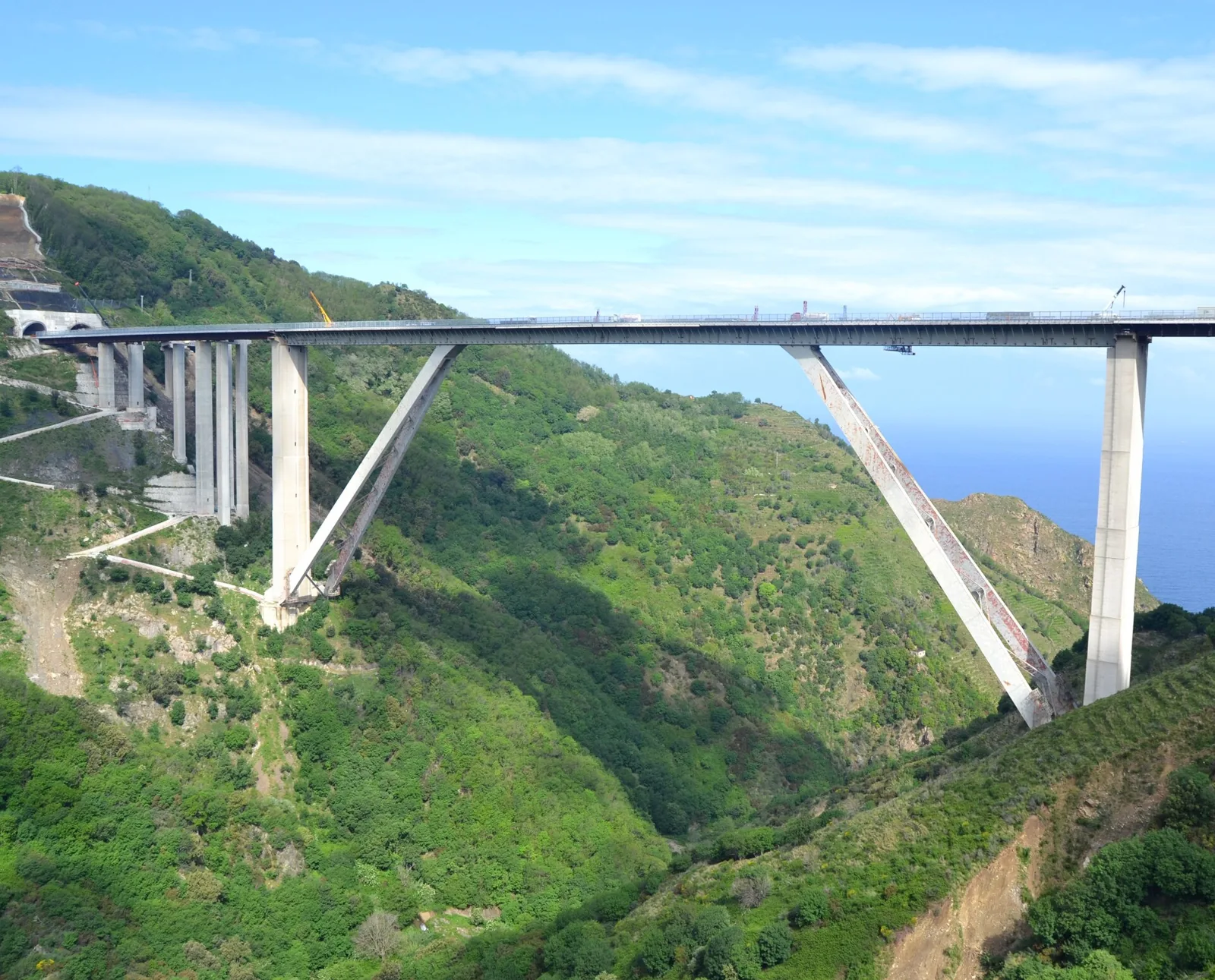
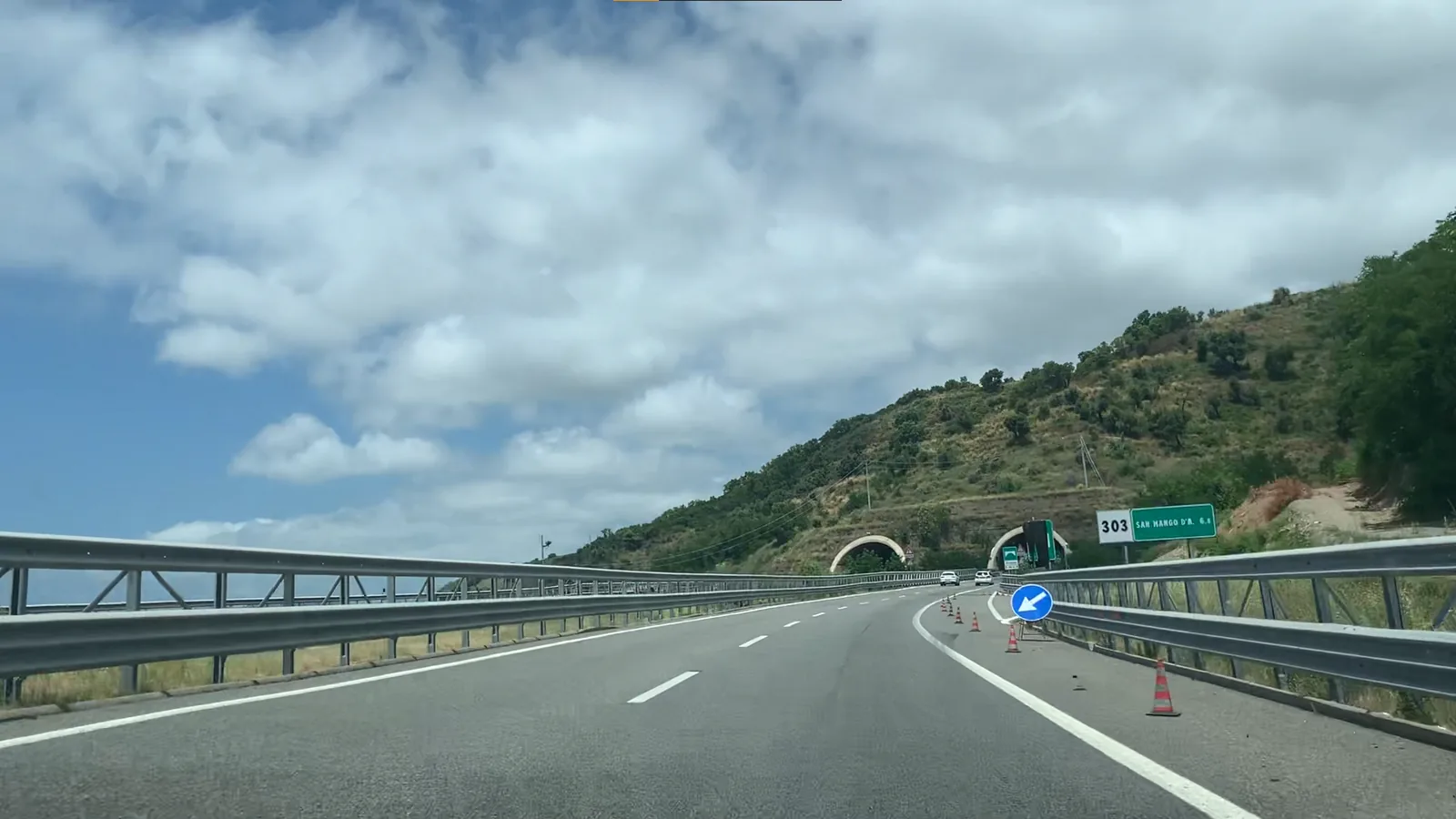
A2 Motorway (Salerno–Reggio Calabria) – the main north-south artery. The road is in good condition after years of renovation. Crucially, it is toll-free throughout Calabria. Speed limit is 130 km/h, but frequent construction zones reduce it to 80–110 km/h. Speed cameras are widespread.
SS106 Jonica (Ionian coast) – the state road running along the eastern coast from Reggio Calabria to Taranto (491 km). The SS106 has been and continues to be upgraded, but for much of its Calabrian route it remains a single-carriageway road. Dual-carriageway sections occur only on selected stretches. The road can be hazardous in bad weather – localised flooding occurs.
Mountain roads – routes leading to villages in Aspromonte, Sila or Pollino are winding, narrow and steep. You do not need to avoid them, but:
- Drive slowly and honk before blind bends.
- In winter (December–March), passes above 1,000 m may have snow and ice – check whether your rental includes snow chains.
- Fuel stations in the mountains are scarce – fill up on the coast.
- GPS navigation can be unreliable – follow road signs too.
In Italy, dipped headlights must be used at all times outside built-up areas. A warning triangle and reflective vest (for anyone leaving the vehicle on the carriageway or hard shoulder) are mandatory in the car. If you are travelling with children, remember that children under 150 cm tall must use an appropriate child seat or booster according to their weight and height.
Speed limits: 50 km/h in built-up areas, 90 km/h on state roads outside towns, 110 km/h on dual carriageway expressways, 130 km/h on motorways. Fines are steep: from 40 € for minor speeding to several hundred euros for serious violations.
Watch on YouTube
Motorways, Parking and ZTL
Tolls: The A2 motorway through Calabria is toll-free (managed by ANAS). This toll-free stretch of the A2 also extends further north beyond the regional border, so you do not pay as soon as you leave Calabria. At toll booths where charges do apply, you can pay by card, cash or contactless. Telepass is not standard in rental cars – its availability depends on the company and pickup point.
Parking:
- White lines – parking is usually free, but always check vertical signs and supplementary panels: a time limit or disco orario may apply.
- Blue lines – paid parking (meters or the EasyPark app). Typically 0.50–1.50 €/hour.
- Yellow lines – reserved for residents, disabled or official vehicles. Do not park here.
- In smaller resort towns (Tropea, Pizzo, Scilla), finding a spot in the centre during summer can be difficult. Look for car parks on the outskirts and walk down.
ZTL (Zona Traffico Limitato): These are restricted traffic zones marked with a white "zona traffico limitato" sign showing the hours of operation. In practice you need to read the sign very carefully, as the zone may only apply in the evenings, at weekends or seasonally in summer. Cameras read number plates automatically, and if your hotel is inside the ZTL, it may sometimes be able to register your licence plate – but this must be arranged in advance.
In Calabria, you will encounter ZTL mainly in Reggio Calabria, Cosenza and Catanzaro. An unauthorised entry typically results in a fine starting from about 83 € plus administrative charges from the rental company. This is one of the most common causes of unpleasant extra charges after returning from holiday.
Alternatives to Renting a Car
If you prefer not to drive, you have a few options – though none offers the same freedom as your own car:
Trains (Trenitalia Regionale): The Tyrrhenian axis Reggio Calabria–Lamezia Terme works well, and connections to Tropea run on a regional line via Pizzo/Vibo Valentia and Rosarno rather than the main long-distance line. Cosenza is not on the coastal line – it is reached by a branch heading inland. Approximate journey times: Lamezia Terme Centrale–Tropea about 1 hour, Lamezia–Reggio Calabria Centrale about 1 h 30 min–2 h, Reggio Calabria Centrale–Scilla about 20–30 minutes.
The key railway junction of the region is Lamezia Terme Centrale, connected to SUF Airport by the Lamezia AirLink / Autolinee Lamezia Multiservizi bus. Tickets for this shuttle are available from the Edicola/Tabacchi point inside the terminal. The Ionian line runs less frequently, and many inland destinations require a change to a bus. More on connections in our getting there guide.
Regional buses: Ferrovie della Calabria, Romano Autolinee and local operators serve smaller towns, but timetables are thin (sometimes just 1–2 services per day) and unreliable. Weekend and holiday services are often suspended.
Taxis and NCC: Available in larger cities. More expensive than in northern Italy but still reasonable for short trips (e.g. Lamezia Airport–Tropea about 70–90 €). Always agree on the price before getting in.
Outside Lamezia, Reggio Calabria, Cosenza and the larger stations, taxis are scarce. In Tropea, Scilla or Pizzo, outside peak season and outside the summer season, you often need to book a ride by phone or through your hotel in advance. Ride-hailing apps such as Uber are not a common or reliable option here.
Chauffeur service (NCC): A premium option, popular for airport transfers or day trips. Prices from 150 €/day.
If you plan to visit more than one coastline or explore mountain villages, renting a car is the most convenient option. Calabria has two long coastlines – Tyrrhenian and Ionian – separated by mountainous terrain, and many interesting places lie beyond the main rail lines: from mountain villages to beaches between stations. Travelling between the Costa degli Dei and the Ionian coast by public transport can be multi-step and significantly slower than driving. More trip planning tips in our practical guide.
Frequently Asked Questions
Do I need an International Driving Permit in Calabria?
Not if you hold an EU-issued driving licence. A Polish driving licence is fully accepted. For drivers from outside the EU, rules depend on the country of issue and the rental company's policy: for the US and Canada an IDP is often required or strongly recommended, while for short stays with a UK licence the same rule does not apply. Always check the specific company's conditions before booking.
Is full insurance worth it?
Standard insurance (CDW) includes an excess (franchigia), which may be charged to the driver in the event of damage. A third-party excess policy may reimburse eligible excess costs after a claim, but it does not replace the rental company's terms or guarantee that the deposit will be waived. Check exclusions and the claims procedure before buying.
How does refuelling work in Italy?
Petrol stations have two modes: self-service (you pump and pay at the machine or inside) and servito (an attendant fills the tank – 10–20 cents per litre more expensive). On Sundays and at night, many stations operate self-service only, accepting banknotes and cards at automated pumps. Motorway stations are open 24/7.
Can I take my rental car to Sicily?
It depends on the company. Some companies, including Hertz and Avis, allow the ferry crossing to Messina for an additional fee or at no extra cost, but you must declare it at the time of booking. Local companies frequently prohibit taking the car out of Calabria. Always check the rental agreement before signing.
Where should I avoid parking?
Stay away from yellow-line zones (reserved spaces), ZTL areas without a permit, and pavements. During summer, town centres in Tropea, Pizzo and Scilla are virtually inaccessible by car – use car parks on the outskirts and walk down. A ZTL fine typically starts from about 83 € plus administrative charges from the rental company.
Last updated: