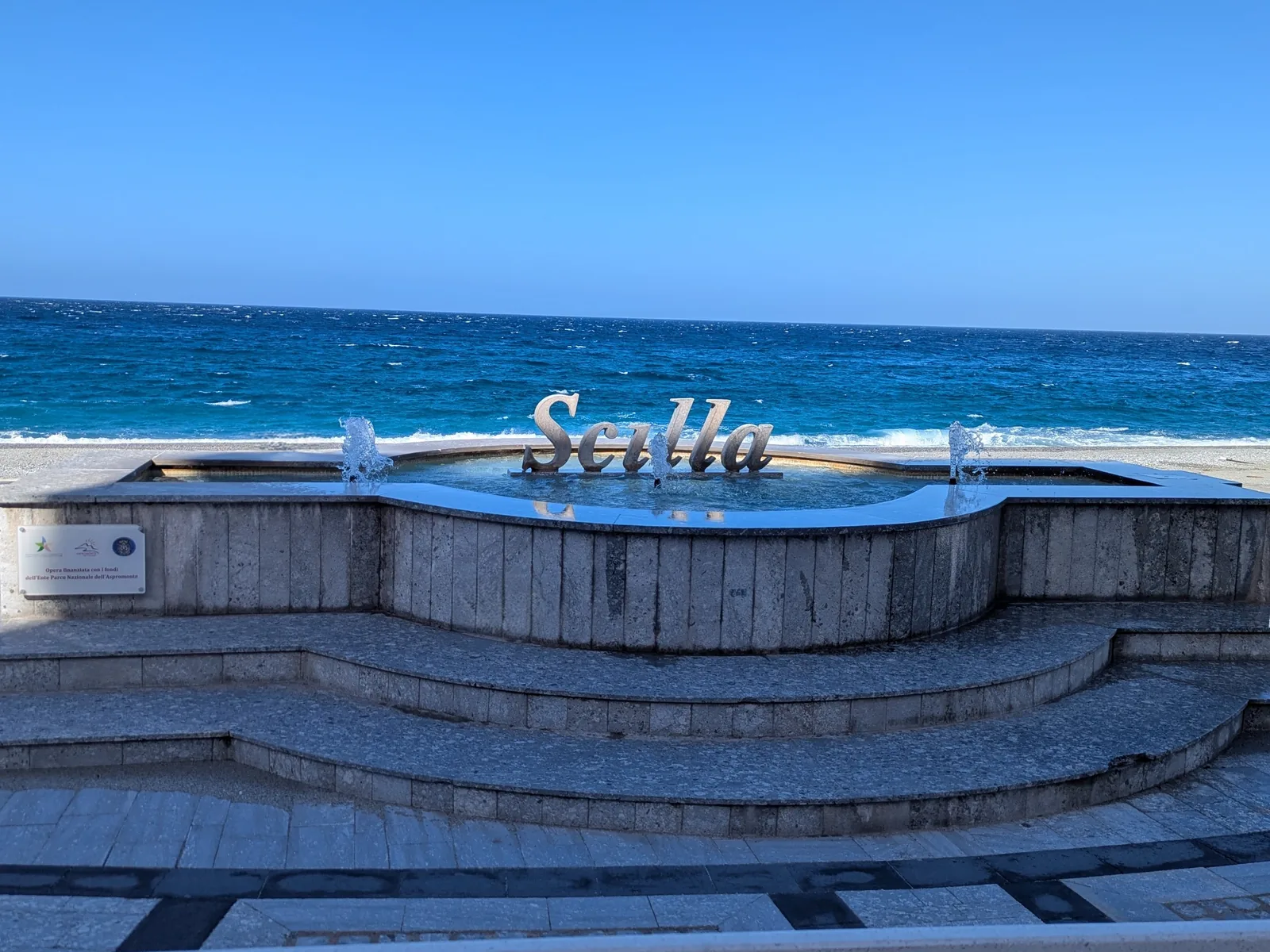
Scilla, often called the “Pearl of the Costa Viola”, is a picturesque town on the southern coast of Italy that draws visitors with its unique charm and multi-layered history. Located in the Calabria region, it offers views of the Tyrrhenian Sea and the Aspromonte mountains, standing at the meeting point between rugged land and the waters of the Strait of Messina. Whether exploring the imposing Ruffo Castle, strolling through the charming Chianalea district, or relaxing on the beaches of Marina Grande – Scilla works well both for a short stop and for a slower stay. Thanks to its proximity to Aspromonte National Park, nature lovers will also find concrete excursion goals here. Discover what to see, where to stay, and how to best plan your visit to this corner of Calabria.
Ruffo Castle and the History of Scilla – Heart of the Calabrian Landscape
History and Reconstruction of the Town
Scilla is an example of a town that managed to survive numerous adversities, with roots reaching far deeper than its current architecture might suggest. Archaeologists indicate that the first settlements here, founded by the Oenotrians and Ausonians, date back to the late Iron Age. During the era of Magna Graecia, Scilla served as a strategic observation point for the powerful city of Rhegion, shaping its military character. Throughout history, the town was repeatedly struck by earthquakes.
The most significant modern event occurred in 1908, when a catastrophic earthquake nearly destroyed the settlement. After the 1908 earthquake, Scilla was largely rebuilt and renewed, especially in the upper part of town. In Scilla itself, one example worth mentioning is Villa Zagari from 1933 in Chianalea; it should not be confused with Villa Genoese Zerbi in Reggio Calabria. Scilla preserved the legible layout of its seafront districts and continued to play an important role as a fishing centre.
Its fishing character gives the town an authenticity that is hard to find in other tourist destinations in the region. The urban structure of Scilla is divided into three distinct districts: the seafront Chianalea, the resort area of Marina Grande, and the administrative centre of San Giorgio. Each served a different function in the town’s historical development, from the fishing port to the civic centre with Piazza San Rocco.
| Historical Era | Key Events and Administrative Changes |
|---|---|
| Magna Graecia / Classical period | At the beginning of the 5th century BC, Anaxilas of Reggio is said to have fortified the Scilla promontory as a point for controlling navigation and defending against Tyrrhenian pirates. |
| Roman Period | Scilla was a strategic point in the Strait area; under Augustus, the Bruttium area became part of Regio III Lucania et Bruttii. |
| Norman Rule (11th century) | Official conversion into a military fortress (1060 AD). |
| Ruffo Dynasty (1533–18th century) | Purchase of the fief by Paolo Ruffo, transformation of the castle into a baronial residence. |
Ruffo Castle – Guardian of the Coastline
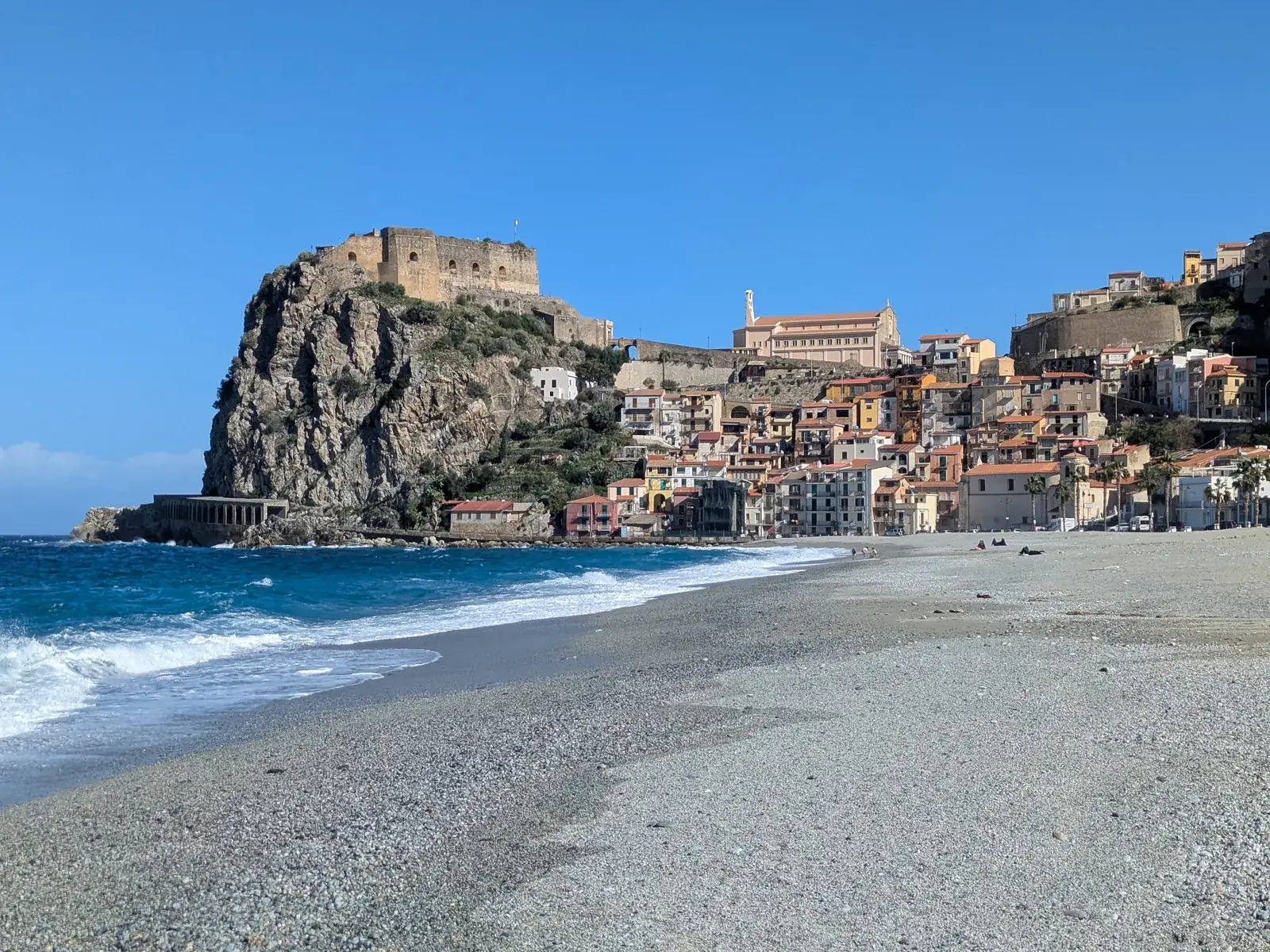
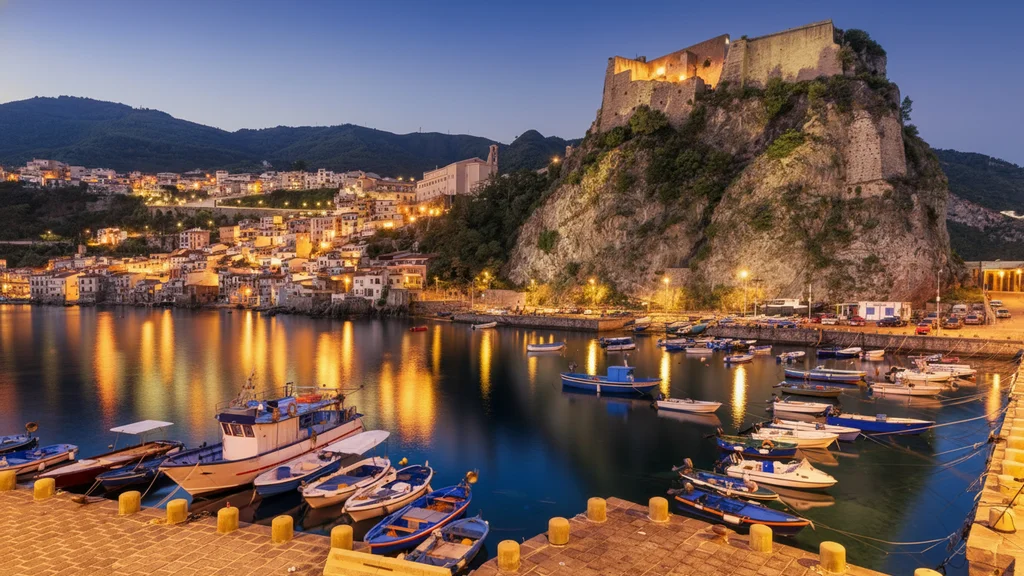
Rising from the high rock that divides the town in two stands the imposing Ruffo Castle. It is not only an architectural landmark of Scilla but also a place from which spectacular views over the sea and the surrounding Aspromonte mountains unfold. The castle’s history dates back to the Norman era, when Robert Guiscard consolidated his influence in Calabria in the 11th century, reinforcing the strategic importance of this area.
A pivotal moment for the building came in 1533, when Paolo Ruffo purchased the fortress and transformed it from a stern fortification into an aristocratic residence that remained in the family until the 18th century. Open to visitors, Ruffo Castle repeatedly served as a vital observation point, allowing locals to effectively protect the coastline from raids. Interestingly, in 1913 a lighthouse was built on the castle’s terrace, which still fulfils its navigational function today, connecting military history with modern maritime safety.
A dense network of steps and narrow corridors in the castle leads to numerous viewing terraces, allowing you to see Scilla from the perspective of the old fortress. Since the 1970s, the castle has been transformed from a youth hostel into a cultural centre, hosting exhibitions on the natural history of the Strait of Messina.
Cultural Significance of the Region
As part of Calabria, Scilla is a place full of tradition and culture, which is evident in the daily life of its residents. Local festivals and celebrations held in the town’s squares, such as Piazza San Rocco, create an atmosphere in which religion, music and neighbourhood gatherings still matter. Particularly venerated is San Rocco, the patron saint protecting against plague, whose cult in the town dates back to at least 1595.
During processions, the faithful carry enormous votive candles called nthrocci, and the celebrations culminate in the so-called trionfino – a run with the statue of the saint, symbolising triumph over disease. The town attracts visitors seeking places where they can see daily life in southern Italy, enriched by the Dance of the Giants – Mata and Grifone, symbolising the historic encounter of cultures.
Fishing in Scilla – Tradition and Modern Economy
Scilla, situated on the shores of the Tyrrhenian Sea, has lived in close relationship with the sea for centuries. The fishing industry here plays an important role in shaping the cultural and economic identity of the region. Traditional fishing methods, such as using small boats and nets adapted to specific sea conditions, are passed down from generation to generation, with roots in old seafaring and fishing practices.
Swordfish, the Pride of Calabria, and the Cardata da' crùci Ritual
One of the best-known culinary symbols of Scilla is swordfish (pesce spada), whose catch follows the rhythm of the season and the conditions in the Strait. Hunting swordfish is not only about obtaining food, but also an element of local tradition. After catching a swordfish, the fisherman would perform a gesture called “a cardata ra cruci”, scratching the sign of the cross with his fingernails on the cheek or gill of the fish as a ritual mark of respect.
Fishing supplies swordfish and other fish to Calabrian tables, but it is also one of the reasons visitors come to Scilla outside the beach season. Traditionally, boats of the luntru type with observation masts were used, now replaced by modern passarelle with tall metal towers and long bowsprits.
Modern Challenges and Sustainable Development
Despite its significance, fishing in Scilla faces many contemporary challenges. Pressure on natural resources means that the fishing economy must adapt to new conditions, focusing on protecting the marine environment. Catch limits, closed seasons and the protection of breeding individuals are important for conserving swordfish stocks; swordfish is a migratory, usually solitary species, and females grow larger than males.
Importance for Tourism and the Local Community
For visitors, watching the fishermen at work is one of the most concrete experiences of a visit to Scilla. Walking through the narrow streets of the Chianalea district, known as Little Venice, one can encounter local fishermen preparing their nets at the place called “Scaro Alaggio”, where boats moor directly beneath the houses. Fishing thus remains an integral part of daily life and the local economy. It is a tradition that gives Chianalea a character different from typical seaside resorts.
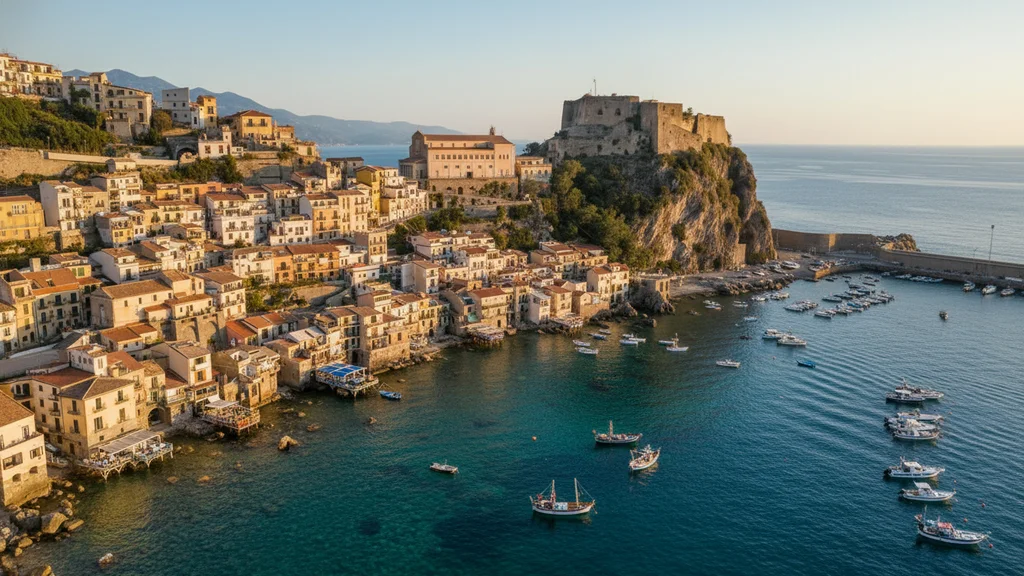
Table of Contents
Culture and Traditions of Scilla – From Mythology to Daily Life
Mythological Setting and Greek Heritage
Scilla is a place that bears traces of a past beginning with the mythological rock of Scylla, which inspired many generations of Greeks. The name of the town itself refers to the legendary rock that was the setting of many monster tales from Homer’s time. According to Ovid, Scylla was a beautiful nymph transformed into a monster by the jealous sorceress Circe, who poisoned her bathing pool.
These myths are intertwined with the history of Greek presence in the Strait of Messina area. Ancient sources connect Scyllaeum with the fortification of the promontory by Anaxilas of Reggio at the beginning of the 5th century BC. Modern science explains part of these legends through the specific hydrodynamics of the Strait of Messina, where the waters of the Ionian and Tyrrhenian seas collide to form dangerous whirlpools. The motif of Scylla and Charybdis remains an important element of the local tourist and cultural narrative.
The Influence of Fishing Culture
Scilla has always been bound to the sea, and its inhabitants cultivate fishing traditions dating back to ancient times. At Castello Ruffo you can see an exhibition dedicated to maritime traditions and boats used in swordfish fishing; the traditional swordfish fishing technique in Scilla is connected with the luntru and later passerelle and feluccas, not with the tonnara. Until recently, a superstition among fishermen held that during swordfish hunting, songs could only be sung in the Greek language, which was believed to ensure good fortune.
The methods and tools used by fishermen are part of the Calabrian way of life, from which the region’s distinctive identity derives. On the bows of boats, Phoenician symbols of eyes or stars are often painted, recalling the multi-layered heritage of this place. The easiest time to see this tradition is in the morning or before dusk in Chianalea, when daily work on boats and equipment is still taking place beside the houses on the water.
Cuisine as a Reflection of Tradition and Winemaking
The cuisine of Scilla is based on Calabrian flavours and seafood. A good example is grilled swordfish, which forms part of the maritime diet, often served as involtini – rolls stuffed with breadcrumbs, garlic, capers, and pine nuts. Fish caught in the region is served with simple seasonings such as olive oil and peperoncino, and these dishes are best tried in restaurants in Chianalea and Marina Grande.
The traditional Sagra del Pesce Spada in Chianalea takes place every year in the first two weeks of August. The programme includes tastings of swordfish dishes, performances, music, and materials and films about the historic luntri boat. The newer Spada Fest Scilla 2026 has been announced for 28–30 August 2026 at Marina di Scilla, so late August may also be a good time for those interested in fish cuisine.
Another characteristic of the culinary traditions is the presence of ‘nduja, a spicy sausage that pairs well with Maccheroni al Ferretto pasta, hand-shaped around a thin wire. In local winemaking, the Scilla IGT/IGP designation covers red and rosé wines from the Scilla area, including varieties authorised for the province of Reggio Calabria, such as Gaglioppo, Calabrese and Nerello Mascalese. The vineyards grow on the steep, terraced slopes of the Costa Viola.
Watch on YouTube
Natural Jewel of Calabria – Aspromonte National Park
Aspromonte National Park, situated in the southern Apennines, is an ecosystem of great natural significance in southern Italy. Covering an area of approximately 65,000 hectares, it offers tourists and nature lovers a mosaic of habitats ranging from Mediterranean areas to the mountain interior. From Scilla, the easiest way to treat Aspromonte is as a day-trip destination: sea in the morning, mountain roads and viewpoints in the afternoon.
A concrete destination within the municipality of Scilla is the Grotte di Tremusa, described by the municipality as caves located at an altitude of about 530 m above sea level. This is a place for those interested in geology and history, with views towards the Strait of Messina and the Costa Viola. A trip to the Grotte di Tremusa clearly shows how quickly Scilla’s landscape changes from seaside to mountain scenery.
Plant Diversity and Unique Endemics
Aspromonte National Park hosts about 1,500 plant species, representing more than half of Calabria’s regional flora. These natural resources include primarily deciduous forests with holm oak (Quercus ilex), beech (Fagus sylvatica), and sweet chestnut (Castanea sativa). Mediterranean maquis also grows there, alongside species characteristic of the mountain areas of southern Calabria.
Among the park’s flora, endemic and rare species are of particular value; official park materials mention, among others, 23 exclusive species. These floristic resources are one reason why Aspromonte remains an important nature conservation area. Equally fascinating is the underwater life off the coast of Scilla – at depths between 50 and 110 metres lies the world’s largest colony of black coral (Antipathella subpinnata).
Wildlife of Aspromonte
In terms of fauna, the park is home to the Apennine wolf (Canis lupus italicus), which serves as the main predator in the local ecosystem. Additionally, visitors may encounter wild boar, wildcat, edible dormouse, forest dormouse and the reintroduced Italian roe deer. The Strait of Messina is also an important migratory corridor for cetaceans and dolphins.
Aspromonte National Park is also a good area for birdwatchers, providing habitat for over 150 bird species, including raptors such as the eagle owl (Bubo bubo) and peregrine falcon (Falco peregrinus). Adding to this the unique populations of amphibians and reptiles, such as frogs (Rana italica) and salamanders (Salamandrina terdigitata), the park is an important biodiversity area of southern Calabria.
The Importance of Nature Conservation
Aspromonte plays a fundamental role in preserving biodiversity in the region, serving as an ecological corridor on the migration route of animals from Sicily to the Apennines. Its significance is particularly important in the context of combating the fragmentation of natural habitats. It is also a place where an excursion along mountain roads and trails helps you understand the contrast between the Costa Viola coastline and the interior of southern Calabria.
Scilla – Unique Beauty Among Calabrian Gems
Scilla is one of the most beautiful places in Calabria, combining nature and history in a very compact space. The town is known for its distinctive geography: a rocky hill with Ruffo Castle dominating the town and the turquoise waters of the Tyrrhenian Sea. Castello Ruffo di Scilla, perched atop the hill, attracts visitors with its history and views over the Strait of Messina.
One of Scilla’s greatest assets is its atmosphere of a fishing town. The narrow streets of the Chianalea district, where houses literally open onto the sea, are famous for postcard views and daily scenes connected with fishing. Walking through this part of town, you can experience the Italian coast without moving far from restaurants, the port and the beach.
Calabria offers many different tourist attractions, and Scilla provides a distinctive complement to them. Compared to other destinations, such as Reggio Calabria with its impressive museums or Pentedattilo with its ruins on a rocky slope, Scilla retains an intimate character. While other towns in Calabria attract lovers of adventure and nature, Scilla stands out for the close combination of beach, castle, fishing district and the mountain backdrop of Aspromonte.
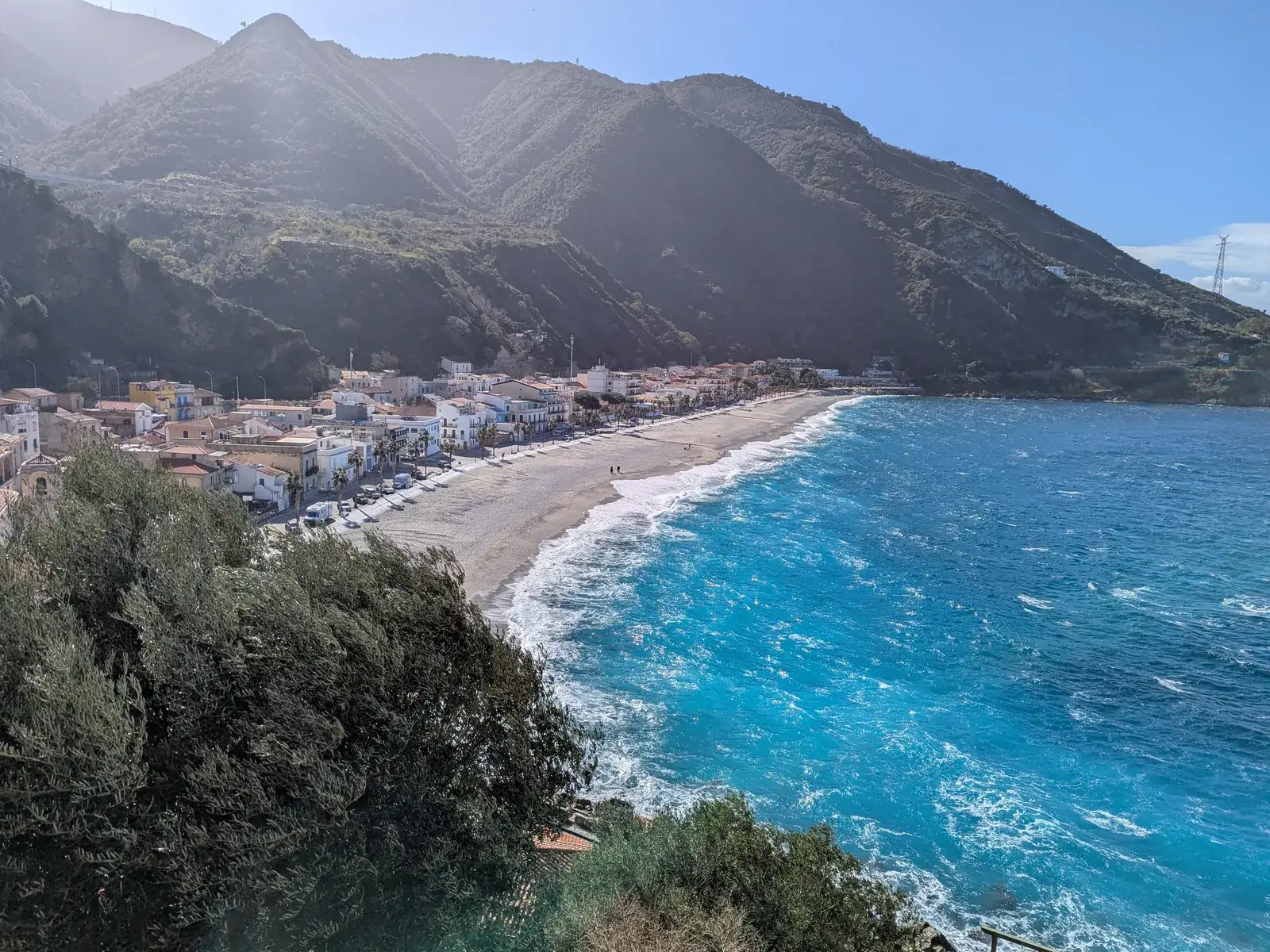
Although less well-known than some Calabrian attractions, Scilla is a strong point on a trip through the region, offering a blend of history, culture, and nature. The ideal place to unwind is Marina Grande, where there is a popular beach and waterfront restaurants. For those who prefer activity, the proximity of Aspromonte National Park enables excursions through the landscapes of southern Calabria.
Scilla – Frequently Asked Questions
What should you see in the historic Chianalea district?
Chianalea, known as “Little Venice”, is famous for its houses built directly on the rocks at the water’s edge. Worth seeing is the “Scaro Alaggio”, where fishermen moor their boats beneath the houses, the 16th-century Ruffo Fountain, and the Zagari Palace from 1933. A walk through the narrow streets lets you feel the authentic atmosphere of a fishing settlement.
What tourist attractions are there in Scilla?
The main attraction is Ruffo Castle (Castello Ruffo) with its lighthouse and views over the Strait of Messina. Visitors also explore the fishing district of Chianalea, the church of San Rocco, and the viewpoint at Piazza San Rocco. Also worth seeing is the Madre Santissima Immacolata church, known as “Mesa”.
Where is the most popular beach in Scilla?
The most popular beach is in the Marina Grande district. It is a wide beach with golden sand, separated from Chianalea by the castle promontory. It offers excellent tourist infrastructure, numerous lido establishments, bars and restaurants with views over the Tyrrhenian Sea.
How do you get to Scilla by train from Reggio Calabria?
Scilla station is on the Battipaglia–Reggio Calabria line. From Reggio Calabria, take a regional train towards Rosarno, Lamezia Terme or Paola; sample regional fares show tickets from around €3. Journey time depends on the service and is usually about 20–40 minutes, and Scilla station is close to the centre and the beach.
Where is the best place to park in Scilla?
The most convenient car parks are along the Marina Grande promenade (paid in summer) and near the port. There are also parking spaces in the upper part of town (San Giorgio) near Piazza San Rocco, from where you can take a lift or walk down the stairs to the seafront districts.
Is Castello Ruffo open for visits?
Yes, Ruffo Castle is open to visitors. According to the official website of the municipality of Scilla, the castle is closed on Mondays and open Tuesday to Sunday from 09:00–13:40 and 15:00–20:00. A single ticket costs €3.00, and children up to 6 years old and people with disabilities with a companion enter free of charge; the information was updated on 29 June 2026.
Main attractions
Ruffo Castle
Norman fortress from the 12th century with a lighthouse (1913) and viewing terraces. Cultural centre – exhibitions on the history of the Strait of Messina and swordfish fishing.
Chianalea – Little Venice
Charming fishing district where houses stand directly on the rocks at the water’s edge. Boats moor beneath the houses at the spot known as “Scaro Alaggio”. 16th-century Ruffo Fountain.
Marina Grande Beach
Wide golden sandy beach, separated from Chianalea by the castle promontory. Numerous lido establishments, bars and restaurants with views of the Tyrrhenian Sea. The largest beach in Scilla.
Piazza San Rocco
The central square with church and panoramic viewpoint. Every year it hosts processions in honour of the town’s patron saint, with the carrying of votive candles nthrocci and the trionfino ritual.
Aspromonte National Park
65,000 ha of wild nature – beech forests, endemic and rare species, and Apennine wolves. Hiking trails with views over the Strait of Messina. Coral at depths of 50–110 m.
Maritime traditions exhibition at Castello Ruffo
Models and a luntra boat, plus materials on swordfish fishing. The exhibition presents boats and tools connected with Scilla’s maritime traditions.
Getting there
From Poland to Lamezia Terme (SUF) – seasonal direct Ryanair flights; outside the season via Rome or Milan. Reggio Calabria airport (REG) is closer – just 25 km from Scilla, with direct flights from Katowice (Ryanair) and from Rome and Milan.
Scilla station is on the Battipaglia–Reggio Calabria line. Regional trains from Reggio Calabria run towards Rosarno, Lamezia Terme or Paola; sample regional tickets start from around €3, and the journey takes about 20–40 min depending on the service. Scilla station is close to the centre and the beach.
Hire a car at the airport. From Reggio Calabria, take the A2 diramazione Reggio Calabria/A2 “Autostrada del Mediterraneo” and local roads to Scilla: about 25–30 km, depending on the starting point. Car parks are available by the Marina Grande promenade (paid in summer) and in San Giorgio.
The most convenient way to reach Scilla is by regional train from Reggio Calabria or Rosarno. Local bus connections along the Costa Viola and towards Reggio Calabria should be checked with regional operators before travelling, as timetables and stops change seasonally.
Near Scilla
Last updated: