In the heart of Calabria, just a few kilometres from the shores of the Ionian Sea, lies Gerace. This small town, whose labyrinthine cobbled streets conceal a thousand years of history, is a strong stop for lovers of medieval architecture and culture. Sacred monuments, castle ruins, views over the Locri valley and the Ionian Sea, and the quiet rhythm of the old town make Gerace a natural fit for an itinerary through southern Calabria. This compact town is ideally suited for a relaxed half-day visit, and during the tourist season a special shuttle train runs from the lower car park.
Table of Contents
- Sacred Architecture of Gerace – The Influence of Medieval Genius on Calabria
- The Norman Castle of Gerace – Defence and Power in Medieval Calabria
- Cultural Traditions and Festivals in Gerace – the Heart of Calabrian Identity
- Gerace in the Byzantine Era – Strategic Centre of Calabria
- Gerace – A Flavourful Guide to Calabrian Specialities
- Gerace as a Base for the Locride Region
Sacred Architecture of Gerace – The Influence of Medieval Genius on Calabria
Introduction to Gerace's Sacred Wonders
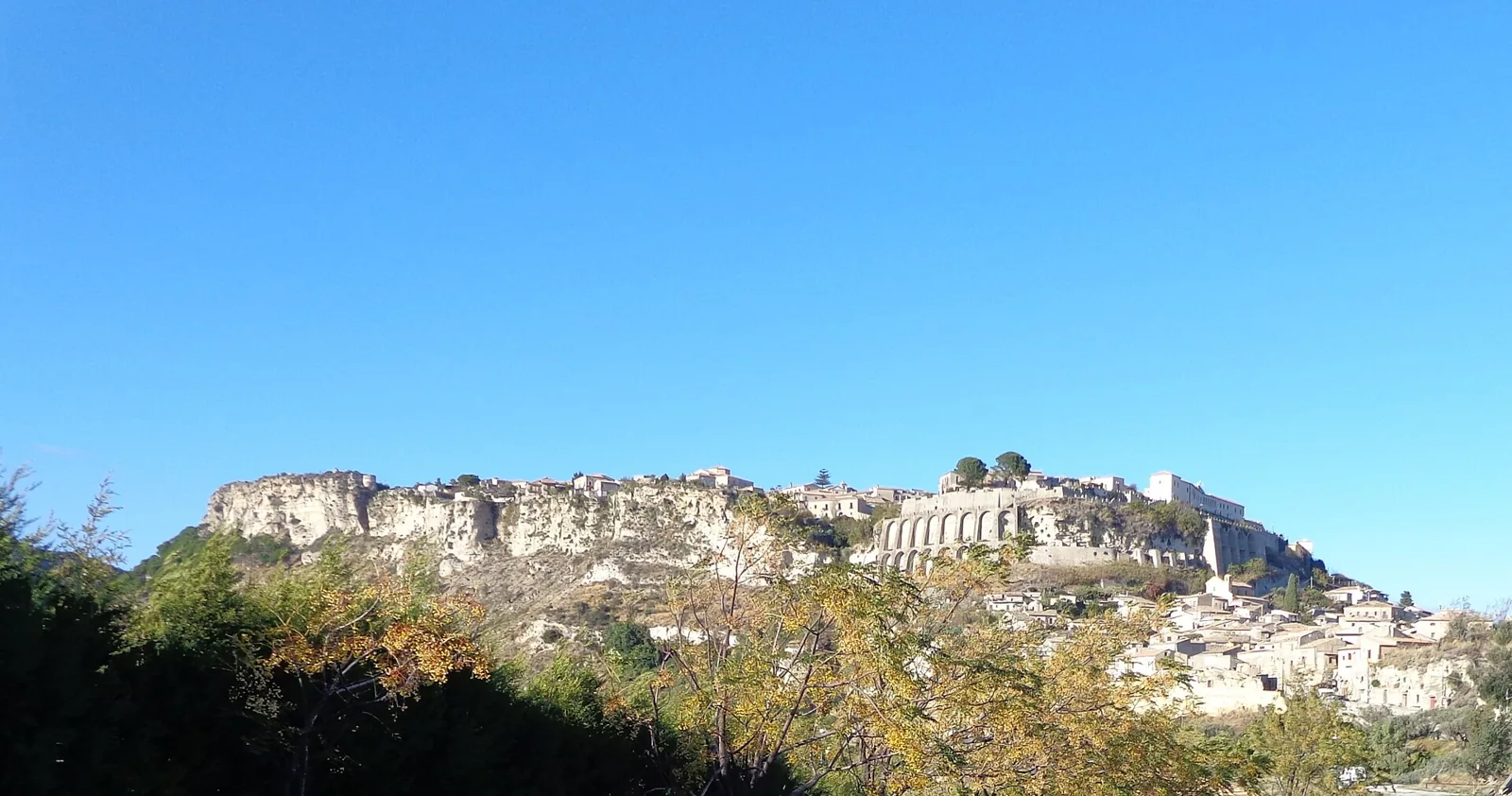
Gerace, a medieval town in Italy set in the scenic region of Calabria, is a treasure trove of Romanesque-Byzantine sacred architecture. Its monuments bear witness to the turbulent history of this corner of the world – from Byzantine influence, through Norman invasions, to the dominance of the Sicilians and the Angevins. The town is sometimes called the City of 128 Churches, which, given its current population of around 2,300–2,400, represents an extraordinary concentration of sacred buildings in a small historic centre.
Outstanding Sacred Monuments
The foremost landmark is the Cathedral of Santa Maria Assunta, founded by the Normans in the 11th century on the foundations of an earlier Byzantine basilica. The cathedral was consecrated in 1045; the official description gives its area as 1,898 m² and defines it as the largest Romanesque church in southern Italy. The upper basilica has a Latin-cross plan and three naves, giving the interior a clear, monumental, and austere character. Legend has it that it was erected on the very edge of a cliff, to serve as a spiritual and physical barrier protecting the townspeople from Saracen raids.
Beneath the cathedral lies a Byzantine crypt connected with the oldest, 8th-century core of the rock church; its vaults are supported by 26 columns made of reused material, partly associated with ancient Locri Epizephiri. The crypt has the plan of an irregular Greek cross, different from the ordered layout of the upper basilica, clearly showing the successive historical phases layered within the church. This majestic structure combines Lombard-Romanesque and Byzantine elements and ranks among the most important sacred monuments in the region. Admission to the cathedral may be ticketed; current prices and opening hours are best checked directly with the Cittadella Vescovile / on 0964 356323, and visitors should remember that appropriate attire is required in this holy place.
Another significant landmark is the Church of San Giovanni Crisostomo, known as San Giovannello, a small Greek-Orthodox church from the 11th century, with a single apse, simple volume, and pitched roof. It is a good example of the modest Eastern sacred tradition preserved in Gerace's historic fabric. Other notable buildings include Santa Maria del Mastro and the church of San Francesco, which impresses with its interior decoration and features characteristic of the Norman period.
Cultural Influence on Calabria and Southern Italy
The sacred architecture of Gerace shaped the cultural identity and urban planning of southern Italy. Architectural models and stylistic solutions – such as the characteristic bell towers and biforate windows – became templates for other towns in Calabria and Sicily. Visit the Diocesan Museum in the Cittadella Vescovile complex at Piazza Tribuna 1, where collections of sacred art and the cathedral treasury are displayed.
The Diocesan Museum is located at Piazza Tribuna 1 in the cathedral complex, so it is easiest to combine it with a visit to the cathedral and crypt. Official opening hours are daily in summer from 9:15 to 13:00 and 15:00 to 20:00, and in winter from Tuesday to Saturday from 9:30 to 12:45 and 15:00 to 17:00; the museum is closed on Monday. For admission costs, the municipality refers visitors to 0964 356323.
The foundation of Gerace's sacred buildings was a response to the town's religious, defensive, and administrative needs. The cathedral, smaller churches, and the Cittadella Vescovile buildings show how strongly urban life centred on church institutions. Gerace proudly bears the title of Borghi più belli d'Italia, confirming its status as one of the most beautiful settlements in the country, with a readable urban layout preserved over the centuries.
The Norman Castle of Gerace – Defence and Power in Medieval Calabria
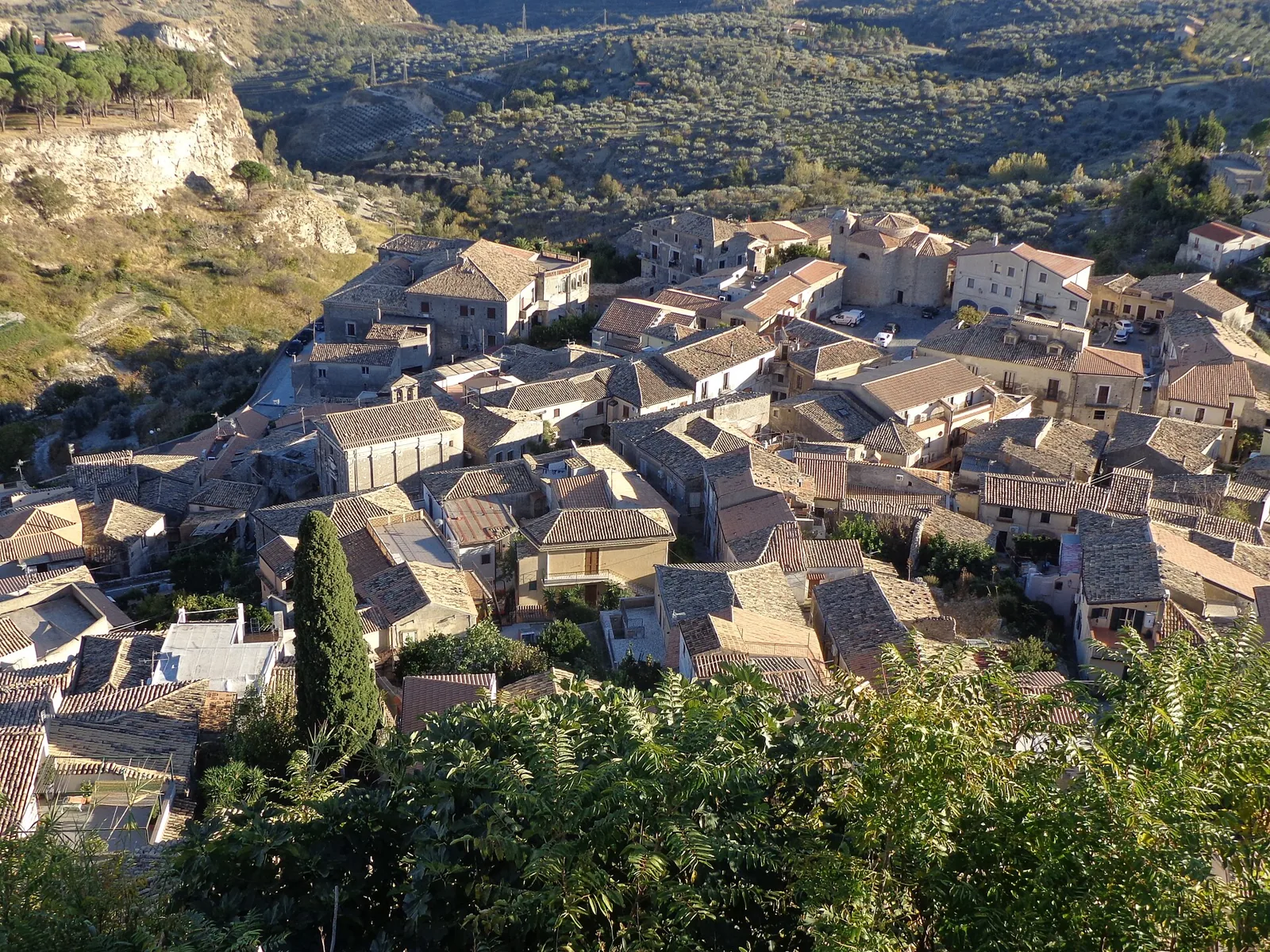
The Norman castle of Gerace, one of the most important points of defensive architecture in medieval Italy, stands on a strategically positioned hilltop. The castle has older, probably Byzantine origins; its existence is documented as early as the 10th century, and the Normans rebuilt and fortified it around 1050. The scenic Via Caduti sul Lavoro trail leads to the castle ruins, offering panoramas over the Locri valley and the Ionian Sea.
Defensive and Military Function
From a historical perspective, the castle played a crucial role in defence against both Arab and Byzantine raids. Its position on the edge of a cliff gave the garrison a strong lookout advantage and made access to the stronghold difficult. Only fragments of walls, a gate, a crenellated facade, and a round Aragonese tower survive today, set on the edge of the precipice. These remains are enough to understand why control of Gerace mattered for this whole stretch of the Ionian coast.
Administrative and Residential Centre
The castle at Gerace also served as the centre of local power, being the seat of the Norman counts. It was the venue for audiences and judicial sessions, as well as the hub of the local economy, which engaged in trade in olive oil and silk, among other goods. The castle included, among other elements, a courtyard, armoury, well, small oratory, and rooms with different functions, showing that it was not only a defensive point but also a centre of everyday feudal administration.
Symbolism and Religious Significance
The Norman dominance in Calabria, symbolised by the castle, had not only a military-political dimension but also a religious one. Inside the castle there was a chapel, an expression of Christian influence and an important element in the Christianisation of this part of Italy. Ongoing archaeological and historical research on the castle continues to shed light on its many functions and its significance in the context of Norman expansion in medieval Italy.
Cultural Traditions and Festivals in Gerace – the Heart of Calabrian Identity
Main Religious Festivals
Gerace is known for its deeply rooted religious tradition, which manifests itself in numerous feast days. In August, patronal celebrations in Gerace are connected, among others, with Maria Santissima Immacolata, Sant’Antonio del Castello, Santa Veneranda, San Filippo d’Argirò, and San Jeiunio. The celebrations include processions, local gatherings, music, and elements of local religiosity that are especially visible in the small towns of the Locride.
During Holy Week in Gerace, an important diocesan event is the Chrism Mass in the cathedral on Holy Thursday. This is a celebration connected with the life of the diocese and the Cathedral of Santa Maria Assunta, not a staged ritual aimed at tourists. If you plan to visit during the Easter period, check the current programme in the cathedral and local notices in advance.
Folk and Cultural Traditions
Craft production, including majolica ceramics, is an integral part of Gerace's cultural landscape. At the end of July, the town comes alive with the Il Borgo Incantato festival (the Enchanted Village), which brings together street artists, musicians, and craftspeople from around the world. The official festival website gives the dates as 26–28 July and notes that the event was founded in 1999. The programme includes street-artist performances in the squares and streets of the historic centre, so this is a time to explore Gerace on foot and without rushing.
In Gerace's restaurants you can sample Calabrian specialities such as 'nduja (a spicy sausage from Spilinga) and morzeddu (a traditional stew from Catanzaro). The local Greco di Bianco wine is highly prized and considered one of the oldest wines in Italy. In summer, as part of the Estate Geracese events, concerts and performances showcasing local musical and dance traditions are held in squares such as Piazza del Tocco.
Gerace in the Byzantine Era – Strategic Centre of Calabria
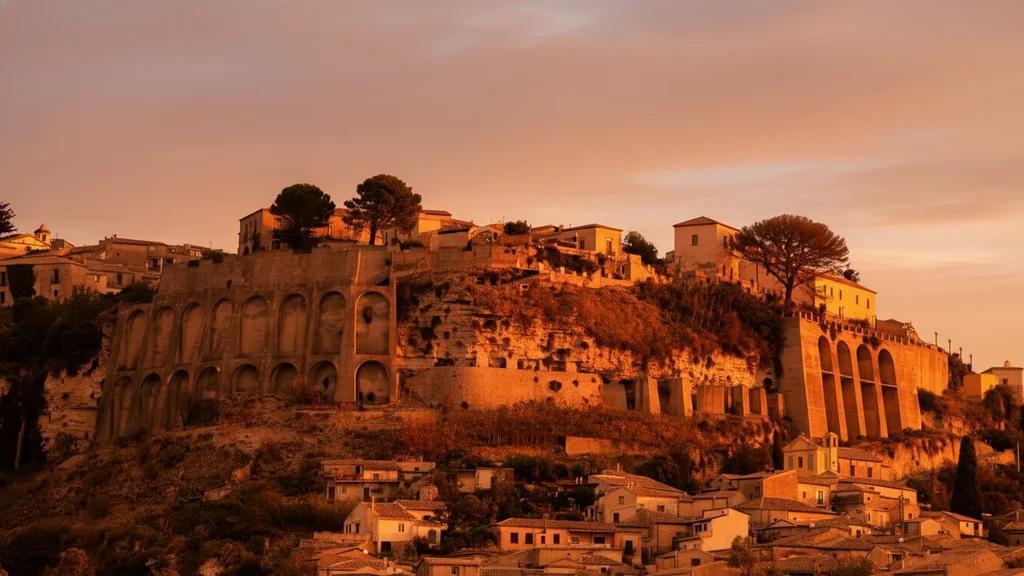
During the Byzantine period, Gerace was an important strategic point on the map of southern Italy. Its geographical position, just 10 kilometres from the Ionian coast, allowed control over maritime routes. Its location at an altitude of around 492–500 metres above sea level made it an ideal vantage point, protecting against sudden attacks from both sea and land.
Defensive features and urban planning. High walls and a system of fortifications effectively protected the town against attacks, particularly the waves of Arab raids. A unique feature of Gerace is its paving in stone laid “di cozzo”, that is, vertically, which was intended to slow the flow of rainwater and make movement easier for pack animals. Over time, the town became the seat of local Byzantine authorities, further underlining its administrative importance.
Trade and cultural networks. As part of the Byzantine infrastructure in Italy, the town supported the spread of Eastern culture and art. The medieval architecture of this period continues to attract scholars thanks to its unique character, combining the austerity of a fortress with Byzantine detail. Gerace played a significant role in the trade exchange network, serving as a safe haven for merchants travelling along the coast.
Watch on YouTube
Gerace – A Flavourful Guide to Calabrian Specialities
Gerace is a good place to try traditional Calabrian cuisine based on simple, intense products. The local kitchen uses olive oil, 'nduja, and peperoncino. Try the local pecorino cheese and the traditional dish pasta chjina, a richly stuffed pasta that belongs to the region's home-cooking repertoire.
| Speciality | Description |
|---|---|
| 'Nduja | Spicy, soft pork sausage with a generous amount of chilli. |
| Pasta chjina | Stuffed pasta baked with meat, cheese, and eggs. |
| Greco di Bianco | Sweet dessert wine of amber colour with an ancient lineage. |
| Pecorino | Hard sheep's cheese with an intense flavour, ideal with red wine. |
In the local restaurants you can savour authentic Calabrian 'nduja, served in the traditional way with bread. Look for ceramics and majolica from Gerace; if you are heading to nearby Mammola, the local speciality there is stocco di Mammola. The combination of local food, craft traditions, and medieval scenery makes Gerace well suited not only to sightseeing but also to a slow lunch between a visit to the cathedral and a walk to the castle.
Gerace as a Base for the Locride Region
Thanks to its location, Gerace makes a convenient base for exploring the Locride region. It lies just 10 km from ancient Locri, making it easy to plan an action-packed day of sightseeing. A suggested itinerary includes a morning visit to Gerace, an afternoon at the Locri Epizephiri archaeological park, and an evening on the beach at Marina di Locri.
For those with more time to spare, other gems of the region lie within a 40-kilometre radius. A visit to Caulonia and Stilo, famous for the Byzantine Cattolica di Stilo, is well worthwhile. The region combines the mountain landscapes of Aspromonte with the blue of the Ionian Sea, so Gerace works well as a stop between the coast and the interior.
Gerace – Frequently Asked Questions
How do you get to Gerace – is a car necessary?
A car is the most convenient means of transport and gives you independence. You can also travel by Regionale train to Locri station, then take an Autolinee Federico S.p.A. bus from the square in front of the station to the centre of Gerace.
How long does it take to visit Gerace?
Gerace is a compact town, so a relaxed half-day (around 4–5 hours) is sufficient to see the main sights such as the cathedral and the castle. However, it is worth staying longer to enjoy lunch at one of the local trattorias.
Can Gerace and Locri be visited in one day?
Yes, combining these two destinations in a single day is popular and logistically sensible. They are separated by a short uphill road, allowing you to explore medieval Gerace in the morning and the archaeological park at Locri in the afternoon.
When does the Il Borgo Incantato festival take place in Gerace?
Il Borgo Incantato takes place at the end of July; the official festival website gives the dates as 26–28 July. The event was founded in 1999 and includes street-artist performances in the squares and streets of the historic centre.
What should you buy in Gerace as a souvenir?
The best choices are local majolica ceramics and food specialities: pecorino cheese, spicy 'nduja, or a bottle of the rare Greco di Bianco wine. If you are going to nearby Mammola, look there for stocco di Mammola.
Is there an admission charge for the Gerace cathedral?
Admission to the cathedral may be ticketed, but the current price is best checked directly with the Cittadella Vescovile or on 0964 356323. Additional charges may apply for visiting the Diocesan Museum, which houses the cathedral treasury.
Main attractions
Cathedral of Santa Maria Assunta
The largest Romanesque church in southern Italy, consecrated in 1045, with an upper basilica of three naves and a crypt supported by 26 columns made of reused material.
Norman Castle
A stronghold with older, probably Byzantine origins, rebuilt by the Normans around 1050, with a panorama over the Locri valley and the Ionian Sea.
Church of San Giovannello
A small Greek-Orthodox church from the 11th century, with a single apse, simple volume, and pitched roof.
Diocesan Museum
A museum in the Cittadella Vescovile complex at Piazza Tribuna 1, with collections of sacred art and the cathedral treasury.
Il Borgo Incantato
An international street-art festival held on 26–28 July, organised in the squares and streets of the historic centre since 1999.
Getting there
From Poland to Lamezia Terme (SUF) – seasonal direct Ryanair flights; outside the season via Rome or Milan. Reggio Calabria airport (REG) is closer than Lamezia Terme, about 100–110 km away by road.
The most convenient option. From the A2 motorway, exit at Rosarno, follow the Jonio-Tirreno road to Marina di Gioiosa Jonica, then the SS106 towards Locri and the former SS111/SP1 to Gerace. From Reggio along the Ionian coast, the SS106 to Locri is an alternative.
Trenitalia offers travel to Gerace as a combined journey: Regionale train to Locri station + bus from the square in front of Locri station to the centre of Gerace. The bus section is operated by Autolinee Federico S.p.A.; the supplement for the Locri–Gerace section is €1.80 and is added to the rail ticket.
The Locri–Gerace connection is operated by Autolinee Federico S.p.A.; the integrated train + bus ticket can be bought through Trenitalia systems by choosing Gerace as the destination station. In season, an additional shuttle from the lower car park up the hill makes access to the historic centre easier.
Near Gerace
Last updated: