Reggio Calabria, the largest city in the Calabria region and guardian of the Strait of Messina, captivates with both its rich history and hidden tourist gems. Situated at the very tip of the “Italian boot,” against the backdrop of the rugged Aspromonte mountain range, it attracts travellers who want to explore the city’s cultural heritage and taste its local cuisine. Discovering Reggio means encountering an architectural and archaeological palimpsest, where traces of Magna Graecia, the Roman Empire, and the Byzantine era intertwine with modern urbanism born from seismic catastrophes. Its position on the Strait of Messina, port, Tito Minniti Airport, and links with Sicily make the city a practical gateway between Calabria and the island.
Table of Contents
- Reggio Calabria – a treasure trove of Magna Graecia’s culture
- From Byzantium to the Normans – the medieval faces of the city
- Architectural and historical gems – the attractions of Reggio Calabria
- A city reborn from the ashes – the seismic legacy and reconstruction
- Bergamot – the gold of Reggio Calabria
- The Bridge over the Strait of Messina – an engineering giant and gateway to Sicily
- The contemporary urban fabric – from the Lungomare to sustainable development
Reggio Calabria – a treasure trove of Magna Graecia’s culture
Reggio Calabria, situated at the southern tip of the Apennine Peninsula, was once one of the most important centers of Magna Graecia, known as Rhegion. Founded around 743 BC by Greek settlers from Chalcis, the city quickly became a key commercial, political, and cultural hub. Its strategic location on the Strait of Messina favored trade, and over time it gained such great prestige that this southern tip of the Peninsula was what the ancient Greeks originally called “Italia.”
The name “Reggio” itself is a matter of debate among historians. One theory derives it from the Greek word regnynai (to break), referring to the mythical cataclysm that supposedly separated Sicily from the mainland. Another points to the Italic word rec, meaning “king.” Regardless of the name’s origin, Rhegion became renowned for its production of wine, olive oil, and pottery highly prized in the ancient world.
The legacy of this rich past is visible today in numerous monuments and museums. The most important of these is the Museo Archeologico Nazionale (MArRC), housed in the Palazzo Piacentini and recognized as a global center of knowledge on Magna Graecia. This is where the famous Riace Bronzes are kept – two Greek statues from the 5th century BC that represent a masterpiece of sculpture and one of the most significant discoveries of the 20th century. Beyond the Bronzes, the museum displays treasures such as the “Head of a Philosopher” and the “Kouros of Reggio,” testifying to the city’s artistic might.
MArRC is located at Piazza De Nava 26, close to Corso Garibaldi and the seafront, so it is easy to combine a museum visit with a walk through the centre. The museum is open Tuesday to Sunday from 9:00 to 20:00, with last admission at 19:30; it is closed on Mondays. Since 1 July 2024, a standard ticket costs €10, a reduced ticket for visitors aged 18–25 costs €2, and admission is free for visitors under 18, among others.
Hellenic influences survived the centuries, as evidenced by the Greko dialect still spoken in some villages of the Reggio metropolitan area. The city also keeps its ancient history alive through everyday life: museums, a walkable centre, and cuisine based on local products. Here one can find both traditional Italian cooking and modern interpretations of regional specialties in restaurants such as Mamas Pellaro and Timo Restaurant.
From Byzantium to the Normans – the medieval faces of the city
After the fall of the Roman Empire, Calabria became an arena of successive conquests. From the 7th century, Reggio served as a strategic bastion of the Byzantine Empire, defending against Saracen raids while maintaining a culture with Greek roots. Traces of this era, though partly erased by later earthquakes, can still be found in the foundations of some historic buildings, such as the Aragonese Castle.
The arrival of the Normans in the 11th century under Robert Guiscard ushered in a period of relative prosperity and modernization. Reggio, incorporated into the vast Norman empire, flourished as an important commercial center. The city then came under the rule of the Swabians/Hohenstaufens, including Emperor Frederick II, and later the Angevins.
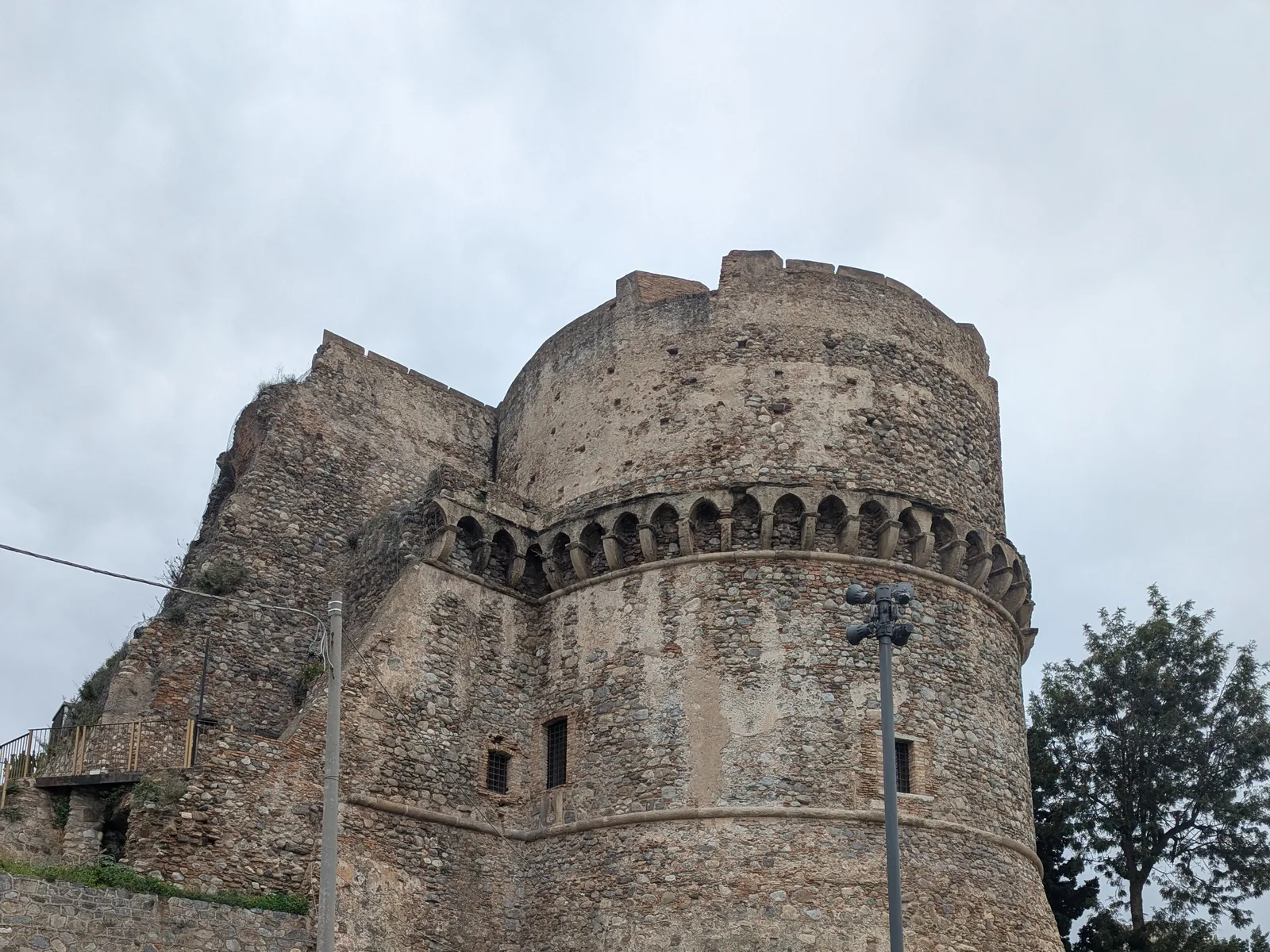
In the 15th century, under Aragonese rule, the castle was further expanded and became a powerful fortress and symbol of the city’s resilience. Through all these historical storms, Reggio’s strategic position on the Strait of Messina ensured its role as a place of trade and a target of conquest. This continuity of Greek, Byzantine, Norman, and Aragonese influences shaped the city’s multi-layered identity.
Architectural and historical gems – the attractions of Reggio Calabria
Reggio Calabria combines the history of ancient Greece with the architecture of a rebuilt city and the landscape of the Strait of Messina. The most important tourist attractions are monumental buildings, museums, and public spaces that set the rhythm for exploring the centre. Alongside the already-mentioned National Museum, it is the cathedral, the Aragonese Castle, and the seafront promenade that define the character of the city.
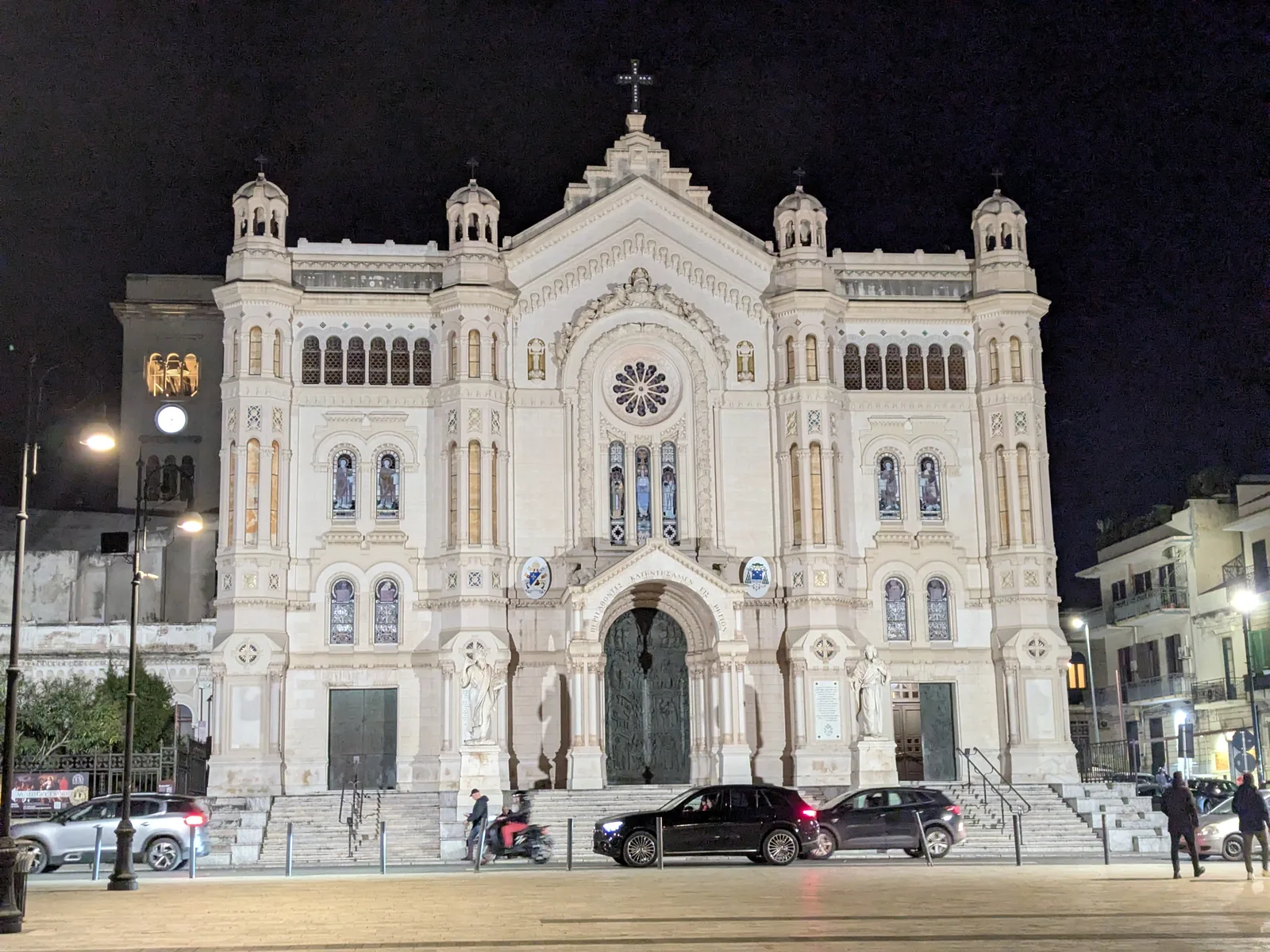
The Cathedral of Reggio Calabria, dedicated to Our Lady of the Assumption, is the largest sacred building in Calabria. Rebuilt in a Neo-Romanesque style with Liberty influences after the 1908 earthquake, it was reconsecrated in 1928. Inside, one finds the Chapel of the Blessed Sacrament, a Baroque masterpiece in polychrome marble, as well as a relic tied to the legend of the miracle of Saint Paul, who is said to have converted the city’s inhabitants in 61 AD.
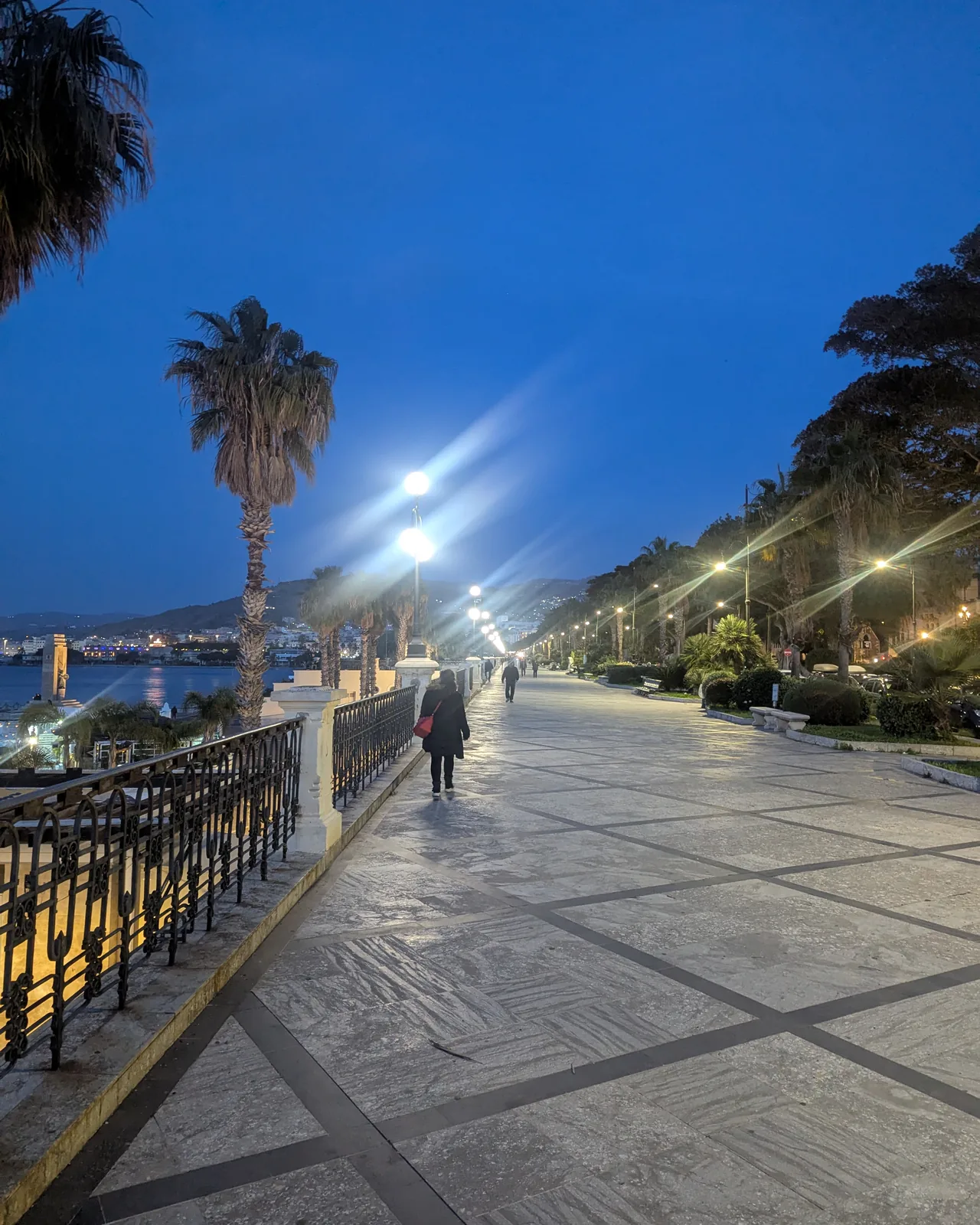
Not to be overlooked is the Lungomare Falcomatà, a promenade known as “the most beautiful kilometre in Italy” – a phrase traditionally, though controversially, attributed to Gabriele D’Annunzio. Reggio’s official tourism portal states that the Lungomare Falcomatà is in fact about 1.7 km long. The promenade runs along the coast and is one of the city’s main places for a walk, with views of the Strait of Messina and Sicily. It is a true “open-air archaeological park,” where modern sculptures and exotic vegetation – including giant ficus trees and magnolias – coexist with exposed ruins of Greek walls and Roman baths. Running parallel to the promenade is Corso Garibaldi, the city’s main pedestrian street and its social heartbeat.
Castello Aragonese is one of the most recognizable traces of medieval Reggio. According to the municipality, what can be seen today is mainly the two cylindrical towers from the Aragonese period, while the site itself functions as a temporary exhibition space. The castle is open Monday–Friday from 8:30 to 13:00 and 14:30 to 19:00, Saturday from 14:30 to 19:00, and Sunday and public holidays from 9:00 to 13:00. A combined Castello Aragonese + Pinacoteca ticket costs €7 for non-residents and €2 at the reduced rate for residents and pupils aged 6–18 from the Città Metropolitana di Reggio Calabria.
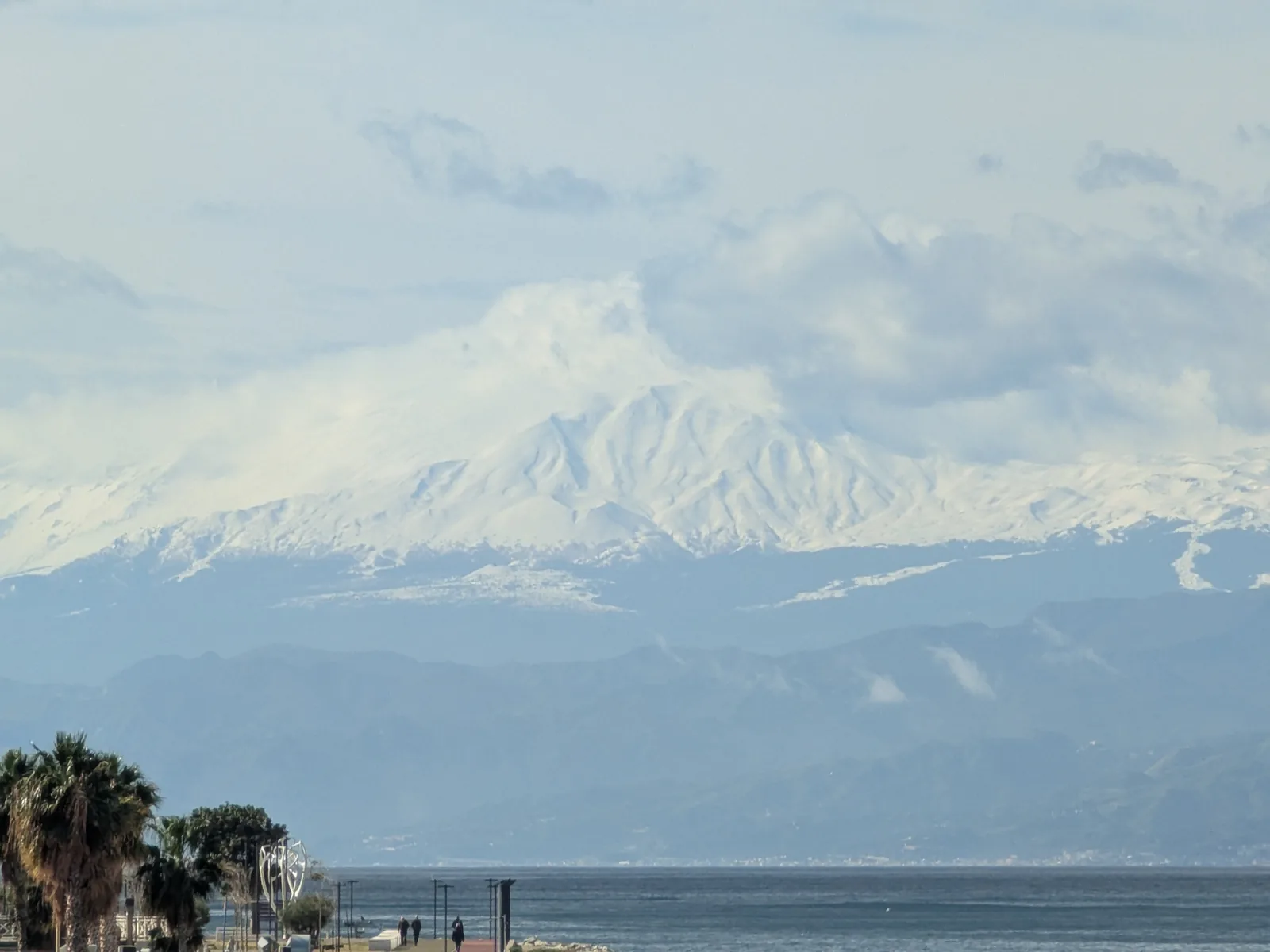
Reggio’s appeal is further reinforced by its natural attractions. Picturesque beaches, such as those near the town of Scilla, and views of Sicily and Etna draw travellers who want to combine city sightseeing with the sea. It is from here, under the right atmospheric conditions, that one can witness the rare mirage phenomenon known as Fata Morgana, making the Sicilian coastline appear within arm’s reach.
A city reborn from the ashes – the seismic legacy and reconstruction
The history of Reggio Calabria is inextricably linked to the seismic nature of the region, situated at the junction of the Eurasian and African tectonic plates. Although the city has also been exposed to strong winds damaging the Lungomare Falcomatà promenade, earthquakes have left the deepest mark on it. The catastrophes of 1562 and 1783 forced modernization processes, but it was the earthquake of 28 December 1908, combined with a powerful tsunami, that completely destroyed the medieval and Baroque urban fabric.
This tragedy became the catalyst for a total reorganization of the cityscape. Reconstruction proceeded in the spirit of the Liberty style, the Italian variant of Art Nouveau, which combined aesthetics with structural safety. The result was a modern urban layout featuring wide, parallel streets and linear construction along the coastline, designed to limit the impact of similar disasters in the future.
Contemporary Reggio therefore functions as a city rebuilt almost from scratch, where older historical layers often survive only in fragments. This gives special importance to the individual preserved or exposed traces of earlier periods: the ruins of Greek walls, Roman baths, elements of the castle, and religious architecture rebuilt after 1908. In the background remains the regional problem of organized crime, including the ’Ndrangheta, which affects public life in Calabria and is one of the contexts of contemporary city management.
Bergamot – the gold of Reggio Calabria
Reggio Calabria proudly bears the title of “City of Bergamot,” as it is here, on a narrow coastal strip, that nearly 90% of the world’s production of this extraordinary citrus fruit is concentrated. Bergamot (Citrus bergamia) is prized for its essential oil, which is a key ingredient in the perfume industry and the defining aroma of Earl Grey tea. The first bergamot trees were planted in the area around Reggio around 1750.
“Bergamotto di Reggio Calabria – Olio essenziale” essential oil has DOP status, confirming its strong link with the production area. The historical production specification identifies a strip in the province of Reggio Calabria about 150 km long. For fresh “Bergamotto di Reggio Calabria,” an IGP procedure is under way and has been published; the 2025 specification lists 51 municipalities in the production area and a harvest period from October to March, depending on climate conditions.
Its significance for the local economy and culture is so great that it has been honored with the National Museum of Bergamot. The museum traces the evolution of oil extraction technology, from the manual “sponge” method to the invention of the “Calabrian Machine” in 1844. Bergamot oil also has applications in medicine as an antiseptic and antidepressant, as well as in cosmetics and culinary arts, for flavoring liqueurs and sweets.
Watch on YouTube
The Bridge over the Strait of Messina – an engineering giant and gateway to Sicily
The Strait of Messina plays an important role in Reggio Calabria’s economic strategy, and its most debated element for years has been the bridge construction project. Planned as the longest suspension bridge in the world, it is to span more than 3.3 kilometres and connect Calabria with Sicily. The process was relaunched by decree on 31 March 2023; the investment cost is estimated at around €13.532 billion, with completion expected in 2032.
Technically, the project calls for towers 399 m high and a structure designed for strong winds – according to Stretto di Messina, up to 216 km/h – and high seismic activity. According to Stretto di Messina, during the construction phase average employment is expected to be around 4,300 people per year, peaking at 7,000, while the total direct, indirect, and induced impact is estimated at 120,000 AWU. The project is nonetheless controversial, drawing opposition from environmental and social movements known as the “No Bridge Movement.”
Regardless of the bridge, the Port of Reggio Calabria remains an important element of local transport. It mainly serves passenger traffic and local trade; in 2024 it handled around 1.204 million tonnes of goods and did not handle TEU containers. In practice, for travellers the most important links are the crossings over the Strait of Messina and the proximity of Villa San Giovanni, from where ferries to Sicily depart regularly.
The contemporary urban fabric – from the Lungomare to sustainable development
Reggio Calabria, after the urban transformation forced by the 1908 earthquake, now faces modern challenges. The “Reggio Città Metropolitana” programme aims to revitalize key districts, with an emphasis on urban regeneration, including the already-mentioned Lungomare Falcomatà with its mosaics and art installations. The protection of cultural heritage goes hand in hand with adapting spaces to the daily life of residents and tourist movement.
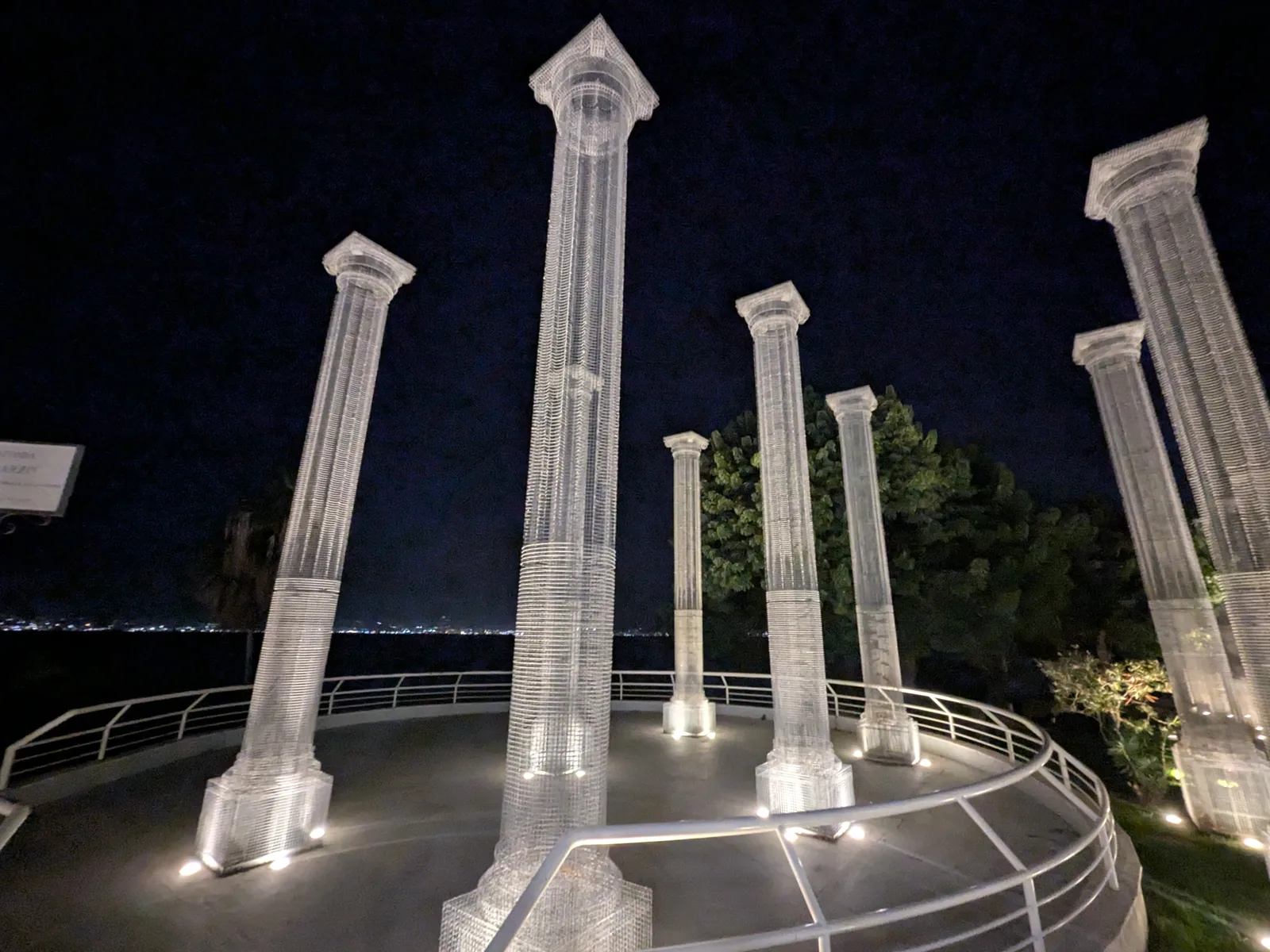
The city is investing in the development of public transport, including the modernization of the bus network, which together with a cycling path network and integration with the port and Tito Minniti Airport, aims to reduce dependence on cars. These measures are intended not only to reduce pollution, but also to make the city more accessible for residents and travellers.
Key urban planning documents include the PRG from 1975, which remains in force, and the PSC/REU process, whose final document was adopted by municipal council resolution no. 1 of 11 January 2020. The city also draws on EU funds (PNRR) for the revitalization of public spaces in order to counter depopulation and improve the quality of urban services. Despite its ambitious projects, Reggio continues to struggle with economic problems, unemployment, and the influence of organized crime, which stands in contrast to its tourism potential.
Frequently Asked Questions
Where is the city of Reggio Calabria located?
Reggio Calabria is located at the southern tip of the Apennine Peninsula – the very “toe of the Italian boot.” It lies in the Calabria region, directly on the Strait of Messina, with views across to Sicily.
What are the most important landmarks in Reggio Calabria?
The key landmarks include: the National Museum of Magna Graecia (home to the famous Riace Bronzes), the Neo-Romanesque Cathedral, the Aragonese Castle, and the Lungomare Falcomatà promenade, dubbed “the most beautiful kilometre in Italy.”
How do you get from Reggio Calabria to Sicily?
Currently, the main way is by ferry across the Strait of Messina, which runs regularly between Reggio (or the nearby Villa San Giovanni) and Messina in Sicily. In the future, the journey is set to be made possible by the Bridge over the Strait of Messina, with construction planned for completion by 2032.
Where is the National Museum of Magna Graecia located?
The National Museum of Magna Graecia (MArRC) is housed in the distinctive Palazzo Piacentini building at Piazza De Nava 26, in the city centre near the main pedestrian street, Corso Garibaldi.
Which beaches are worth visiting in Reggio Calabria?
The city itself has a long coastline with urban beaches along the promenade. However, the most beautiful are considered to be the beaches in nearby towns, such as the picturesque Scilla, which offers crystal-clear water and charming views.
When is the best time to visit Reggio Calabria?
Reggio Calabria enjoys a mild Mediterranean climate, making it an attractive destination for much of the year. The best time to visit is spring (April–June) and early autumn (September–October), when temperatures are pleasant and tourist crowds are smaller than at the peak of summer.
Top Attractions
Getting there
From Poland to Lamezia Terme (SUF): seasonal direct Ryanair flights from Kraków, Warsaw, and Katowice; outside the season, with a connection in Rome or Milan. Reggio Calabria Airport (REG) is closer to the centre, with direct flights from Katowice (Ryanair) as well as from Rome and Milan. From Lamezia to Reggio it is about 150 km, roughly 1.5h by car or train.
From Lamezia Terme Centrale, regional trains or Frecciarossa services reach Reggio Calabria Centrale in about 1.5–2h. From Rome, the direct Frecciarossa takes about 5.5h.
Hiring a car at the airport is the most convenient way to explore Calabria. From Lamezia Terme, take the A2 motorway south for about 1.5h. From Reggio Airport, the city centre is only 5 km away.
Ferries to Messina (Sicily) run every 20 minutes from Villa San Giovanni, 10 km north of the centre. The crossing takes about 20 minutes.
Last updated: