Bova, a picturesque village in Calabria, is a place steeped in history and culture that stands out from the Italian landscape. Set on the rocky slopes of the Aspromonte at an altitude of around 820 metres, Bova captivates visitors with its authenticity and is today recognised as the symbolic capital of the Bovesìa region. It is one of the last Greek-speaking communities in Italy, attracting travellers interested in the history, language and living traditions of southern Calabria.
Table of Contents
The History of Bova – Greek Influences in Calabria
Bova, a small municipality in the metropolitan city of Reggio Calabria, is a place with deeply rooted history stretching back to the time of the ancient Greeks and even the Neolithic period. Excavations near the Norman castle have revealed fragments of obsidian, providing compelling evidence of a trading network with the Aeolian Islands as far back as the fourth millennium BC. This small settlement, perched on a rocky ridge in the Aspromonte mountains, is known for preserving its unique cultural and linguistic heritage. Bova stands out as one of the few places in Italy where the Griko dialect is still spoken, serving as a living testament to the long presence of Greek culture in these lands.
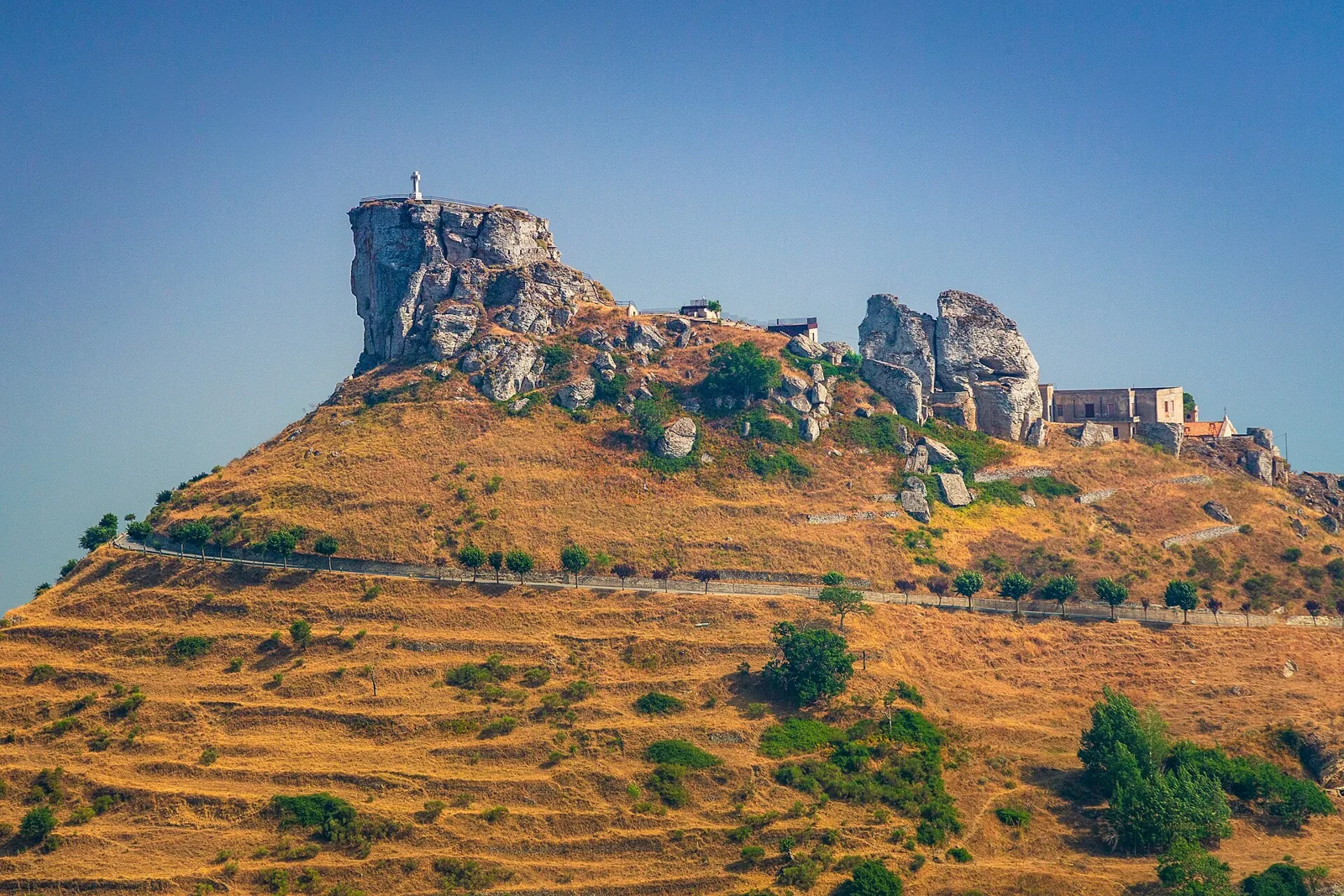
Initially, the centre of local civilisation was located on the coast, in the seaside town of Delia, founded by Greek colonists. The situation changed dramatically in 440 AD, when a devastating raid by the Vandals triggered an era of instability and forced the population to seek refuge in the mountains. After raids and instability along the coast, part of the population moved into mountain settlements that were easier to defend, such as Bova. Unfortunately, echoes of conflict reached even there, as evidenced by the year 953, when the Arab emir Hassan al-Kalbi brutally plundered the settlement and deported many of its inhabitants to Africa as slaves.
Thanks to its rocky setting and scenic landscapes, Bova attracts not only tourists but above all researchers fascinated by its ancient heritage. In the historic centre, a particularly important landmark is the statue of Saint Leo, guiding visitors along the so-called "English Path", one of the village's most notable walking trails. Local legends attribute the founding of the city to an Armenian or Greek queen named Oichiste, who supposedly left her footprint in the rock at the very spot where the castle was later built. The history of Bova also includes culinary traditions, among them lestopitta – a local flatbread that remains one of the recognisable flavours of the Grecanico area.
In the context of Greek influences, Bova plays a key role in preserving the language and traditions of its ancestors. Its architecture, cuisine, rituals and local memory show how Greek, Byzantine and Calabrian history overlapped here over the centuries. Contemporary Bova retains its traditional character while consciously working to protect the heritage that forms the basis of the local community's identity.
| Historical Era | Key Events and Phenomena | Socio-Political Impact |
|---|---|---|
| Neolithic (4th millennium BC) | Obsidian trade with the Aeolian Islands | Early integration into maritime trade |
| Magna Graecia | Foundation of the coastal colony of Delia | Establishment of strong Hellenic culture |
| 440 AD | Destruction of Delia by the Vandals | Beginning of mass abandonment of the coast |
| 953 AD | Sacking of the settlement by Hassan al-Kalbi | Deep demographic crisis and slavery |
| 1572 | Abolition of the Greek-Byzantine rite | Official religious transition to Catholicism |
Heritage and the Struggle for Survival – Griko Culture in Bova
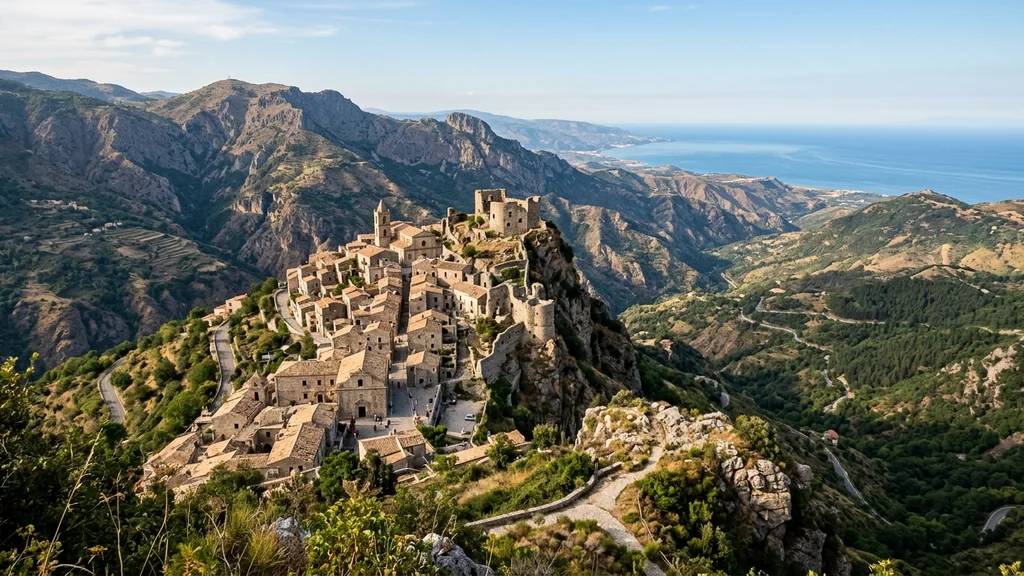
Bova, picturesquely situated on the eastern slopes of the Aspromonte massif, is widely known as the main stronghold of Greek culture in southern Calabria. Locals speak the Griko dialect, which has its roots in Byzantine times, though the latest linguistic research has cast entirely new light on the matter. German linguist Gerhard Rohlfs proved that this speech contains archaic elements deriving directly from the Doric Greek of ancient colonists. The survival of this language in Bova is a fascinating testament to cultural continuity stretching unbroken for over 2,800 years.
The Roots of Griko – A Struggle for Identity
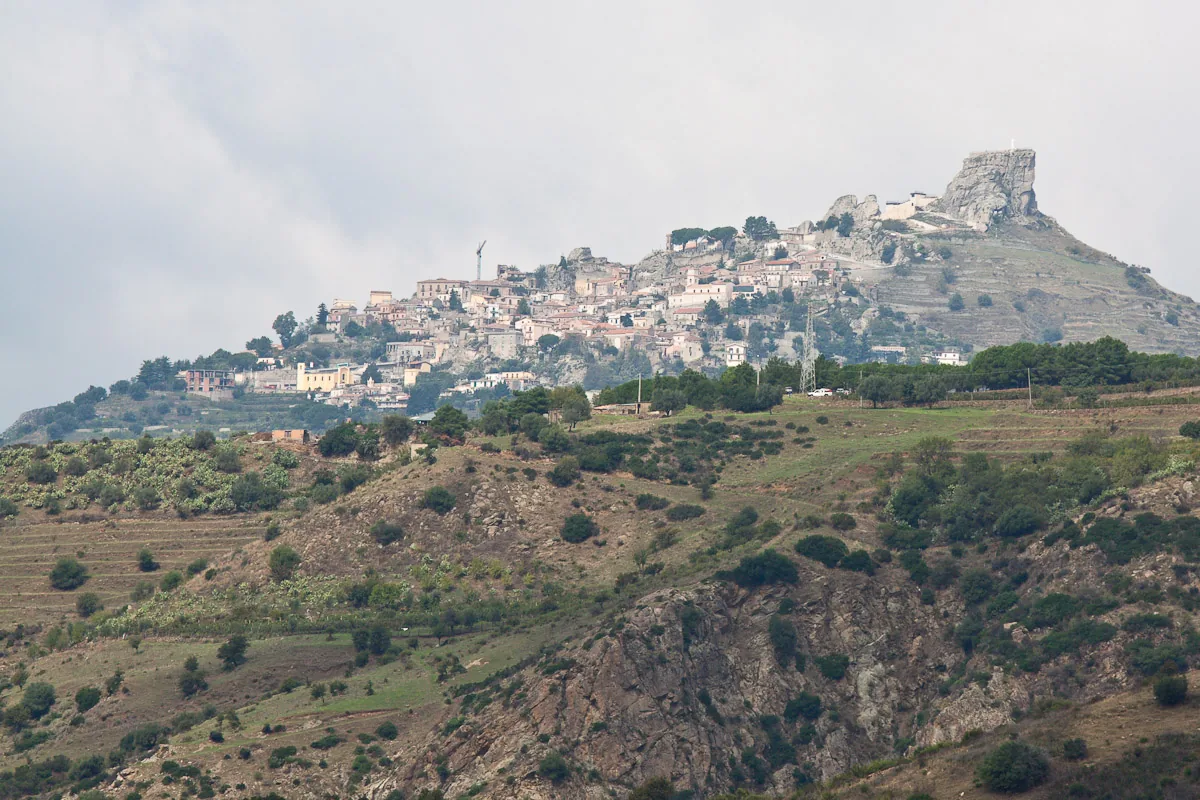
Griko draws heavily from ancient Greek and Byzantine traditions, with the period of strongest influence dating from the 6th to the 11th century, when southern Calabria was a jewel of the Eastern Roman Empire. The inhabitants of Bova have preserved these elements in their customs with great devotion, making their village a true phenomenon on the map of Italy. Remarkably, the Greek-Byzantine religious rite survived here until 1572, when the Cypriot bishop Giulio Stavriano definitively imposed the Latin liturgy. The streets of the town are still full of monuments that silently bear witness to this rich and often turbulent history.
Contemporary Culture – Challenges and Hopes
Today the Griko dialect is still alive, though it is spoken mainly by the oldest generations, and the number of active users has dropped drastically below two thousand people. Old-fashioned folk songs known as kantàdhji, as well as poetry, are excellent examples of how the language still finds its place in the daily routine of residents. Younger generations are increasingly switching to Italian, which poses serious challenges for the minority. For this reason, the dialect currently appears on the UNESCO list as a severely endangered language.
Promotion and Protection – Rescue Initiatives
Initiatives aimed at protecting and promoting the Griko heritage of Bova are numerous and grow stronger every year. In the neighbouring town of Bova Marina, an annual summer school called "To Ddomadi Greko" is organised, attracting participants for intensive classes in the Greek language of Calabria, as well as cultural and field events. Activist Mimmo Nucera also played an enormous role in this linguistic revitalisation, helping to transform the village of Gallicianò into the symbolic acropolis of Magna Graecia. Bova protects tradition not through declarations, but through language learning, music, local festivals and the everyday use of memory about its Grecanico roots.
Culinary Treasures of Bova – Traditional Flavours of Calabria
Bova, situated in the remote region of Calabria, is famous not only for its breathtaking landscapes but also for a rich culinary tradition shaped by harsh agro-pastoral conditions. The mountainous terrain of the high Aspromonte meant that goat farming, rather than cattle raising, became the foundation of local survival. One of the most important elements of the culinary heritage of this place is lestopitta, a simple flatbread made from flour, water, olive oil and salt, recognised as a speciality of Bova and the Grecanico area.
Lestopita and Goat Specialities – The Dietary Foundation
Lestopitta, prized for its simplicity, is prepared from just a few ingredients: wheat flour, water, olive oil and a pinch of salt. The dough is kneaded by hand, rolled into thin round flatbreads and fried in hot oil; it is served warm. The true king of local tables, however, is capra alla vutana – goat meat braised for five to six hours in a large copper pot called a caddara. Thanks to the use of good olive oil and herbs from the surrounding hillsides, these dishes are filling, expressive and strongly tied to the pastoral character of the place.
Traditional Dishes and Cultural Influences
The cuisine of Bova is distinguished by the intersecting influences that have shaped this isolated region over the centuries. Ancient Greek culinary traditions combined with Italian craftsmanship are easily discernible in local recipes, while the robust red Palizzi IGT wines served with meals cut well through the richness of braised meats. Dishes featuring fish and seafood are also popular, recalling Bova's historic connection to the coastal lands of Delia.
Examples of exceptional dishes include maccaruni cu sugu i capra, hand-rolled pasta served with a thick, slow-cooked goat sauce. An absolute ethnographic phenomenon is the Musulupu cheese, shaped in intricately carved wooden moulds called musulupare, which is traditionally consumed during the Easter period. Among desserts, pastries made with almonds or lemon are particularly noteworthy, as a sweet reflection of the southern Italian culinary tradition.
- Lestopitta – an ancient "quick bread" made from flour and water, fried and always served piping hot.
- Musulupu – a fresh cheese made from sheep's and/or goat's milk, shaped in carved wooden moulds; the name's etymology is uncertain, and one hypothesis links it to the expression "muso del lupo".
- Maccaruni – traditional pasta shaped using a thin metal rod called a ferretto, perfectly absorbing sauces.
Watch on YouTube
Tourist Attractions of Bova – Discovering the Charms of a Calabrian Village
Bova, known for its strategic position in the heart of the mountains, offers visitors a combination of history, culture and the rugged landscape of the Aspromonte. This small municipality bears the title of one of the "Most Beautiful Villages in Italy" and is a good place for travellers interested in antiquity and the heritage protected by the Aspromonte UNESCO Global Geopark. The best place to start exploring is the historic centre, because most of the main points of interest are within walking distance.
First and foremost, the ancient centre of Bova deserves attention, dominated by the preserved ruins of the Norman castle on the summit of Monte Rotondo. Stone alleyways wind among traditional houses, and from the higher viewpoints you can see the valleys and the Ionian Sea. The most important religious monument is the Cathedral of Santa Maria dell'Isodia, which houses a magnificent Renaissance sculpture of the Madonna and Child by Rinaldo Bonanno from 1584. The central point of the village is also the statue of Saint Leo, the patron of the town and a 12th-century monk whose relics rest in a nearby sanctuary.
An extraordinarily fascinating element of the town's public space is the Sentiero della Civiltà Contadina, or the Path of Peasant Culture. This open-air museum, designed by emigrant Saverio Micheletta, consists of enormous traditional farming tools integrated directly into the village's narrow alleyways. The route was created from July 2014 until its inauguration in August 2015. In Bova's streets you can see, among other things, millstones from watermills and animal-powered mills, presses and torchi from olive mills, palmenti for pressing grapes, drinking troughs and devices used to extract bergamot essence. Local sources state that until the early 20th century Bova had 9 watermills and 14 frantoi, so the path is not decoration but a record of the village's former economy.
Bova is also known for its Greek-speaking community, and one of the most important places connected with this identity is the Museo della Lingua Greco-Calabra "Gerhard Rohlfs". The museum is dedicated to the Greek language of Calabria and the heritage of the local minority. It is located at Via Sant'Antonio, 89033 Bova; telephone: +39 0965 762013. It is a good stop for anyone who wants to understand why language and the memory of Magna Graecia have survived so long in this part of Calabria.
For those wishing to actively explore the area, Bova makes an excellent base for hiking in the region of the so-called Valley of Great Rocks. Geological formations such as the mighty Rocca del Drago (Dragon Rock) fire the imagination and, according to legend, once served mythical beasts. A true tourist highlight is the Sentiero dell'Inglese – a 110-kilometre trail traced in the footsteps of English traveller Edward Lear, who was captivated by these landscapes in 1847. A visit to Bova is a journey from ancient roots to living traditions, best suited to travellers who prefer the quiet of stone alleyways to the rhythm of seaside resorts.
Bova – The Cultural Heart of Calabria
Bova, situated in the picturesque part of the former province of Reggio Calabria, is a place where the influences of ancient Greece are visible in language, rituals and local memory. The settlement does not need large commercial events to attract visitors: its strength lies in its stone alleyways, traces of Grecanico culture and the residents' everyday attachment to tradition. Preserving its Graeco-Italian roots, Bova offers travellers an experience different from modern resorts on the coast.
A particularly spectacular example of local religious syncretism is the Pupazze ritual, held every Palm Sunday. Residents create female figures from olive branches and leaves, reeds, flowers, fruit and seasonal gifts of nature, making a reference to the ancient myth of Persephone. These figures are solemnly carried to the church and, after being blessed, are dismantled so that the consecrated branches – called steddhi – can protect homes from evil.
Music is another powerful vehicle for identity, as evidenced above all during the August festival of Paleariza, which brings the entire Bovesìa to life. The event promotes the playing of traditional instruments such as the Calabrian lyre and the double flute, which are often hand-carved by the artists themselves. Another important date in the local calendar is 5 May, the feast day of Bova's patron saint, Saint Leo, or San Leo. Saint Leo is also co-patron of the Archdiocese of Reggio Calabria-Bova. During a stay in Bova, the local delicacies are also worth appreciating, such as lestopitta – a dish associated with the simple hospitality of the Grecanico villages.
Bova remains a key point on the cultural map of southern Italy. The survival of the ancient spirit is not a tourist slogan here, but the result of the local community's work: from protecting the language, through religious festivals, to cuisine and music. That is why it is best explored slowly, with time for conversation, the museum and a walk through alleyways where farming tools stand beside signs of Grecanico memory.
Frequently Asked Questions
Where is the village of Bova in Calabria?
Bova is located in the Reggio Calabria area, on the south-eastern slopes of the Aspromonte massif. The town sits at an altitude of around 820 metres above sea level, which historically provided it with a natural defence against attacks from the Ionian Sea coast.
What monuments are worth seeing in Bova?
The most important monuments include the ruins of the Norman castle on the summit of Monte Rotondo and the Cathedral of Santa Maria dell'Isodia with its Renaissance Madonna sculpture. It is also worth strolling along the Path of Peasant Culture (Sentiero della Civiltà Contadina), a unique open-air farming museum.
How do I get to Bova from Reggio Calabria?
The easiest way from Reggio Calabria is by car, taking the SS106 (Jonica) national road to Bova Marina and then the SP24/intermunicipal Bova Marina–Bova road to the historic centre. Without a car, you can take the Reggio Calabria–Metaponto train line to Bova Marina station, then continue by Autolinee Federico bus or taxi.
What characterises Graeco-Calabrian culture in Bova?
This culture is distinguished above all by the use of the Griko dialect, which has its roots in ancient Doric Greek. It also manifests itself in unique rites, such as the Pupazze procession on Palm Sunday, and in traditional music featuring the Calabrian lyre.
When is the best time to visit the town of Bova?
The best time to visit is spring, particularly during Easter, to witness the Pupazze ritual in person. August is also an excellent choice, when the Paleariza music festival takes place, buzzing with life and local folklore.
Is Bova one of the most beautiful villages in Italy?
Yes, Bova officially appears on the prestigious "I Borghi più belli d'Italia" (Most Beautiful Villages of Italy) list. It owes this title to the excellent preservation of its historic architecture and the remarkably harmonious integration of its medieval buildings into the rugged Aspromonte mountain landscape.
Top Attractions
Getting there
Reggio Calabria Airport (REG) is closer – about 50 km from Bova, with direct flights from Katowice (Ryanair) as well as from Rome and Milan. Lamezia Terme (SUF) is farther away but offers wider connections.
From Reggio Calabria Airport, take the SS106 to Bova Marina, then the SP24/intermunicipal Bova Marina–Bova road to the historic centre. The section from Bova Marina to Bova is about 10–14 km and follows a winding mountain road. The whole journey from Reggio Calabria usually takes around one hour.
Without a car, the best option is to take the Reggio Calabria–Metaponto train line to Bova Marina station, then continue by bus or taxi. Bus services are operated by Autolinee Federico; according to local information, they usually run about twice a day, depending on the period. Check the current timetable before travelling, as services are infrequent.
Sentiero dell'Inglese – a 110 km trail from the Ionian coast through the Greek villages of Aspromonte.
Last updated: