Calabria is the birthplace of Italian winemaking – ancient Greeks were so impressed by its hillside vineyards that they named the region Enotria, “land of the vine.” Today the region offers 1 DOCG, 9 DOC appellations and 10 IGP/IGT designations. From the indigenous Gaglioppo grape come some of southern Italy’s most distinctive red wines, often far removed from the anonymous style of Italy’s large export regions.
Table of Contents
History – from Enotria to DOCG
When Greek colonists established settlements along Calabria’s Ionian coast in the 8th–7th centuries BC, they found the local Oenotrian people already cultivating vines. Near present-day Cirò Marina, a wine called Krimisa was produced – tradition holds it was offered to victors at the ancient Olympic Games. Pliny the Elder, writing in the 1st century AD, listed Calabrian wines among the finest on the Italian peninsula.
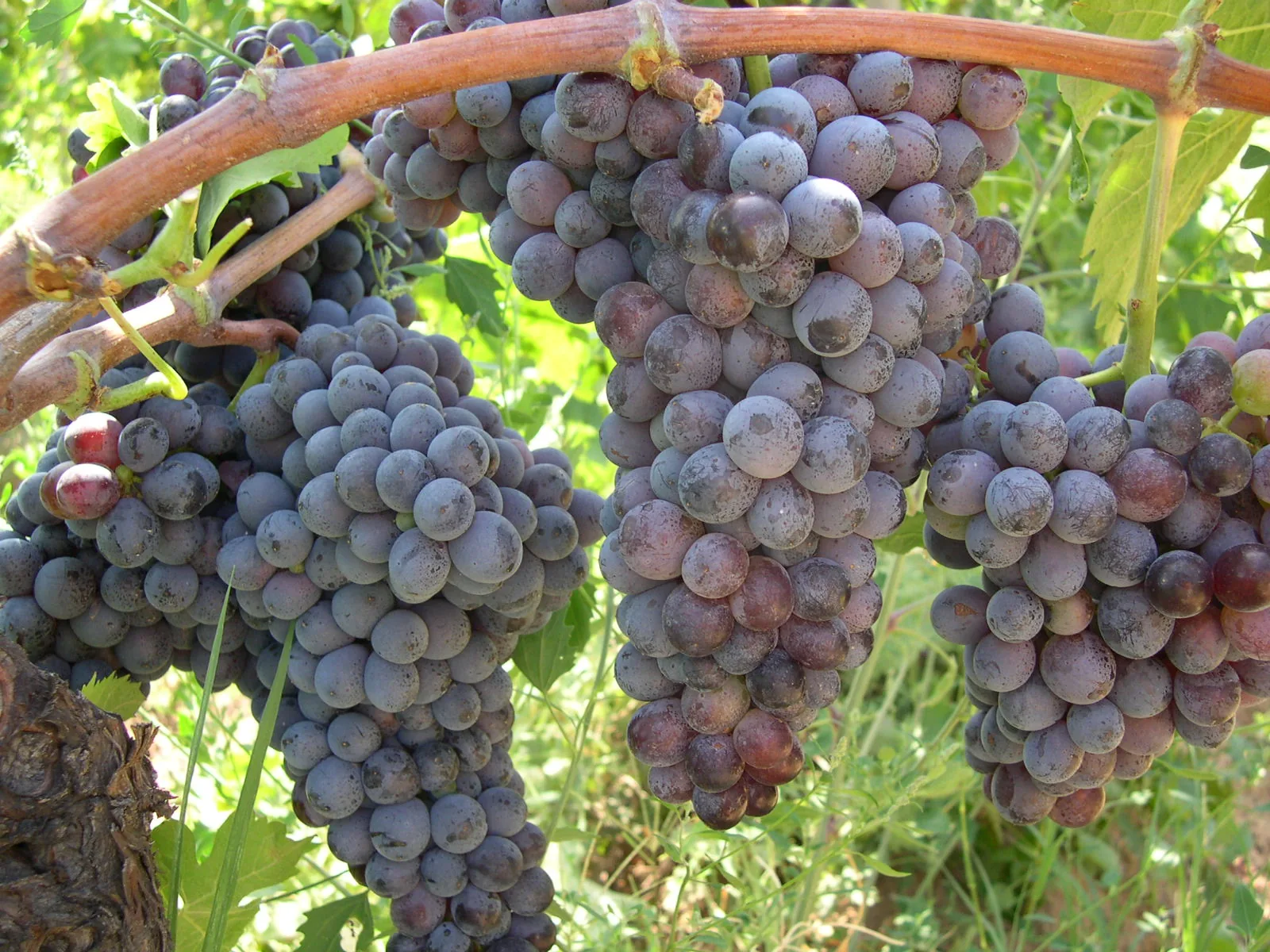
For centuries, Calabria served as a vast reservoir of bulk wine – over 90% of production went to cooperatives and was used for blending with northern Italian wines. The turning point came in the 1960s: in 1969, Cirò DOC was established as Calabria’s first controlled appellation. Today the region’s highest quality category belongs to the separate Cirò Classico DOCG denomination, reserved for red wine from the municipalities of Cirò and Cirò Marina.
The modern quality story began with the Italian DOC appellation system, introduced in 1963. After Cirò DOC came further important milestones: Savuto DOC in 1975, Greco di Bianco DOC in 1980, Bivongi DOC in 1996 and Terre di Cosenza DOC in 2011. In the 1980s and 1990s, Calabria gradually moved away from selling wine in bulk towards bottling and promoting indigenous varieties, above all Gaglioppo, Magliocco and Greco Bianco.
Key grape varieties
About 60% of Calabrian production is red wine. The region is known for indigenous varieties rarely found outside Calabria:
- Gaglioppo – the “king of Calabria.” The red grape at the heart of Cirò Classico DOCG wines (minimum 90% of the blend; up to 10% may be Magliocco and Greco Nero). It produces wines with a deep brick-red colour, firm tannins, and aromas of dried cherries, leather, and Mediterranean herbs. It has been genetically linked to Sangiovese, but its origin is not described by a single, certain scenario.
- Magliocco Dolce / Magliocco – the dominant grape in Terre di Cosenza DOC rosso (minimum 60% of the blend; locally also Arvino, Mantonico nero, Lacrima or Guarnaccia nera). Yields intensely coloured, powerfully structured wines with notes of blackberry and spice.
- Greco Nero – a native Calabrian red used in Savuto and Donnici DOC wines, often blended with Gaglioppo.
- Greco Bianco – a white grape of ancient pedigree, the basis of the legendary Greco di Bianco DOC dessert wine. Produces golden wines with notes of bergamot, honey, orange blossom, and apricot.
- Mantonico – a white variety from the Reggio Calabria province, used in wines with aromatic intensity and good acidity. Increasingly vinified as a single-varietal wine.
- Pecorello – a rare white grape from the Cosenza area, producing mineral, fresh wines with citrus and white-flower notes.
Local grape naming in Calabria can be confusing. Among the red varieties with the name Magliocco, several related terms exist, and Magliocco Canino and Magliocco Dolce are not the same thing. Similarly with the name “Greco” – Greco Bianco used, among others, for Greco di Bianco is a local Calabrian variety, not the same as Campania’s Greco di Tufo.
Wine regions and appellations
Calabrian vineyards stretch from the Ionian coast to the slopes of the Aspromonte and Sila massifs. The table below presents a selection of the most important appellations:
The greatest stylistic differences are seen between the Ionian zones and the cooler interior. The Cirò and Melissa coastline is warmer, drier and strongly influenced by the sea, with clay-limestone soils favouring riper red wines. The Cosenza and Savuto areas, at higher altitude with greater temperature swings, typically produce a fresher profile; across Calabria, vineyards range from sea level to around 500–600 metres, which strongly affects acidity and ripening.
| Appellation | Main grapes | Wine style | Area |
|---|---|---|---|
| Cirò Classico DOCG | Gaglioppo (min. 90%; up to 10% Magliocco and/or Greco Nero) | Dry red | Province of Crotone, Ionian coast |
| Greco di Bianco DOC | Greco Bianco min. 95% (up to 5% other permitted white varieties) | Passito – sweet dessert (min. 17% ABV) | Municipality of Bianco and part of the municipality of Casignana (prov. Reggio Calabria) |
| Terre di Cosenza DOC | Magliocco, Greco Nero | Structured reds | Hills around Cosenza |
| Melissa DOC | Gaglioppo, Greco Bianco | Red, white | Province of Crotone |
| Savuto DOC | Gaglioppo, Greco Nero, Magliocco | Lighter reds, rosé | Savuto river valley (mountain terrain) |
| Lamezia DOC | Nerello, Gaglioppo, Greco Bianco | Red, white, rosé | Lamezia Terme plain |
| Bivongi DOC | Gaglioppo, Greco Nero, Greco Bianco | Red, white, rosé | Ionian foothills around Bivongi and Stilo, in the metropolitan area of Reggio Calabria |
Calabria currently has 9 DOC appellations: Bivongi, Cirò, Greco di Bianco, Lamezia, Melissa, S. Anna di Isola Capo Rizzuto, Savuto, Scavigna and Terre di Cosenza; the former Donnici, Pollino, San Vito di Luzzi and Verbicaro function as subzones of Terre di Cosenza DOC. In addition, there is 1 DOCG and 10 IGP/IGT designations: Arghillà, Palizzi, Calabria, Pellaro, Costa Viola, Scilla, Lipuda, Val di Neto, Locride and Valdamato.
Cirò Classico DOCG covers only the entire territory of the municipalities of Cirò and Cirò Marina. It is red wine only, based on a minimum of 90% Gaglioppo, with Magliocco and/or Greco Nero permitted up to 10%. Minimum ageing is 36 months from 1 January after the harvest, including at least 6 months in wood, so the DOCG is not a simple replacement for all wines from the wider Cirò area.
Greco di Bianco deserves a special mention. It is one of the oldest wines in Italy – grapes are sun-dried for 10–15 days, yielding a dense, amber passito with notes of toasted almonds, sage, and dried apricots. Annual production is minuscule, making it a genuine collector’s rarity.
This wine is produced exclusively in a small area around Bianco and part of the municipality of Casignana on the Costa dei Gelsomini. Traditionally, it was associated with home production and the festive table, and its style relies on partially dried Greco Bianco grapes and oxidative ageing. In the glass, you can usually expect dried apricot, orange peel, honey, herbs and almonds, while the high concentration of sugar and alcohol lends it an almost liqueur-like depth.
Watch on YouTube
Wineries worth knowing
The modern revolution in Calabrian wine is the work of a handful of families who bet on quality and indigenous grapes:
- Librandi (Cirò Marina) – the region’s greatest ambassador, founded in 1953 by Raffaele Librandi. Today the estate spans 232 hectares of vineyards with an output of 2.5 million bottles per year. Flagship wine: Gravello (Gaglioppo/Cabernet).
- Ippolito 1845 (Cirò Marina) – Calabria’s oldest winery, with over 100 hectares in the classic Cirò zone. Speciality: single-varietal Gaglioppo bottlings, including Ripe del Falco – the flagship cuvée from the oldest vineyards.
- Cantine Lento (Lamezia Terme) – the Lento family links a key stage in its history with 1963; later it supported the birth of Lamezia DOC in 1978. Known for clean, elegant white wines.
- ‘A Vita (Cirò) – a young estate run by Francesco De Franco, emblematic of the new wave of natural Calabrian wines from Gaglioppo. Minimal intervention, spontaneous fermentation.
Before visiting, remember that tasting offers, prices and tour languages change seasonally. In practice, a tasting usually costs around €15–35 per person, and premium versions can be more expensive. English is not guaranteed at every small winery, so it is best to write via email or WhatsApp 1–2 days in advance; on Sundays and public holidays, availability may be limited.
Wine tourism – how to explore Calabrian wines
Calabria still has intimate wine tourism: fewer ready-made packages than Tuscany or Piedmont, but more direct contact with producers. Tastings are usually simple, concrete and closely tied to local food. Practical tips:
- Best time – for a wine tourism trip, aim for May–June or September–October. The grape harvest in Calabria usually runs from late August to October, depending on the zone and variety.
- Tastings – most wineries require 24–48 hours' advance booking. Visiting options in the Cirò and Cirò Marina area vary, but without prior contact you may easily find a closed gate.
- Getting there – without a car, access is limited, as many estates lie outside town centres. The nearest airport to the Cirò and Cirò Marina zone is Crotone; you can also reach the Cirò/Cirò Marina stations by the Ionian railway line, but the last stretch usually requires a taxi or car.
- Food pairings – Cirò Rosso pairs beautifully with Calabrian staples: ’nduja, caciocavallo silano, and soppressata. Serve Greco di Bianco with almond-based desserts and mostaccioli biscuits.
It is best to treat the Cirò and Cirò Marina area as the natural centre of wine tourism on the Ionian coast, rather than looking for a single officially named route. Cirò DOC covers the entire municipalities of Cirò and Cirò Marina and parts of the municipalities of Melissa and Crucoli. The new Cirò Classico DOCG is narrower and covers only Cirò and Cirò Marina, which helps when planning producer visits and reading labels.
Combine a winery visit with exploring Calabrian cuisine more broadly – in this region, wine and food are inseparable.
Calabrian wine – frequently asked questions
What is the most famous wine from Calabria?
Cirò – the most famous name of the region, and its highest quality category today is Cirò Classico DOCG. Made mainly from the Gaglioppo grape, it has a tradition stretching back to ancient Greece. Expect a full-bodied, tannic red with notes of dried cherries and herbs.
What is Greco di Bianco and why is it so rare?
Greco di Bianco DOC is a sweet dessert wine (passito) produced exclusively in the municipality of Bianco and part of the municipality of Casignana in the province of Reggio Calabria. The grapes are sun-dried for 10–15 days, and the wine must reach a minimum of 17% ABV. The tiny cultivation area means annual production is minimal.
Is it worth visiting wineries in Calabria?
Absolutely. Calabria is one of Italy’s last wine regions without mass tourism. Wineries in the Cirò area and other parts of the region often offer tastings at prices lower than in Tuscany or Piedmont, but you usually need to book your visit in advance.
What Calabrian wine should I bring home?
For reds: Cirò Rosso Superiore / Superiore Riserva DOC or Cirò Classico DOCG (Gaglioppo). Prices depend on the producer and vintage. For whites: wines from the Pecorello grape made by producers around Cosenza. For collectors: a bottle of Greco di Bianco passito (€20–40), if you can find one.
Is Gaglioppo the same as Sangiovese?
No. These varieties have been genetically linked, but Gaglioppo is not the same as Sangiovese. In practice, it produces wines with a different profile – more tannic, with a distinctive character of Mediterranean herbs and dried fruit.
Last updated: