The Cipolla Rossa di Tropea – the red onion of Tropea – is one of the most celebrated food products in all of southern Italy. Sweet, juicy, and intensely violet-red in colour, it has been a cornerstone of Calabrian cuisine for years and a regional symbol recognised far beyond the borders of Tropea. Every August, the area comes alive during the Sagra della Cipolla Rossa – a festival that celebrates this extraordinary product with music, dancing, and genuine feasting.
Table of Contents
Cipolla Rossa – History and Significance
According to local tradition, red onion cultivation on the Tyrrhenian coast of Calabria has a very long history and is sometimes linked to antiquity. It is an important element of the region's culinary landscape, though when it comes to the earliest origins, it is better to speak of hypotheses than of certain, unambiguously confirmed facts.
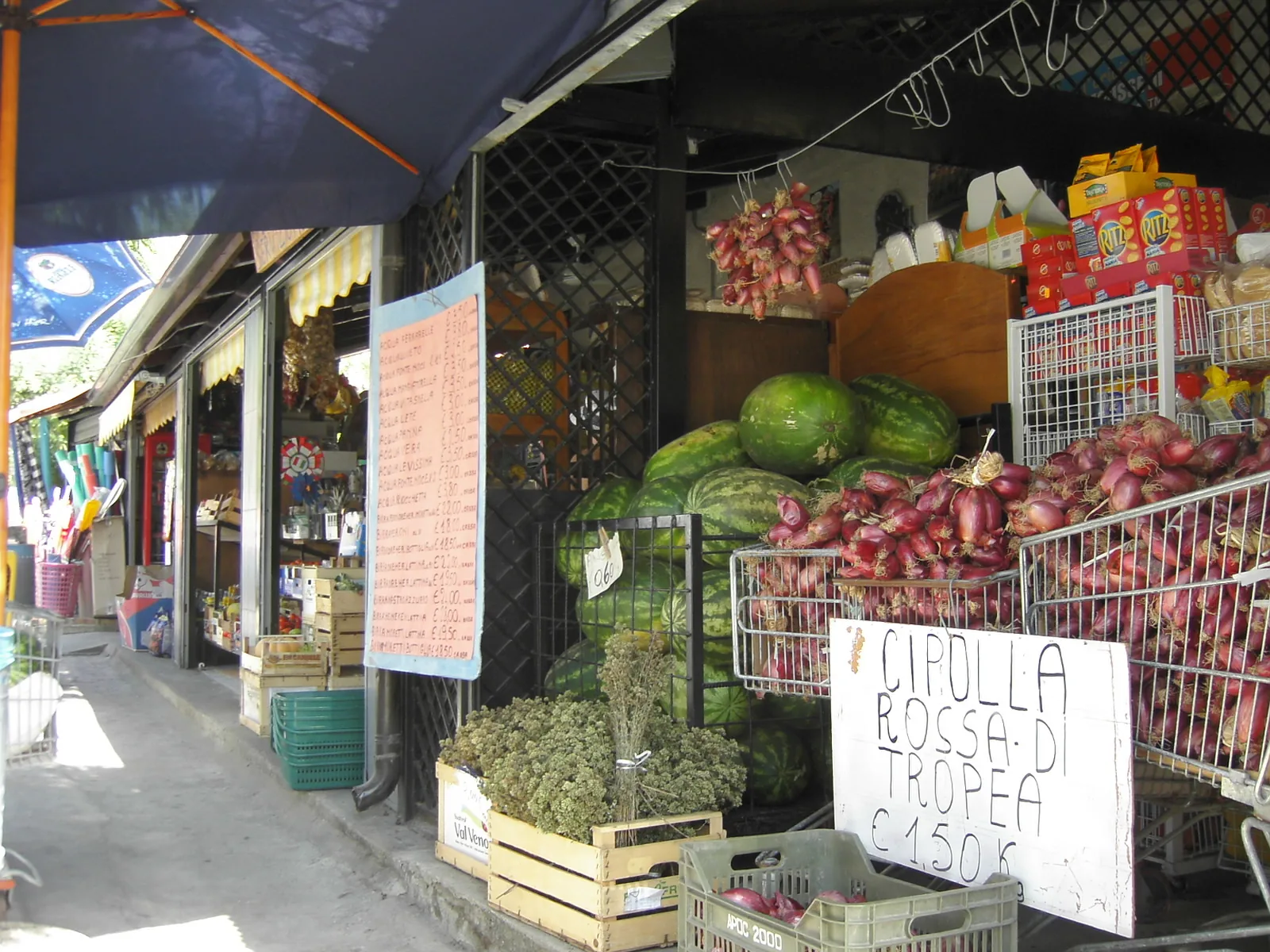
In 2008, the Cipolla Rossa di Tropea Calabria received IGP certification (Indicazione Geografica Protetta – Protected Geographical Indication), guaranteeing that genuine Tropea onions originate exclusively from a defined production area. The production zone includes suitable areas located wholly or partly in selected municipalities in the provinces of Cosenza, Catanzaro, and Vibo Valentia: among them Fiumefreddo, Longobardi, Serra d’Aiello, Belmonte, Amantea; Nocera Terinese, Falerna, Gizzeria, Lamezia Terme, Curinga; and Pizzo, Vibo Valentia, Briatico, Parghelia, Zambrone, Zaccanopoli, Zungri, Drapia, Tropea, Ricadi, Spilinga, Joppolo, and Nicotera.
The full protected product name is Cipolla Rossa di Tropea Calabria IGP. In the EU system, the IGP designation protects a name linked to a specific geographical area and production specification, and the area itself is not limited to the town of Tropea – it refers to a clearly defined stretch of Calabria's Tyrrhenian coast in the provinces of Vibo Valentia, Catanzaro, and Cosenza.
The IGP specification identifies three native ecotypes and three commercial product types:
- Tondo Piatta (primaticcia) – indicatively harvested from mid-April to the end of May
- Mezza Campana (medio-precoce) – indicatively harvested from mid-May to mid-June
- Allungata (tardiva) – indicatively harvested from mid-June to the end of July; the product is sold in the following types: cipollotto, cipolla da consumo fresco, and cipolla da serbo
The secret of the Tropea onion's sweetness lies in its exceptionally high sugar content and low sulphur levels, which means it can be eaten raw without tears or burning. The mild maritime climate and sandy, sandy-clay, or clay soils, often of alluvial origin, create conditions that favour the exceptional quality of the Tropea onion.
Cipolla Rossa di Tropea Calabria is now one of Calabria's most recognisable regional products, alongside ’nduja from Spilinga, bergamot from the province of Reggio Calabria, and liquorice from the Rossano area. In local cooking it appears both raw and preserved – in salads, jams, marinades, and as an accompaniment to cheeses and meats. Thanks to its exceptionally mild flavour, it has become a culinary ambassador for the region throughout Italy.
Watch on YouTube
Sagra della Cipolla Rossa – The Festival
The main onion celebration – the Sagra della Cipolla Rossa – takes place in Ricadi, a commune a few kilometres from Tropea. The historic Sagra della Cipolla Rossa in Ricadi is held on 13 August on Piazza Marconi. Local sources state that the event has been organised since 1978 by the Associazione culturale “Insieme per Ricadi” under the patronage of the Comune di Ricadi. For the 2026 edition, the Comune di Ricadi has confirmed the event date: 13 August 2026.
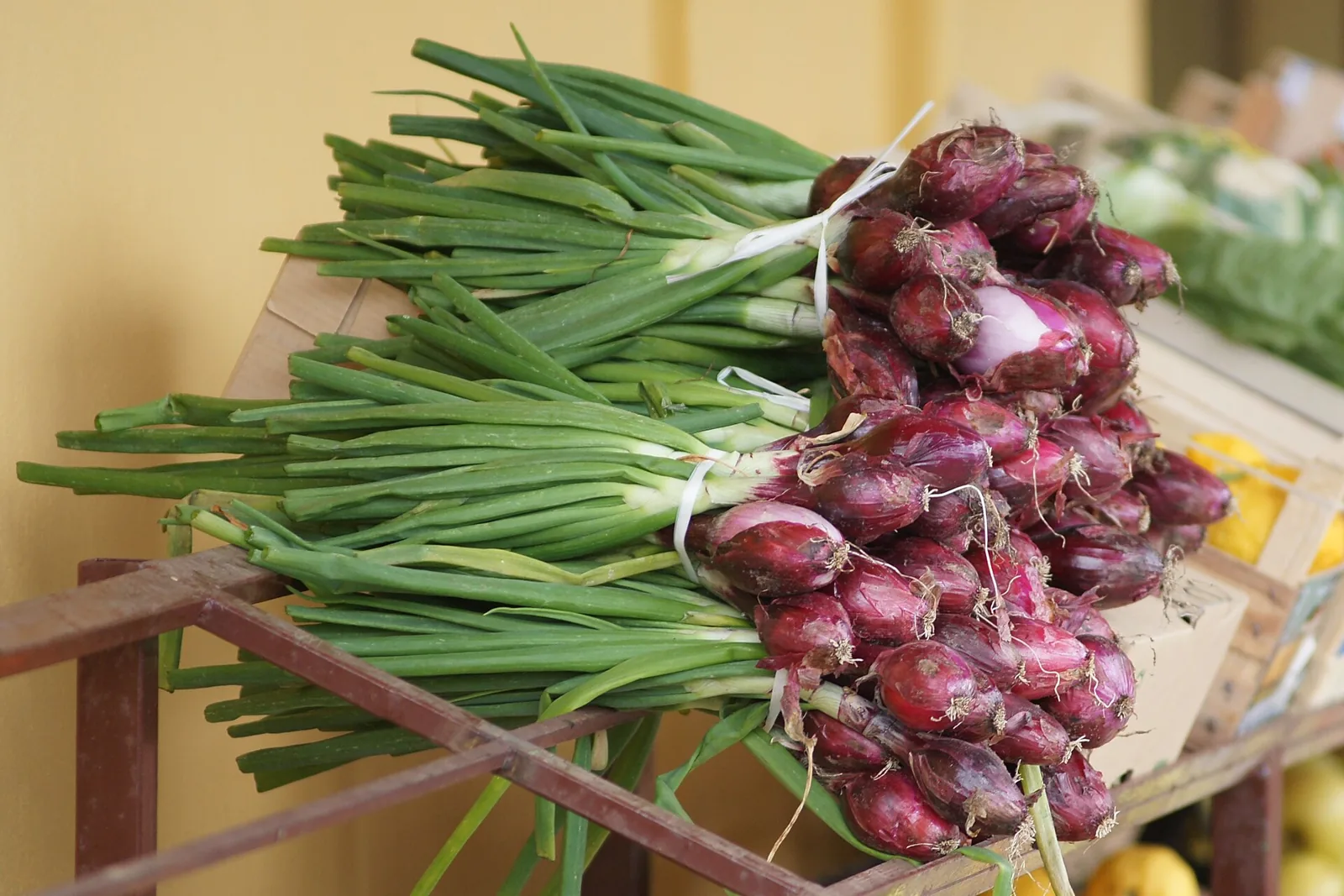
Stalls on Ricadi's main square offer dishes built around the red onion: onion soup, onion frittata, onion focaccia, grilled onion, battered onion, and dozens of other variations. The star of the evening is marmellata di cipolla rossa – onion jam, served with local cheeses (pecorino, caciocavallo) or on bruschetta. This combination of onion sweetness, cheese, and bread shows exactly why the Tropea onion so often appears in preserves and simple antipasti.
Beyond food, the festival features live music, traditional Calabrian songs and dances, and the evening atmosphere typical of summer sagre in southern Italy. Local programmes include folk games, the corsa dei sacchi, the corsa della cipolla, musical performances, balli, and canti popolari. Traditional giganti, fireworks, and the camejiuzzu di fuoco are also characteristic elements. It is a good opportunity to taste several versions of the same product and to see how deeply the Tropea onion is woven into the daily life of the area.
Ricadi lies about 8–10 km south-west of Tropea, so by car you can usually get there in 15–20 minutes. Regional Trenitalia trains also run between Tropea and stations on the Tropea–Ricadi line, though for evening events you should check the last return services. The festival itself is worth allowing 2–4 hours for, and if you combine it with the beaches of Capo Vaticano, half a day is best.
Where to Taste and What to Buy
You will find the Tropea red onion in virtually every restaurant and trattoria in the region, but a few experiences are particularly worth seeking out:
- Insalata tropeana – the classic salad of raw red onion, tomatoes, olives, and oregano, drizzled with olive oil. Simple, but the onion's sweetness makes it exceptional.
- Marmellata di cipolla – onion jam in versions ranging from the classic to variants with peperoncino or orange. An ideal travel gift – jars are available in local produce shops, botteghe, and at producers' stalls.
- Cipolla in agrodolce – sweet-and-sour onion, served as an antipasto or accompaniment to meats.
- Focaccia and torte salate with onion – one of the most natural ways to see how well this product works when baked.
- Jam with pecorino and caciocavallo – a simple, very Calabrian pairing that perfectly shows the balance between sweetness and savouriness.
Also look out for the onion served raw in insalata di pomodori e cipolla, or roasted or caramelised as an accompaniment to meats. It is in these simple dishes that you best understand why the Tropea product holds such a strong place in local cooking.
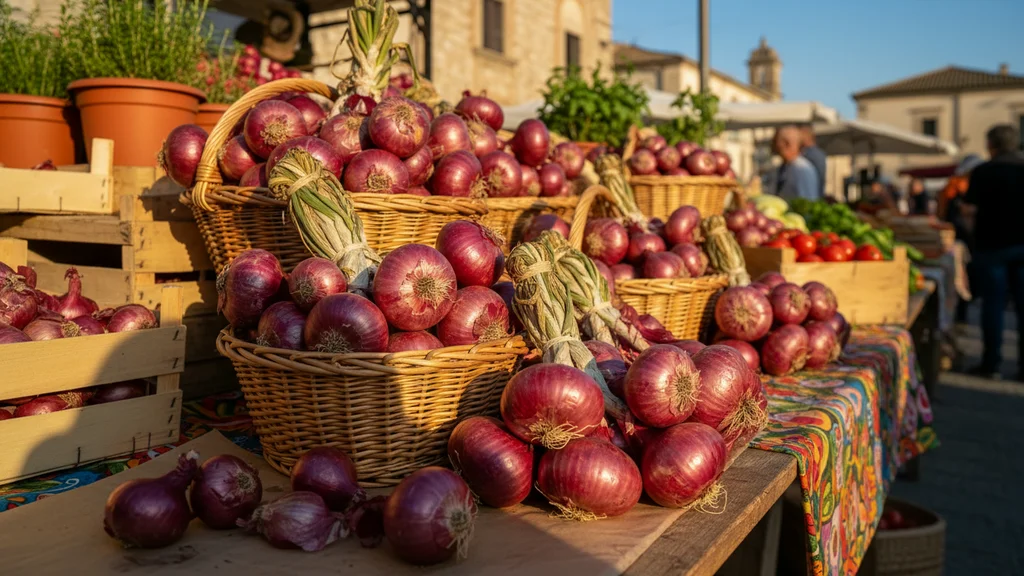
Fresh Cipolla Rossa di Tropea Calabria IGP is sold by weight or in braids and plaits, but retail prices depend on the season, the form of sale, and the harvest year, so it is better not to rely on one fixed price. Preserves – jams, chutneys, and onion in agrodolce – are widely available in botteghe, shops selling IGP products, and at producers' stalls. The most important buying tip is simple: look for the full name Cipolla Rossa di Tropea Calabria IGP on the label, not just the wording “cipolla di Tropea”.
The specification, as amended in 2013, requires containers to display the name Cipolla Rossa di Tropea Calabria IGP together with the product type: cipollotto, cipolla da consumo fresco, or cipolla da serbo, as well as the mark. Fresh onions for consumption are tied in bunches of 1.5–6 kg. Cipolla da serbo may be packed in bags or crates of up to 25 kg, or in plaits made up of at least 6 onions.
The Tropea onion also makes an excellent starting point for exploring the wider world of Calabrian cuisine, which combines simplicity of ingredients with depth of flavour.
Frequently Asked Questions
When does the Sagra della Cipolla Rossa take place?
The historic Sagra della Cipolla Rossa in Ricadi is held on 13 August on Piazza Marconi. For the 2026 edition, the Comune di Ricadi has confirmed the event date: 13 August 2026.
Does the festival take place in Tropea itself?
The historic Sagra is held in Ricadi, a few kilometres from Tropea. This is where the main celebration dedicated to the red onion takes place.
What makes the Tropea onion different from a regular red onion?
It is significantly sweeter due to its high sugar content and low sulphur levels. It can be eaten raw without tears. The flavour is mild, almost fruity – hence its use in jams and other preserves.
Where can I buy authentic Tropea onions?
In local shops selling regional products, botteghe, and at producers' stalls. Look for the full name “Cipolla Rossa di Tropea Calabria IGP” on the label, as well as the product type: “cipollotto”, “cipolla da consumo fresco”, or “cipolla da serbo”. Preserves, such as jams or onion in agrodolce, make an excellent culinary souvenir.
Last updated: