The Duomo di Stilo, or Chiesa Matrice Santa Maria d’Ognissanti in Stilo, is one of Calabria’s important religious monuments. Located in the historic town at the foot of Monte Consolino, it is an important point on a route through Stilo's medieval centre and shows well how successive eras overlapped in a single church. This place is best viewed not through the lens of a single style but as a church developed and transformed over centuries.
Sources preserve the tradition of an old episcopal seat in Stilo, but in the modern period Stilo was already linked to the Diocese of Squillace. After the 1986 reorganisation, the Archdiocese of Catanzaro-Squillace was created, but in 1989 the parishes of Stilo were transferred to the Diocese of Locri-Gerace. Today the local parishes belong to the Diocese of Locri-Gerace.
Table of Contents
Cultural and Architectural Heritage of Santa Maria d’Ognissanti in Stilo
Byzantine Foundation of the Cathedral
The history of the Duomo di Stilo is closely connected with the long period of Greek and Byzantine cultural presence in this part of Calabria, but the church itself should be described separately from the town's most famous monument, the Cattolica di Stilo. The Cattolica is a small Byzantine church usually dated to the 10th century, with a central plan featuring five domes and a nine-bay layout. The Duomo, or Chiesa Matrice Santa Maria d’Ognissanti, was the main town church, transformed in the late Middle Ages and the early modern period, with later Gothic and Baroque additions.
Analysis of the Duomo's structure requires understanding the context of the Stilaro river valley, which from the early Middle Ages served as a refuge for monastic communities. This is why the meeting of Greek and Latin traditions is so visible in Stilo, but one should not equate the form of the Cattolica with the architecture of the cathedral. In practice, the two monuments complement each other and are best viewed together, as they illustrate two different stages in the town's history.
Transformation under Norman Rule
During the Norman period and in the following centuries, the main church of Stilo continued to develop, and its form gradually acquired Western features. Today's Duomo should therefore be read as a building of late medieval and early modern character, rather than a central-plan temple on a Greek cross. The later phases of expansion and interior transformation explain well the present combination of Gothic and Baroque elements.
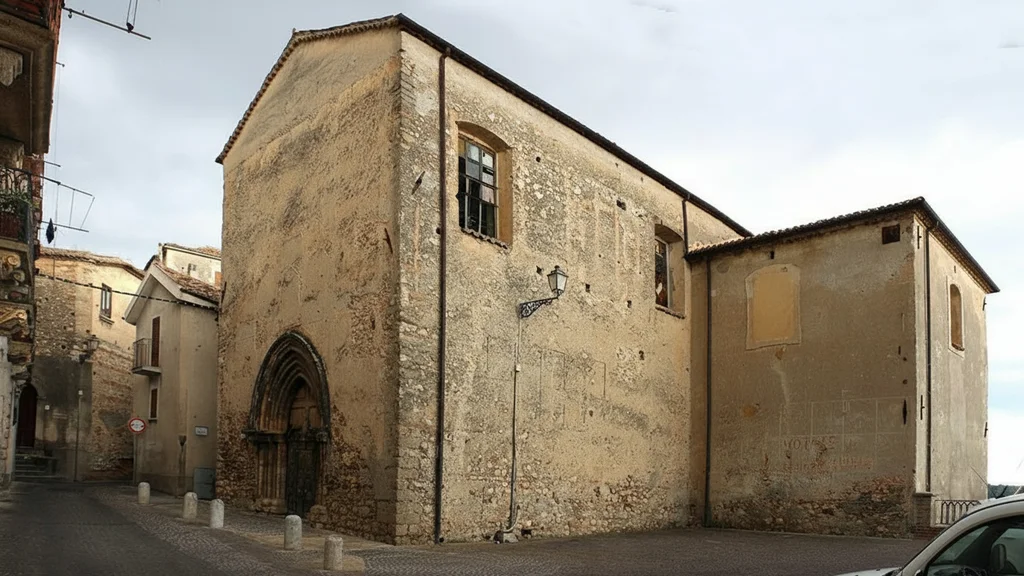
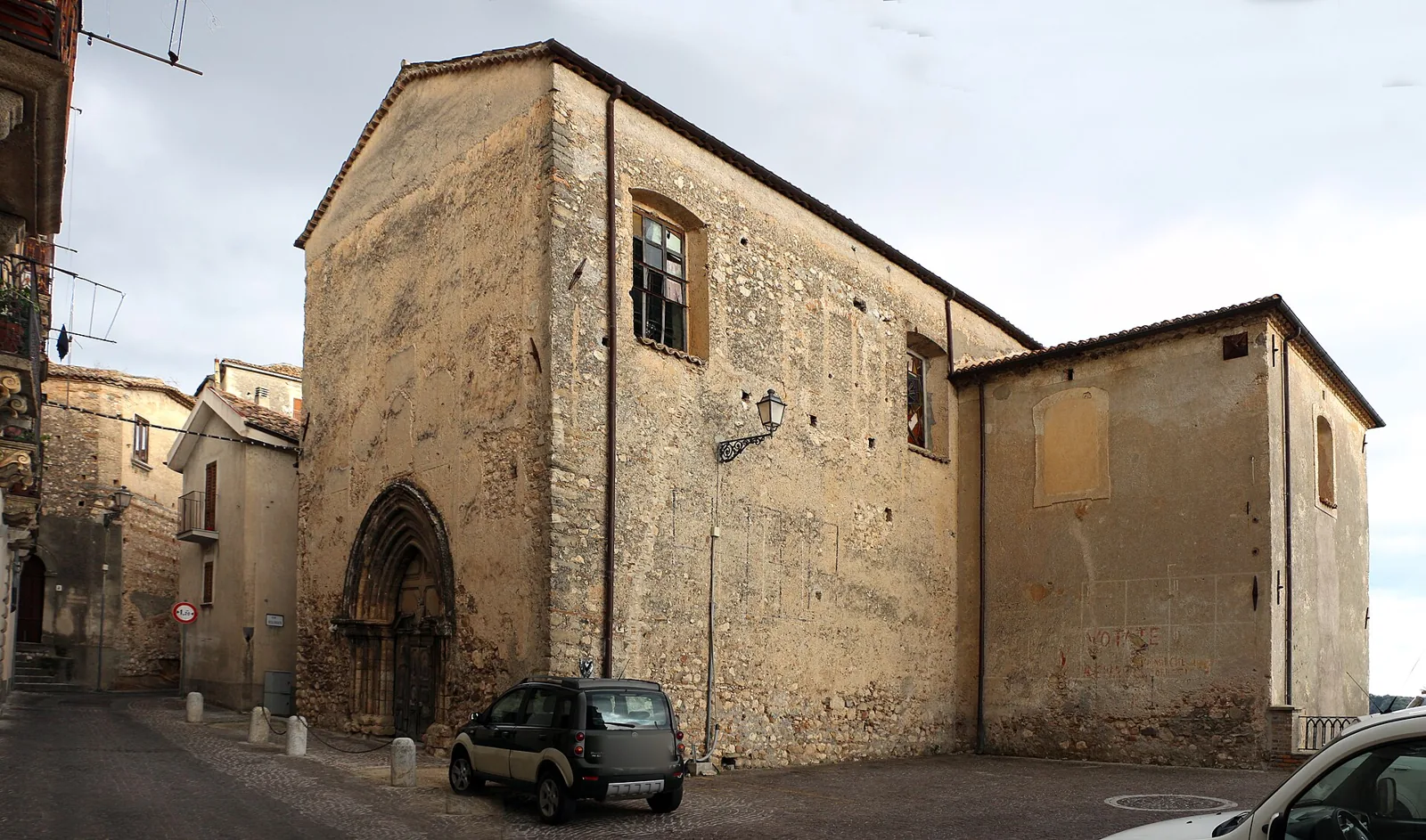
These influences demonstrate the adaptive character of the cathedral, which was rebuilt over the centuries according to liturgical needs and the possibilities of each period. The building survived the seismically difficult period in Calabria's history, especially after the catastrophic sequence of earthquakes in 1783, and its present appearance is the result of many interventions. In practice, it is the medieval portal and the later Baroque layers of the interior that best define the church's character today.
A Synthesis of Cultures
Santa Maria d’Ognissanti is an important testament to the religious and artistic transformations of Stilo, a town located at the meeting point of Greek and Latin traditions. Its significance derives not from the preservation of a pure Byzantine form but from the fact that, as the main town church, it was transformed along with political, liturgical and social changes.
| Comparative Parameter | Cattolica di Stilo | Duomo di Stilo (Chiesa Matrice) |
|---|---|---|
| Construction chronology | 9th – 10th century | 12th – 14th century (later Baroque) |
| Dominant style | Byzantine (Greek cross) | Angevin Gothic / Baroque |
| Spatial layout | Central, 9 equal bays | Longitudinal, three-nave (Basilica) |
| Historical function | Small Byzantine church | Main town church, linked to the tradition of an old episcopal seat in Stilo |
Contemporary Significance
Although the cathedral does not serve as the seat of a diocese, its symbolic status as one of the main churches of Stilo remains important. Today it is of primarily historical, religious and landscape significance – especially if visited together with the Cattolica and a walk through the old town.
Watch on YouTube
Byzantine and Norman Influences in the Architecture of Duomo di Stilo
Byzantine Architecture and Its Influences
In the case of the Duomo di Stilo, Byzantine influences should be understood primarily as part of the broader historical context of the town, not as a description of the church's plan itself. This is an important distinction, because the central layout with five domes belongs to the Cattolica, while the Chiesa Matrice was developed separately as the main church of Stilo. This makes it easier to understand why two such different monuments stand side by side in one small town.
Changes Introduced by the Normans
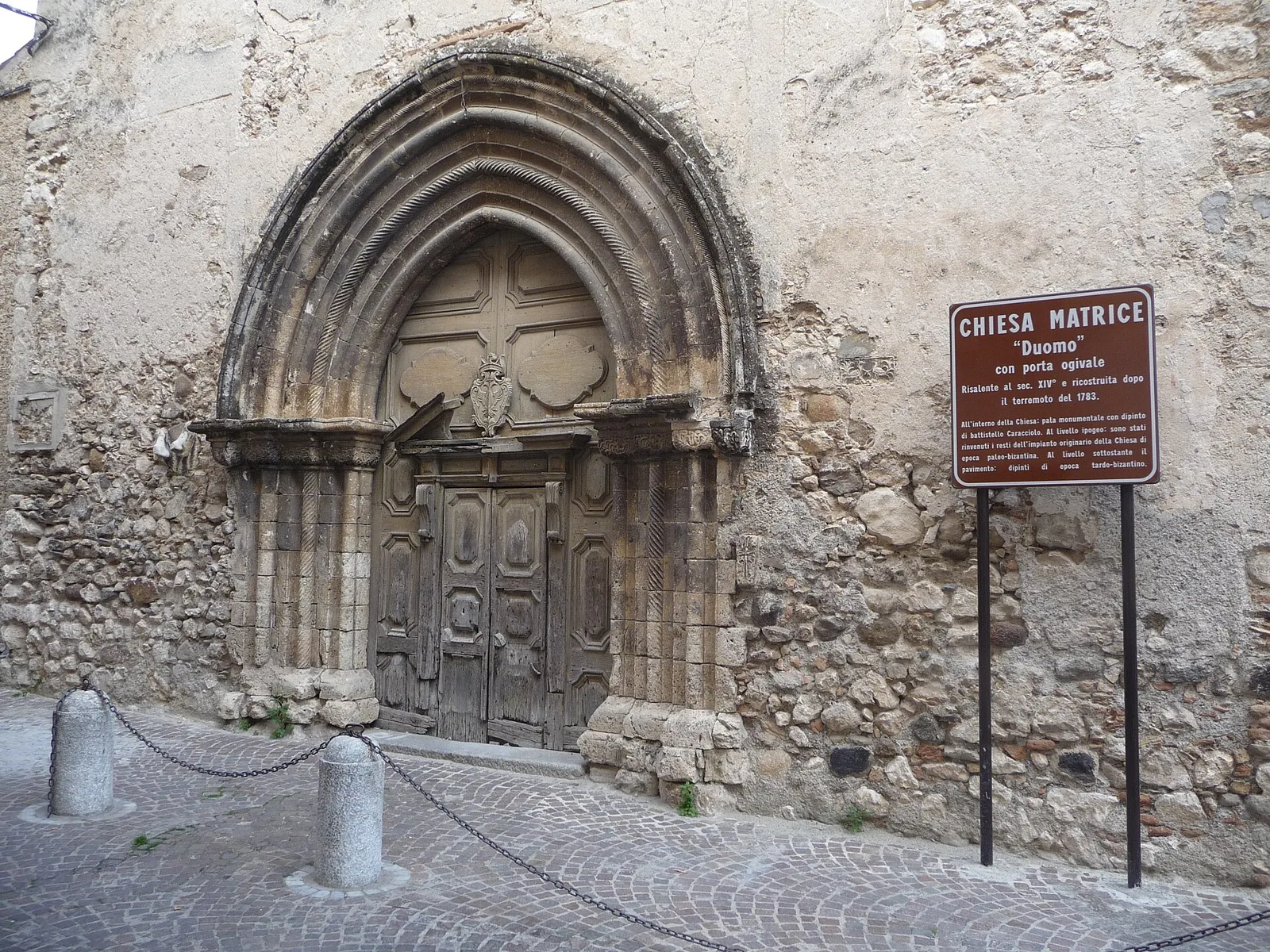
After the Norman conquest of Calabria, the main town church entered successive phases of expansion and adaptation to the Western ecclesiastical tradition. The church facade features a pointed limestone portal, described as Romanesque-Gothic and often dated to the 12th century. Built into the walls are also spolia – reused fragments of older stone elements, a phenomenon common in medieval architecture of southern Italy.
Decorative Details and Iconography
The interior of the Duomo/Chiesa Matrice preserves the painting Madonna di Ognissanti from 1618–1619, a work by Battistello Caracciolo. It is the most important specific work of art associated with the church and a useful point of reference for its dedication to Santa Maria d’Ognissanti. When visiting, look not only at the architecture, but also at how the church furnishings complete its religious function.
By the Duomo portal, reused elements of older origin are pointed out. On the right is a stone relief of two stylised birds, interpreted as Norman or Byzantine, while on the left are marble feet from a Roman statue. These spolia are among the most interesting exterior details of the church, because they show that the medieval building drew on materials and symbols from earlier eras.
The Significance of Santa Maria d’Ognissanti in the Spiritual Life of Stilo
Cultural and Religious Heart of the Town
Santa Maria d’Ognissanti played a central role in the spiritual and cultural life of this small town, gathering the local community around it. The church is dedicated to Santa Maria d’Ognissanti, which corresponds to the most important work preserved inside – Battistello Caracciolo’s painting Madonna di Ognissanti. This is the basic point of reference when describing the religious significance of the church in Stilo.
An Icon of Spirituality and Culture
The cathedral's significance derives above all from its role as the main town church and its connections with the tradition of an old episcopal seat in Stilo. In small Calabrian centres such churches are not only places of worship but also an enduring sign of local memory and community continuity.
The religious rhythm of Stilo is also clearly visible during Holy Week, especially in the rites connected with the sanctuary of San Giovanni Therestis. On Maundy Thursday there is the night-time Processione votiva delle Croci, on Good Friday the Tre ore d’agonia are observed, and on Holy Saturday the Cristo Morto procession takes place. Residents carry gucciadati, bread ciambelle blessed on Maundy Thursday and hung on reed crosses.
Heritage Protection
Calabria is one of the most seismically active areas of Italy, so the structural condition of historic churches has always depended here not only on the age of the building but also on successive tremors and structural problems. The catastrophic sequence of earthquakes in 1783 affected many localities in the region, and in small historic centres churches were later rebuilt, strengthened and adapted for continued use.
The Duomo was rebuilt after the earthquake of 1783 and in subsequent phases of conservation work. It is safer to treat its present condition as the result of a longer process of repairs, changes and structural safeguards rather than as the outcome of a single restoration that can be pinned to one clear date.
Practical Information
Location: Centro storico, Stilo (RC)
Tickets: Free admission
Getting there: Stilo lies in the Metropolitan City of Reggio Calabria (Città metropolitana di Reggio Calabria), approximately 15 km inland from Monasterace Marina. By car, take the SS106 Jonica to the Monasterace/Stilo exit, then the local SP road to the historic centre.
Train: The nearest station is Monasterace-Stilo on the Ionian line Reggio Calabria – Taranto; from there a car, taxi or local bus is needed, as the station is on the coast, not in Stilo itself.
Visit duration: Allow about 15–30 minutes for the cathedral itself, and 1–2 hours if combining it with the Cattolica di Stilo and a walk through the centro storico.
Access: Opening hours in small Calabrian towns often depend on services, parish duty or the presence of a caretaker, so it is best to check current information by phone or on the spot.
The cathedral is in the historic centre of Stilo, while the Cattolica di Stilo lies higher up on the slope of Monte Consolino and usually requires a short walk or drive up. In practice, most visitors see both during a single visit to the town. After the Cattolica reopened on 29 July 2026, the municipality gave the following hours: Monday closed; Tuesday and Sunday 14:00–19:30; Wednesday–Saturday 8:30–19:30. On the first Sunday of the month and on 15 August, the site is due to be open 8:30–19:30, with the ticket office closing 15 minutes before closing time.
Frequently Asked Questions
What can you see in the cathedral in Stilo?
In the cathedral, look for the pointed limestone portal, described as Romanesque-Gothic and often dated to the 12th century, and the interior bearing traces of later Baroque transformations. It is a good place to see how the main church of Stilo changed over the centuries.
What is the history of Duomo di Stilo?
The Duomo di Stilo should be linked to the tradition of an old episcopal seat in Stilo and the development of the town's main church in the late Middle Ages and early modern period. It is not the same type of building as the Cattolica di Stilo, which is a small Byzantine church usually dated to the 10th century.
What works of art are in the cathedral?
The most important work preserved in the Duomo/Chiesa Matrice is the painting Madonna di Ognissanti from 1618–1619, by Battistello Caracciolo. By the portal, also look for the spolia: a relief of two stylised birds and marble feet from a Roman statue.
Is Duomo di Stilo on the UNESCO list?
No. UNESCO is associated above all with the Cattolica di Stilo, included since 1 June 2006 on the Tentative List as part of the nomination “Cattolica Monastery in Stilo and Basilian-Byzantine complexes”. The Duomo has a different significance – as the town's main church linked to the tradition of an old episcopal seat and later Gothic and Baroque transformations.
When is the best time to visit Duomo di Stilo?
It is best to plan a visit when you also have time for a walk through the centro storico and a visit or drive up to the Cattolica. If you want to go inside, remember that access to the church may depend on services or the presence of a caretaker.
Last updated: