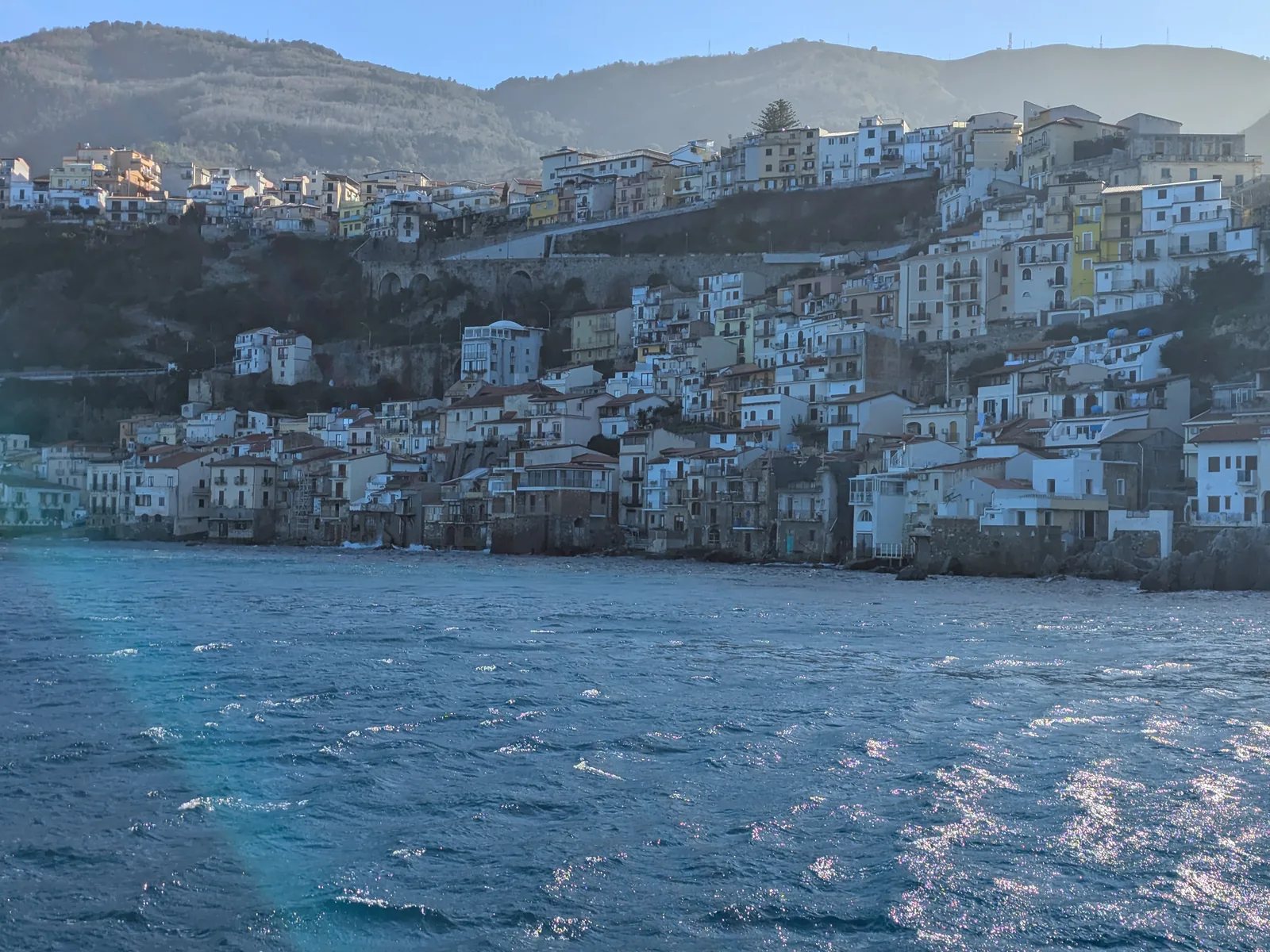
Chianalea di Scilla is one of Italy's most photogenic fishing quarters – a labyrinth of narrow lanes, stone houses built almost directly over the water, and sea that pushes between rocks and buildings, creating a landscape reminiscent of a miniature Venice. It is the oldest quarter of Scilla. Chianalea di Scilla is cited in sources as one of I Borghi più Belli d'Italia; administratively, it is part of the municipality of Scilla. Chianalea has preserved the character of a fishing settlement where the rhythm of daily life is set by the catch, and restaurants serve fish and seafood rooted in local tradition.
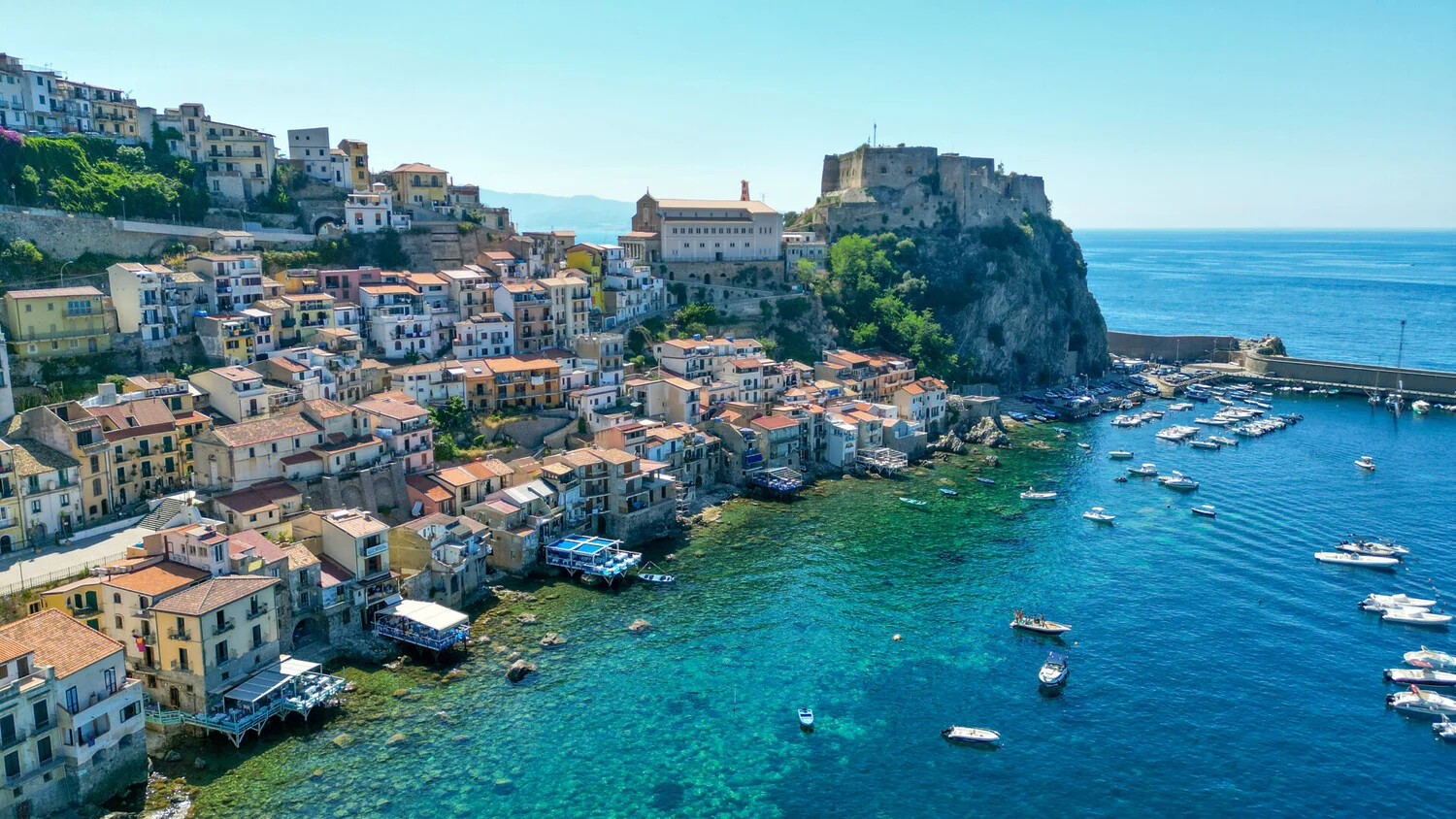
The quarter sits at the foot of Castello Ruffo, directly above the waters of the Strait of Messina. It is the oldest part of Scilla and the best place for a quiet walk among houses leaning into the rocks, narrow passages and small viewpoints from which you can see Sicily on the other side of the strait.
Table of Contents
History and architecture – houses on the sea
The exact origin of the name Chianalea is not entirely certain, with various local interpretations linking it, among other things, to the seaside shape of this part of Scilla. What makes the quarter unique is its buildings set directly above the sea, beside rocks, small inlets and steps leading down to the water, where fishermen have moored their boats for centuries. One specific place of this kind is Scaro Alaggio, indicated as a point where boats moor while sheltered from the waves. This closeness of houses, boats and sea earned Chianalea the nickname "Little Venice of the South" (Piccola Venezia del Sud).
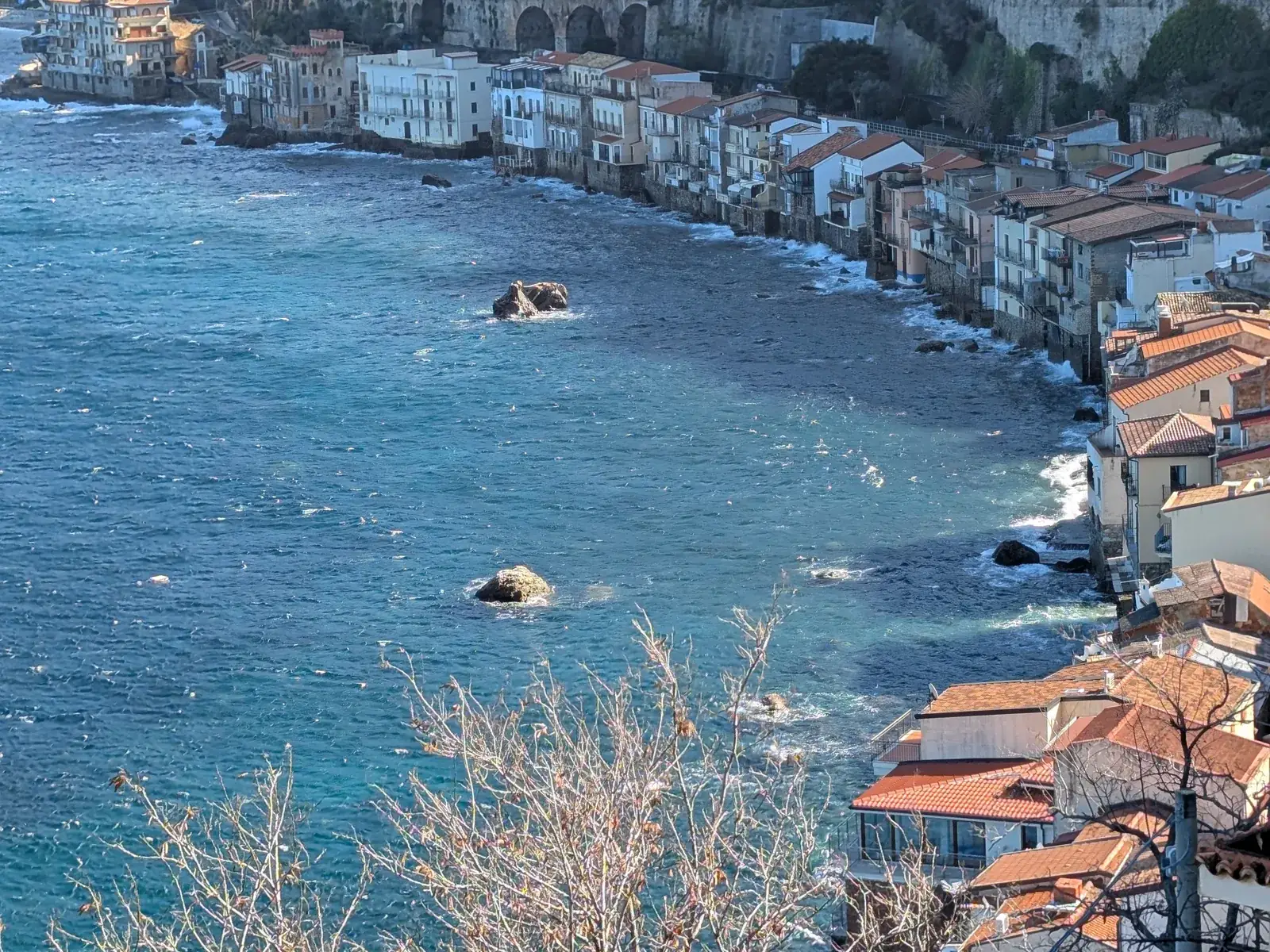
The houses of Chianalea do not merely stand beside the sea – many of them rise almost from the very rock washed by waves. Some restaurants operate on wooden platforms raised above the water on stilts, accessible both from land and by boat. This unique architecture arose from necessity – the narrow strip of rocky coastline left no room for conventional building, so fishermen built where they could: on rocks, right by the water and under the castle's protection.
Castello Ruffo has dominated the settlement for centuries. It is associated with the Ruffo family, who controlled Scilla and a strategic stretch of the Strait of Messina. The castle served a defensive and supervisory function, while the fishing quarter developed below it as a port and residential area for a community living from the sea.
The most notable architectural landmarks in Chianalea include:
- Ruffo Fountain – bearing the coat of arms of the Ruffo di Calabria family, connected with the castle's later history, rebuilding and restoration
- Fountain of Three Channels (1610) – decorated with masks and friezes, one of the main sources of drinking water for fishermen
- Canalello Fountain (St. Clement's Fountain) – another historic water point
- Church of Santa Maria di Porto Salvo – patron saint of fishermen and sailors
- Church of San Giuseppe – a small church woven into the fishing quarter's fabric
- Villa Zagari (1933) – an eclectic building of historical and architectural value, honouring the scholar Giuseppe Zagari (1863–1946)
Watch on YouTube
Life in Chianalea – fishermen, cuisine, and sunsets
Chianalea is no open-air museum – it is a living quarter where fishing families still carry on a multigenerational tradition. In the morning, boats are hauled up at small water accesses between buildings while fishermen mend their nets. The main product of local catches is swordfish (pesce spada), caught using traditional methods in the Strait of Messina from May to September – read more in our article on the swordfish fishing tradition.
Traditional swordfish fishing in Scilla is associated with the characteristic feluccas – long boats equipped with a tall observation mast from which fish are spotted in the clear waters of the strait. It is one of the most recognisable symbols of the town and an important element of local identity.
The restaurants of Chianalea are an attraction in their own right. Several operate literally over the water – you sit on a terrace on stilts, the sea lapping beneath your feet, while grilled swordfish, carpaccio, or pasta, maccheroni or paccheri with swordfish sauce lands on your plate. In local stories and legends, swordfish holds a special place, which is why it has also become the culinary symbol of this town. Discover more about Calabrian cuisine in our guide.
Alongside restaurant dishes, there is also a simpler street-food version of the local cuisine: panino col pesce spada. The classic version is a toasted ciabatta with grilled swordfish and salmoriglio, an emulsion of olive oil, lemon, oregano and salt. It is a quick meal, but very typical of Scilla and Chianalea because it is based on the same ingredient that defines the local menu.
In the evening Chianalea transforms into one of the most atmospheric spots on the Calabrian coast. The sunset over the Strait, with Sicily's silhouette on the horizon and warm light reflecting off stone facades, is a sight that stays with you long after you leave. The best vantage point is the waterfront at the end of the main lane, where you can see the village, the castle, and the open sea all at once.
Practical information
Location: Historic quarter of Scilla, at the foot of Castello Ruffo, on the Strait of Messina
Chianalea address: Via Annunziata 3/36, 89058 Scilla RC
Cost of visiting Chianalea: Free access
Castello Ruffo: The castle is closed on Mondays; from Tuesday to Sunday it is open 09:00–13:40 and 15:00–20:00. A standard ticket costs €3.00, while children up to 6 years old and people with disabilities with a companion enter free of charge
Access: On foot from Marina Grande or from Scilla centre, heading towards the historic quarter below the castle
From the station: Walking from Scilla railway station to Chianalea takes roughly 15–20 minutes
Parking: It is easiest to park before the entrance to the historic part of Scilla; car traffic in Chianalea itself is very restricted or impossible
Swimming and beaches: Chianalea is primarily for strolling, dining and admiring the views; the most convenient beach is at Marina Grande
Best time to visit: Afternoon hours are ideal, especially for sunset; in summer the quarter is busier, while off-season it is quieter and more authentic, though some restaurants may have reduced hours
Tip: The lanes are very narrow and sometimes steep – comfortable shoes are a must
Getting there: From Reggio Calabria about 30 min by car (25 km); train to Scilla station
Frequently Asked Questions
Why is Chianalea called the "Little Venice of the South"?
The nickname comes from the buildings standing right above the water, beside rocks, small inlets and steps leading to the sea. Boats moor directly beside houses and water pushes between the buildings, creating a unique landscape reminiscent of Venice.
Is Chianalea listed on any official register?
In the list and descriptions of I Borghi più Belli d'Italia, Chianalea di Scilla is indicated as the oldest, seaside quarter of the municipality of Scilla.
What dish should you try in Chianalea?
Swordfish (pesce spada) in every form – grilled, as carpaccio, in pasta sauce, or as involtini (stuffed rolls). It is the icon of local cuisine, caught using traditional methods in the Strait of Messina.
What is the best time of day to visit Chianalea?
It is most beautiful in the afternoon and at sunset, when golden light reflects off the stone facades and sea. In the morning you will see the fishing life – boats, nets, and the fresh catch, while outside summer the quarter is quieter, though some restaurants may have shorter opening hours.
Last updated: