Capo Bruzzano is a scenic corner of Calabria, known for its wild beaches, pale rocks and cliff-lined stretch of the Ionian coast. Today it draws visitors with clear water, a rugged landscape and a sense of quiet that is hard to find in larger resorts. It is a good place to see a less familiar side of the Locride – the historical and cultural area of the province of Reggio Calabria.
Table of Contents
Capo Bruzzano – the Wild Cape of the Calabrian Ionian Coast
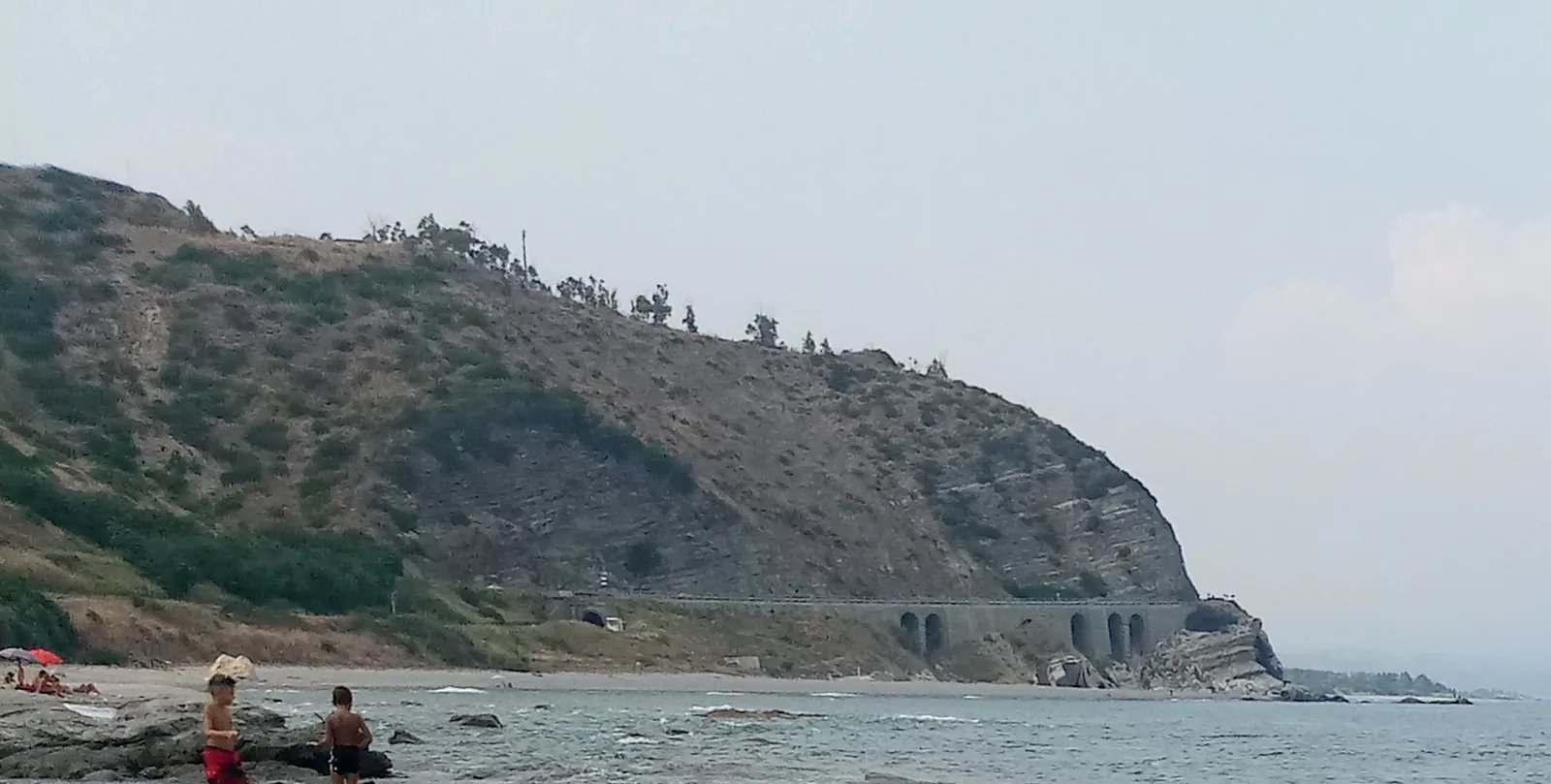
Capo Bruzzano is one of the most distinctive promontories on the Ionian coast of Calabria. Rocky cliffs rise above turquoise water, while pale rock formations create a landscape clearly different from the flat, sandy beaches of nearby towns. The cape is crowned by a rugged coastal cliff shaped by long-term tectonic processes and erosion. Capo Bruzzano is also the northern boundary of the Parco Marino Regionale “Costa dei Gelsomini”, established by Calabria regional law no. 11 of 21 April 2008. The park covers the stretch from Capo Bruzzano to Punta di Spropoli and the municipalities of Bianco, Ferruzzano, Bruzzano Zeffirio, Brancaleone and Palizzi.
History of the Cape
The history of Capo Bruzzano itself and nearby Bruzzano should not be conflated with the story of ancient Zephyrium and the founding of Locri Epizephyrii. When speaking of the Locrian colony, it must be clearly separated from the history of this particular cape and the settlement of Bruzzano. For this area, a more relevant point of reference is the later history of local settlements rather than ancient accounts referring to other places in the Locride.
Bruzzano Vecchio is a medieval and early modern hilltop settlement, abandoned after a series of strong earthquakes, especially those of 1905 and 1908. After the damage, newer development moved lower down, towards modern Bruzzano Zeffirio and its coastal districts. This process explains the present-day layout of settlements in the area: the old village remained on the hill, while administrative and residential life shifted to a more accessible location.
Significance for the Local Community
For the residents of surrounding towns such as Locri and Ferruzzano, Cape Capo Bruzzano is a symbol of their bond with the sea and the Ionian landscape. Fishermen and sailors treated it as a natural landmark on the coast. Today, its presence supports local tourism, especially trips focused on beaches, walks, photography and short historical outings.
The modern municipality is called Bruzzano Zeffirio. The element “Zeffirio” refers to the historic naming tradition of Ionian Calabria, linked to the Greek Zephyros and Zephyrium, but this does not automatically mean that Capo Bruzzano itself is the ancient Zephirion Akron. This is an important detail, as the entire area belongs to the Locride – a region with a strong and recognisable cultural identity.
Nowadays, this region increasingly attracts people seeking a quieter contact with nature. The beaches in this part of Ionian Calabria are among the important nesting sites for the Caretta caretta sea turtle, which encourages the local community to protect the coast and preserve its wild character.
Natural and Tourist Attractions
The Ionian coast of Calabria, including the area around the cape, is known for its wild beaches and rocky landscape. Capo Bruzzano is surrounded by Mediterranean vegetation, and the routes along the shore are suitable for short walks and scenic stops. The natural importance of this stretch is confirmed by ZSC/SIC IT9350160 “Spiaggia di Brancaleone”: the protected area covers 1,585 ha, 89% of which is marine. It protects 9 habitat types and 40 species listed under EU nature directives, and for habitat 1120 “Posidonia beds” the EEA form gives an area of 25.61 ha.
In the landscape around Bruzzano and Ferruzzano, look out for palmenti: rock-cut basins and vats once used for pressing grapes and for the sedimentation and fermentation of must. In Calabria they are found especially in the rural areas of Aspromonte and the Locride. In the Bruzzano/Ferruzzano area there are individual groups connected with the old agricultural and wine-making economy, but before setting out you should check the exact, verified access location.
Species / Attraction |
Characteristics |
Location |
|---|---|---|
Caretta caretta |
Sea turtles nesting in summer |
Sandy stretches of the coast |
Posidonia oceanica |
Underwater meadows stabilizing the seabed |
Shallow coastal waters |
Peregrine falcon |
Predator associated with cliff landscapes |
Coastal rock faces |
Palmenti |
Historic basins and vats for pressing grapes and fermenting must |
Ferruzzano and Bruzzano area |
Watch on YouTube
The Remarkable Charm of Capo Bruzzano Beaches – an Oasis of Tranquility on the Ionian Coast
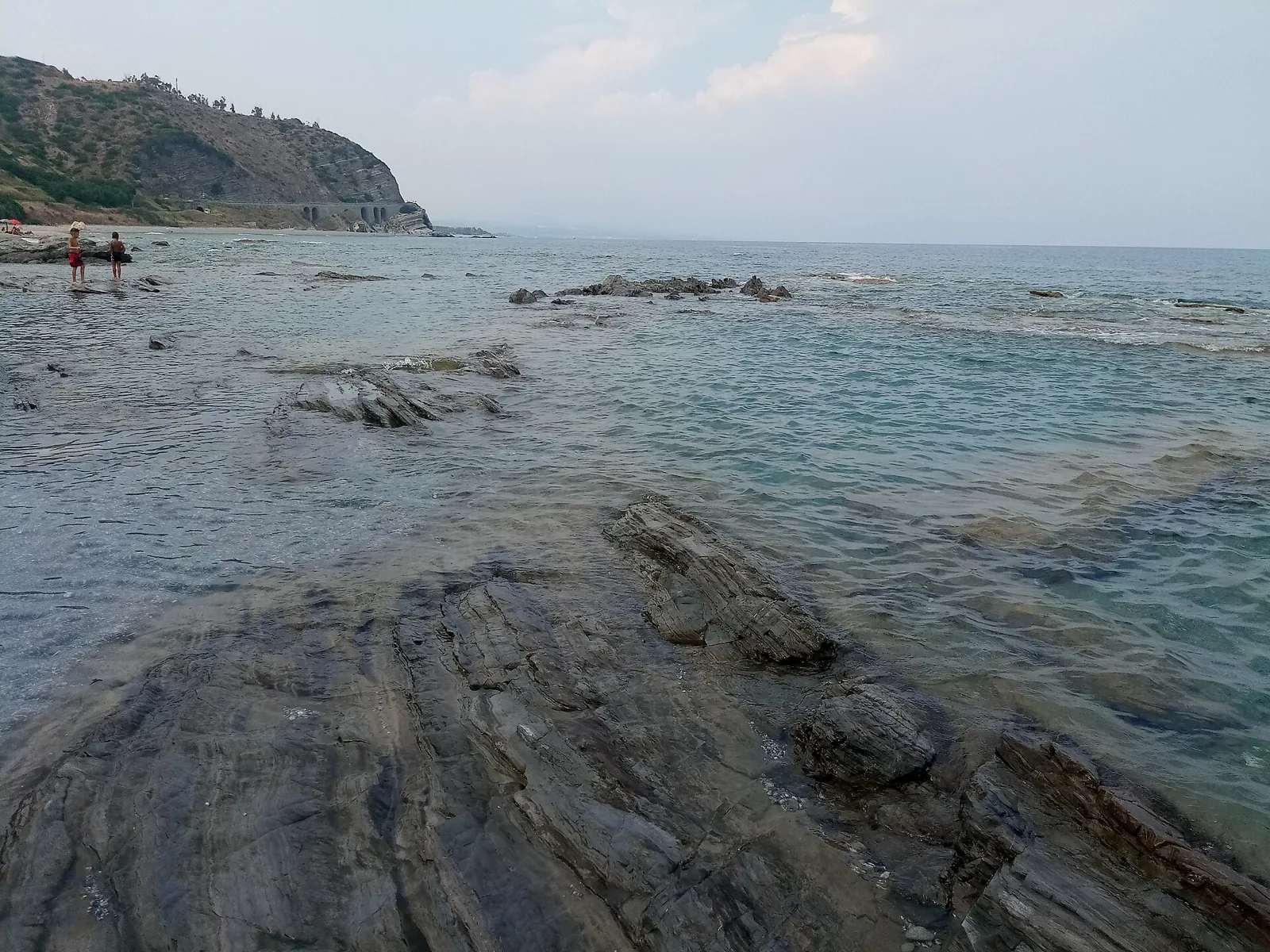
Capo Bruzzano, located on the Ionian coast of Calabria, is known for its little-developed beaches and rocky shoreline, which show the wild character of the Costa dei Gelsomini particularly well. Locally, the key spot on this stretch is often referred to as “Le Piscine” – the scogliera/spiaggia Le Piscine at Capo Bruzzano, with natural rock pools and pale rock formations. The official marine parks portal presents it as “Spiaggia le Piscine (Capo Bruzzano)”. The local landscape is made up of pale rocks, sand, gravel and pebbles, giving this part of the coast a more rugged than resort-like character.
The beaches around Capo Bruzzano are mixed in character: sandy sections give way in places to gravel and pebbles, and the entry into the water can be stony. Facilities are limited or completely absent on the wildest stretches, so in season it is best to bring water, a hat and water shoes. The best time for beach days is from June to September, as outside the season the sea here can be rough.
The cape itself serves as a good vantage point for visitors. From the paths and higher parts of the shore you can see the sea, the pale rocks and neighbouring stretches of the Costa dei Gelsomini. Walking along the coastline, you can observe rock formations and blue water, where beneath the surface there are habitats of Posidonia oceanica seagrass, important for stabilizing sandy seabeds and for marine biodiversity.
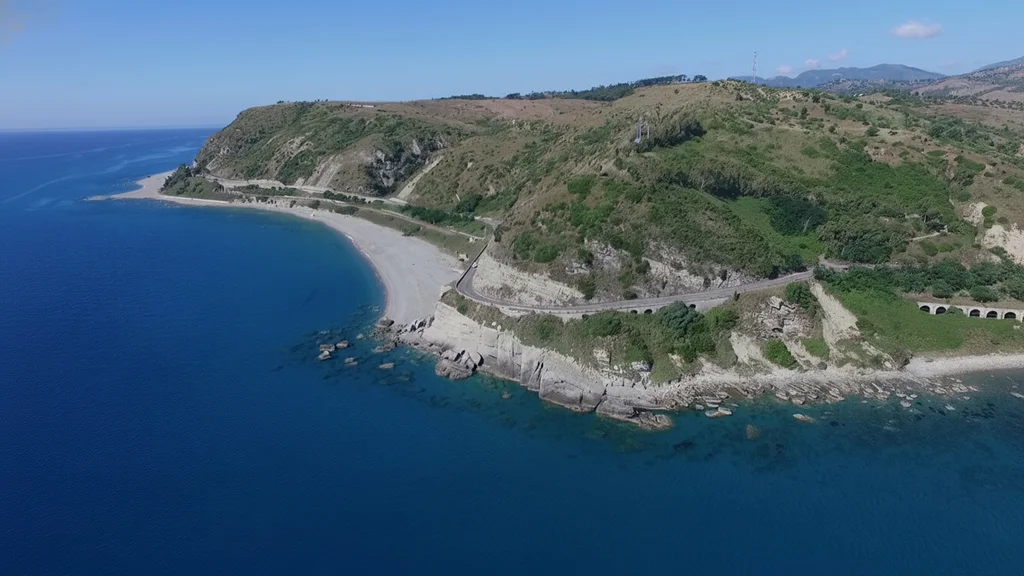
The region has relatively few visitors, especially outside the peak holiday period. The unspoilt beaches of Capo Bruzzano will appeal most to people who do not need beach bars or full facilities, only a place for a quiet swim, a walk and watching the sea. During the turtle nesting season, reduce light after dark and take particular care on sandy sections of beach.
Besides swimming and resting on the shore, the area also allows you to plan a short active day. Nearby coastal paths and viewpoints combine well with walking and landscape-watching. For lovers of history and culture, the palmenti mentioned above make an interesting addition to a visit – historic rock-cut elements of the former wine-making economy found in the Bruzzano and Ferruzzano area.
How to Plan a Visit to Capo Bruzzano – Attractions and Getting There
Capo Bruzzano lies on the Ionian coast of the Metropolitan City of Reggio Calabria, in the area of the municipality of Bianco, on the stretch between Africo and Ferruzzano; the neighbouring municipality of Bruzzano Zeffirio belongs to the same Costa dei Gelsomini belt. The main access route is the SS106 Jonica road, so the easiest way to get here is by car. From Reggio Calabria the drive usually takes about 1 hr 20 min–1 hr 40 min, while from Lamezia Terme it is usually 2–2.5 hours.
If you want to combine the beaches with a short historical outing, Bruzzano Vecchio is a good target – an abandoned hilltop settlement heavily affected by the earthquakes of 1783, 1905 and 1908. After this damage, newer development moved lower down, towards modern Bruzzano Zeffirio. On Rocca Armenia stands the Castello di Bruzzano Zeffirio, also known as Castello d’Armenia, located at about 139 m above sea level. A heritage source dates the original castle to the late 10th – early 11th century and also mentions the Casa del Principe and the Arco Trionfale dei Carafa.
You can also reach Capo Bruzzano by train. The nearest stations/stops on the Ionian line are Bianco, Africo Nuovo, Ferruzzano and Brancaleone; regional services are operated by Trenitalia. The final stretch to the beaches usually requires a car, taxi or local transfer. From Reggio Calabria airport to Bruzzano Zeffirio it is about 75–85 km, and from Lamezia Terme about 145–160 km.
For a short visit to the cape itself and the beaches, plan around 1.5–3 hours. If you want to add Bruzzano Vecchio and scenic stops, allow half a day. For walks and photos, May–June and September–October work best; for swimming, July and August are the main months, although you should expect strong sun and temperatures often above 30°C.
Accommodation in this part of Calabria includes hotels, guesthouses and private rooms in towns spread along the SS106 and the railway line. Before booking, check the real distance from the beach, because a short distance on the map does not always mean an easy walk. When preparing for your visit, also keep local flavours in mind – bergamot is especially characteristic of this stretch of the Ionian province of Reggio Calabria and is one of the most recognisable citrus crops in Italy.
Capo Bruzzano – Frequently Asked Questions
What can you see at Capo Bruzzano?
The main attractions include cliffs, wild beaches, viewpoints and historic palmenti found around Bruzzano and Ferruzzano. It is also worth combining a visit with a trip to abandoned Bruzzano Vecchio.
How do I get to Capo Bruzzano?
The easiest way is by car via the SS106 Jonica road. The nearest stations/stops on the Ionian line are Bianco, Africo Nuovo, Ferruzzano and Brancaleone; regional services are operated by Trenitalia. The final stretch to the beaches usually requires a car, taxi or local transfer.
Are there swimming beaches at Capo Bruzzano?
Yes, there are wild beaches of mixed character – sandy sections give way in places to gravel and pebbles, and the entry into the water can be stony. Tourist facilities are minimal or absent, so bring your own water, sun protection and water shoes.
When is the best time to visit Capo Bruzzano to see the turtles?
On the beaches of Ionian Calabria, Caretta caretta egg-laying is usually recorded from mid-June to late September, with a peak around mid-July; hatching follows an incubation period that depends on beach conditions, often after about 45–65 days. During this time, avoid shining lights onto the beach after dark, do not leave umbrellas or sunbeds overnight, and keep dogs away from nesting areas.
What are the palmenti found in the area?
Palmenti are historic rock-cut basins and vats used for pressing grapes and for the sedimentation and fermentation of must. Their chronology should be described with caution, but they are an important trace of the former agricultural and wine-making economy in the Aspromonte and Locride area.
Last updated: