The Cathedral of Santa Maria Assunta in Gerace is one of the most significant monuments in Calabria, attracting the attention of tourists and lovers of Italian culture. Sources give different figures for the cathedral's area: 1,690 m² and 1,898 m². This monumental basilica, with an area exceeding 1,690 square metres, dominates the Locride landscape, rising on a rocky sandstone rupe about 500 metres above sea level. The building's official name today is Basilica Minore Concattedrale di Santa Maria Assunta. Situated in the town of Gerace, the cathedral bears witness to the region's history and is one of the most important sights in this part of Calabria.
The significance of Gerace becomes even clearer when one looks at the history of the entire Locride. After Arab and Saracen raids in the 9th–10th centuries, the population and ecclesiastical institutions moved from the coast to safer centres inland. Gerace, developed on a rocky plateau at an altitude of about 470–500 metres above sea level, became a better-defended centre of the region – which is why such a grand cathedral was built here, rather than in coastal Locri Epizephyrii.
Table of Contents
- Defensive Architecture and the Historical Role of the Cathedral
- Tourist Appeal of Gerace – the Cathedral as a Key Point of Interest
- Unique Features of Calabrian Cathedrals – the Perspective of Santa Maria Assunta in Gerace
- The Crypt – the Underground Heart of the Cathedral
- Cathedral of Santa Maria Assunta – the Heart of Calabrian Culture
- Practical Information
Defensive Architecture and the Historical Role of the Cathedral
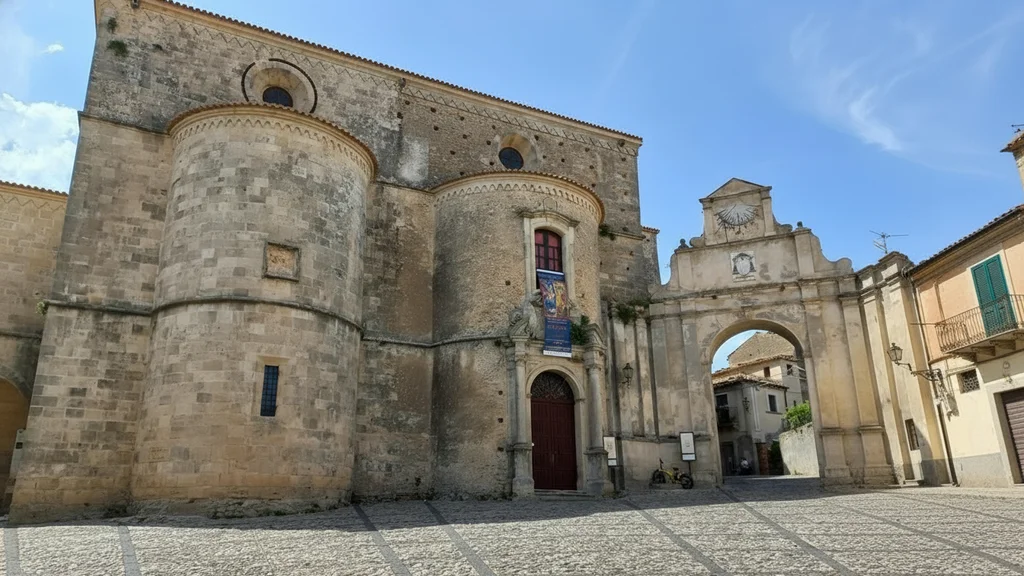
The Cathedral of Santa Maria Assunta in Gerace, also known as the Cattedrale di Gerace, is one of the most important sacred monuments in Calabria and stands out for its austere, monumental form. Its architecture combines Byzantine, Norman, and Latin influences, visible in both its massing and interior. Construction of the present church dates to the Norman era, mainly to the 11th–12th centuries. Beside the cathedral stands a massive bell tower, altered after earthquake damage, especially after 1783.
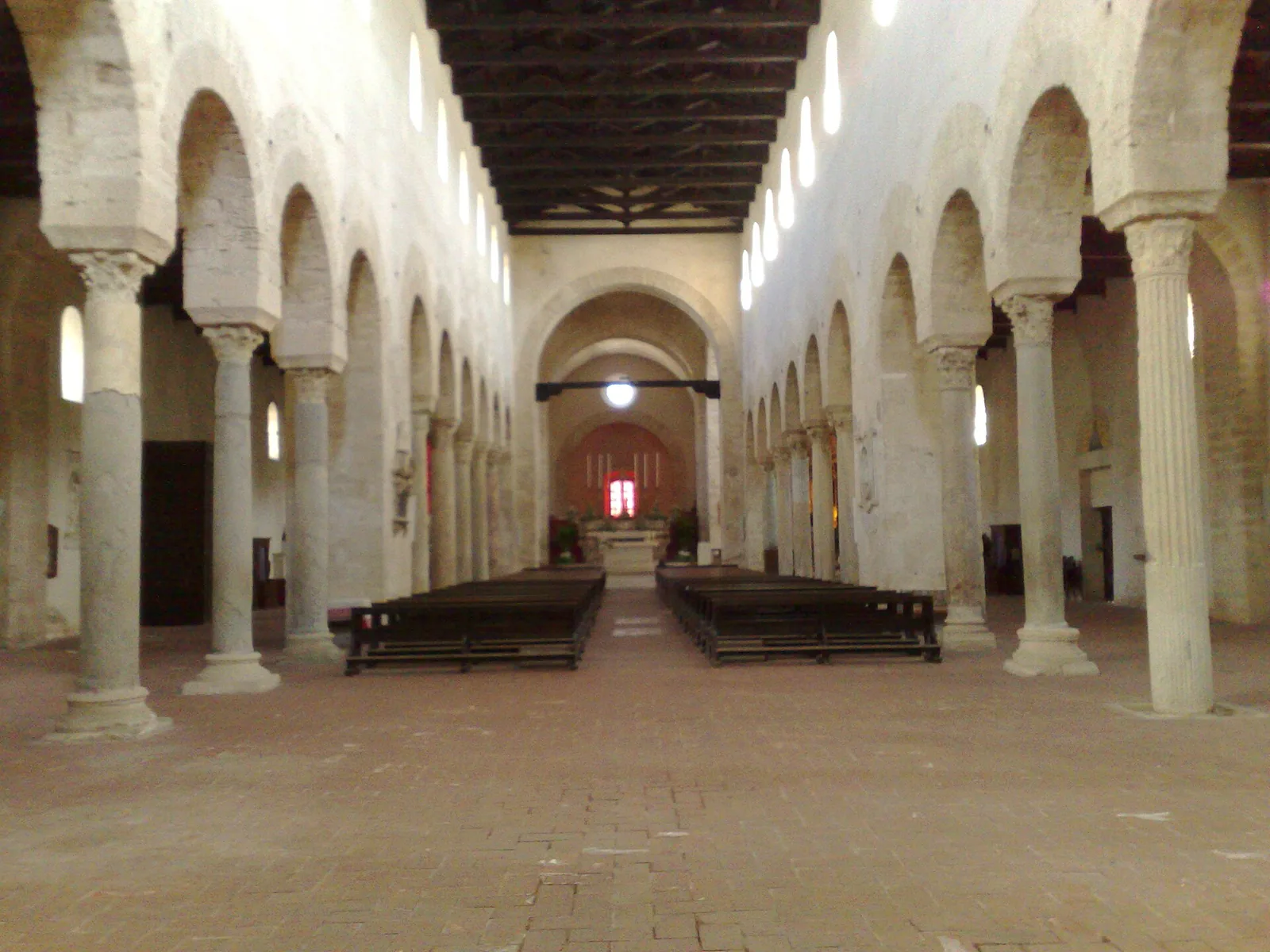
This tower served not only a religious but also a defensive function, which fits well with the character of a town set high above the coast. In places, the cathedral resembles a fortress more than a classical church, reflecting the realities of medieval Calabria. After the earthquake of 1783, repairs and further interventions were carried out, and in the 20th century restorations revealed a more legible Romanesque-Norman character of the interior by removing some later Baroque additions.
The church's current status is linked to the reorganisation of ecclesiastical structures in the 20th century. On 22 February 1954, the bull Urgente Christi voce transferred the episcopal seat from Gerace to Locri. The former cathedral in Gerace was then given the status of co-cathedral, which is why its full modern name is Basilica Minore Concattedrale di Santa Maria Assunta.
| Key Historical Event | Year / Period | Significance for the Cathedral |
|---|---|---|
| Development of Gerace as centre of Locride | 9th–10th century | Movement of population and ecclesiastical institutions from the coast to a better-defended town on the plateau. |
| Construction of the present cathedral | 11th–12th century | Creation of the Norman body of the church, which remains its essential structure to this day. |
| Earthquake and repairs | 1783 and later | Repair of damage and further interventions without total loss of the building's historic character. |
| Modern restorations | 20th century | Revealing a more distinct Romanesque-Norman character of the interior after removal of some Baroque additions. |
Tourist Appeal of Gerace – the Cathedral as a Key Point of Interest
Gerace, a medieval town in the heart of Calabria, attracts visitors with its well-preserved architecture and position above Locride. The town's name is traditionally derived from a Greek word meaning a bird of prey, and is linked to a local legend about the founding of the settlement. One of the key points on the tourist map of the region is the cathedral basilica, whose scale and history attract lovers of architecture and sacred art.
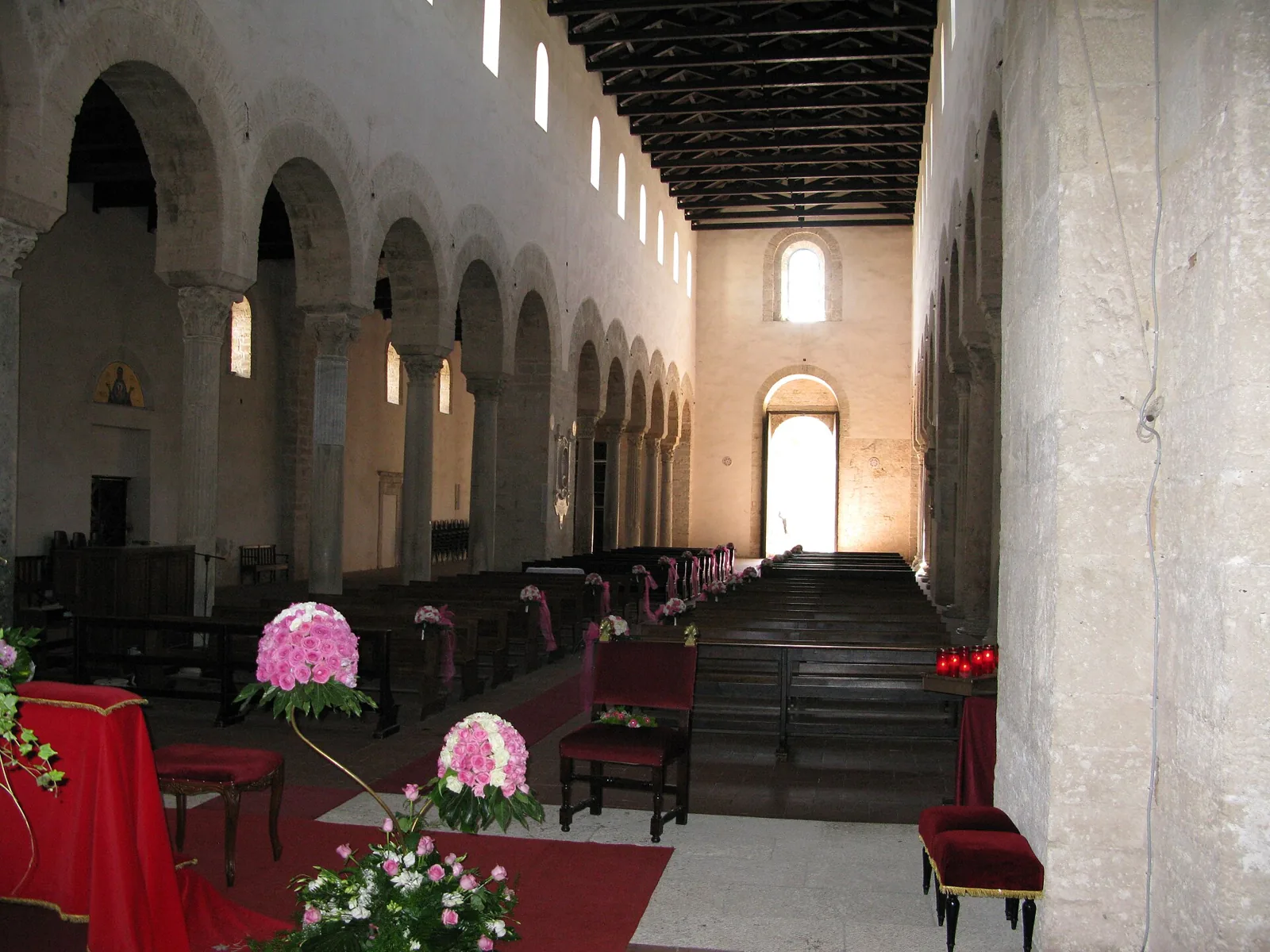
The cathedral interior, based on a Latin cross plan, contains a column system that immediately organises the whole space. The upper basilica has 20 reused Roman-era columns, with marbles from, among other places, Thessaly, Proconnesus, and the Troad. The use of such elements clearly shows how medieval churches in southern Italy absorbed older layers of local history. Above the naves stretches a ceiling of dark wood with a truss construction, which adds an austere, authentic warmth to the interior.
Inside the cathedral, also look for the Cappella del Santissimo Sacramento from 1431, one of the important elements of the church's furnishings and liturgical history. The high altar dates from 1731 and was made by the Palazzotto brothers and Antonio Amato of Messina. These details show clearly that Gerace is not only a Norman monument, but a place where successive eras left concrete, visible traces.
When visiting Gerace, also look out for other attractions such as the 11th-century medieval fortress and the Jewish quarter of Giudecca. The cathedral functions not only as a monument but also as the home of the invaluable Cathedral Treasury, exhibited in the Museo Diocesano. There, visitors can admire the 12th-century Byzantine Staurotheke – a reliquary of the True Cross adorned with precious stones and pearls.
The Staurotheke was not only a precious work of craftsmanship, but also an object of great liturgical and symbolic significance. Holding relics of the True Cross enhanced the prestige of the cathedral and the entire diocese, which is why such objects had importance in the Middle Ages that went far beyond the purely artistic.
Unique Features of Calabrian Cathedrals – the Perspective of Santa Maria Assunta in Gerace
The Cathedral of Santa Maria Assunta in Gerace stands out from other cathedrals in the region thanks to its setting and recognisable architectural style. It is one of the largest churches in the region, and its scale, austere Norman body, and extensive crypt make a striking impression from the very first glance. The building also fits naturally into the landscape of the sandstone rupe of Locride, so that it is perceived almost as part of the plateau itself.
Against the backdrop of other important Calabrian cathedrals, Gerace has its own easily recognisable character. Cosenza is more strongly associated with a Gothic-Cistercian layer, Reggio Calabria with its present form shaped after the destruction of 1908, and Rossano with a strong Byzantine heritage and diocesan museum pieces. Gerace is distinguished above all by its combination of scale, Norman massing, extensive crypt, and setting on a rocky plateau.
In the 20th century, the cathedral underwent important restorations during which some Baroque additions were removed to better expose its earlier character. Thanks to this, the interior is now more legible for those who wish to see above all the Romanesque-Norman layer, although such a decision – as is often the case in Italy – may still provoke discussion.
The Crypt – the Underground Heart of the Cathedral
The crypt, also known as the lower church or soccorpo, is considered the oldest and most fascinating part of the entire building in Gerace. Its layout and spatial arrangement often evoke associations with the older layers of the region's Byzantine heritage, but it is best simply to see how it differs from the upper church. This space covers approximately 500 square metres and is supported by twenty-six columns of various shapes and origins. They create a dense forest of pillars, between which low vaults span, building an atmosphere of silence and contemplation.
Within the crypt and the cathedral complex, an important place is held by the cult of the Madonna dell'Itria. The name itself derives from the Greek Hodegetria or Odigitria and means the Mother of God "Showing the Way," deeply rooted in the Byzantine tradition of southern Italy and Sicily. This is a good example of how in Gerace the Latin form of the cathedral and the older, Eastern heritage of Calabria interpenetrate.
Watch on YouTube
Cathedral of Santa Maria Assunta – the Heart of Calabrian Culture
The Cathedral of Santa Maria Assunta in Gerace is the central point of local culture and tradition in Calabria, whose significance extends far beyond architecture alone. It is the site of the most important religious celebrations and one of the places that best demonstrate the historical importance of Gerace in the history of Locride. It is here that one most easily understands that the town was not simply a beautifully situated settlement, but a real centre of ecclesiastical and civic life.
The cathedral's architecture is often mentioned in the context of other impressive churches in the region. However, Gerace offers a particularly striking synthesis of Norman, Byzantine, and later intervention layers, visible without museum distance – still in a living urban space. Thanks to this, the cathedral remains not only a monument but also an important reference point for local memory.
Practical Information
Location: Piazza Tribuna, Gerace (RC) – centro storico
Getting there: From Locri to Gerace is about 8–10 km. The nearest railway station is in Locri on the Ionian line Reggio Calabria–Catanzaro/Lamezia, from where you continue inland via winding roads; by car, the journey typically takes 15–20 minutes.
Public transport: The Locri–Gerace bus section in connections shown by Trenitalia is operated by Autolinee Federico S.p.A. A bus ticket for the Locri–Gerace route is not sold separately in Trenitalia systems, but it may appear as part of a combined train+bus ticket. Before travelling, check current connections in the Trenitalia search engine or directly with Autolinee Federico.
Opening hours: The official Cittadella Vescovile website gives summer opening hours as daily 9:30–12:45 and 15:00–19:00. In the winter season, from 3 November to 1 March, visits are possible from Tuesday to Sunday, 9:30–12:45 and 15:00–19:00; on Monday the complex is closed. Before visiting, you can confirm the hours by phone: +39 0964 356323 or +39 348 0790972.
Visit duration: The cathedral itself usually takes 20–40 minutes, and with the crypt and Museo Diocesano it is worth planning 60–90 minutes. The museum is right next door, so both places are best combined during a single walk through the centro storico.
Frequently Asked Questions
Why is the cathedral in Gerace considered the largest in Calabria?
The cathedral in Gerace is often described as one of the largest churches in the region due to its substantial area and monumental Norman massing. Sources give different figures for its area: 1,690 m² and 1,898 m². In practice, it is the scale of the building, the extensive crypt, and the setting above Locride that make such a strong impression.
What ancient columns can be found in the cathedral?
The upper basilica has 20 reused Roman-era columns. The marbles come from, among other places, Thessaly, Proconnesus, and the Troad, which clearly shows the importance of spolia in medieval architecture in southern Italy.
What are the cathedral's opening hours?
According to the official Cittadella Vescovile information, in the summer season it is open daily 9:30–12:45 and 15:00–19:00. In the winter season, from 3 November to 1 March, the same hours apply from Tuesday to Sunday, and the complex is closed on Monday. Before arriving, it is best to confirm the hours by phone.
Who attended the reconsecration of the cathedral in 1222?
Some sources associate the reconsecration of the cathedral in 1222 with the presence of Frederick II, but the details of the ceremony are interpreted in different ways; it is safest to write cautiously about a second consecration in 1222.
What is the Staurotheke and where can it be seen?
The Staurotheke is a reliquary of the True Cross, usually linked to the Byzantine tradition and medieval piety. In Gerace, it can be seen in the Museo Diocesano next to the cathedral, which is easily combined with a single walk through the historic centre.
Last updated: