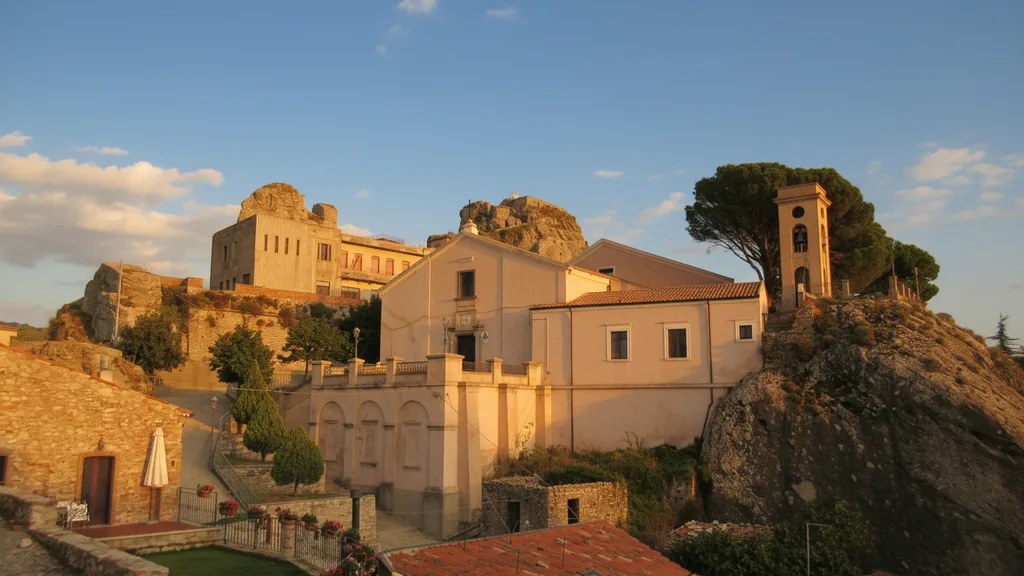
The Cathedral of Santa Maria dell'Isodia in Bova is an important sacred monument of Calabria, attracting tourists with its location and history. Bova itself lies at about 820 metres above sea level, while the cathedral complex and the castle area occupy a higher rocky ridge towering over the town. For lovers of Italy and sacred architecture, this is a place where Greek and Latin traditions clearly meet.
Table of Contents
- Historical Significance of the Cathedral in Bova for Calabria
- Significance of the Cult of Our Lady of the Island for the Bova Community
- Southern Italian Architecture in the Cathedral of Santa Maria dell'Isodia – Traditions and Influences
- Agriculture and Cultural Tourism in Bova – History and Contemporary Attractions
Historical Significance of the Cathedral in Bova for Calabria
The Cathedral of Santa Maria dell'Isodia, formally holding the status of a co-cathedral today, remains an important point of reference for the history and identity of Bova. The church developed during the Middle Ages on the remains of earlier sacred structures, probably linked to the Byzantine tradition. Archaeological research has revealed older building phases, though without assigning overly far-reaching or definitive interpretations.
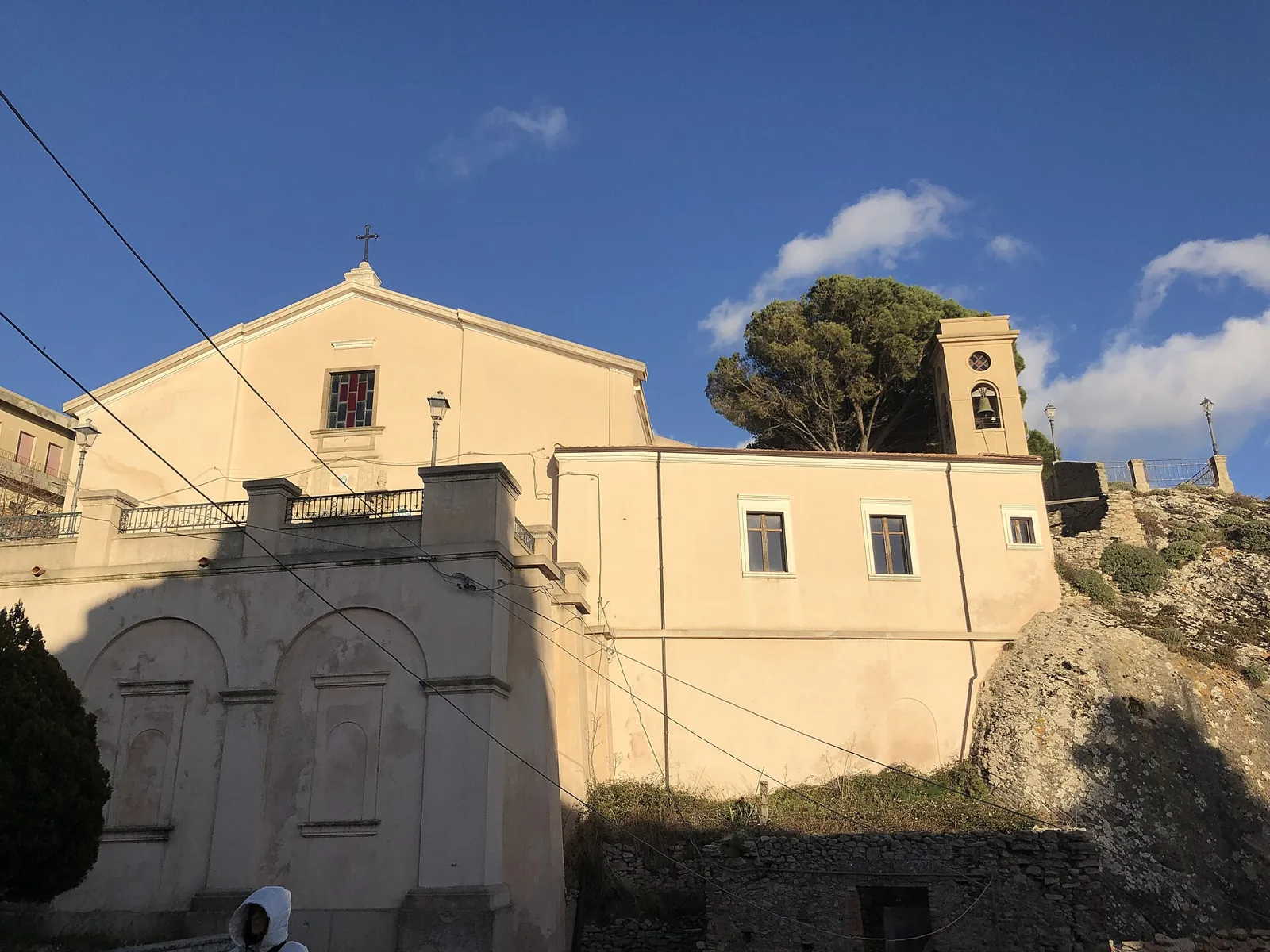
Bova was the historical seat of the Diocese of Bova. The Diocese of Bova was joined personally with Reggio as early as 1940/1941; after an interruption, the union in persona episcopi was restored in 1973, and on 30 September 1986 the two dioceses were fully united into the Archdiocese of Reggio Calabria-Bova. From that moment, the former cathedral in Bova holds the status of a co-cathedral – this is where its current ecclesiastical rank comes from.
Bova belongs to the Bovesìa area, also known as Calabria Greca, where the tradition of the Greko-Calabrian language long endured. The town was an important episcopal centre and a strategic point in the Aspromonte, and during the Middle Ages Byzantine and Latin influences coexisted here. This is key to understanding the church itself, its dedication, and the local cult.
In the Norman era, the church was inscribed in a chain of sites of religious and defensive significance, creating a natural link with the nearby castle. Thanks to the image of the Madonna dell'Isodia, the church for centuries gathered community life and local devotion. The name Isodia derives from the Greek term Eisodia, referring to the feast of the Presentation of the Blessed Virgin Mary at the Temple, celebrated in the Eastern tradition on 21 November.
The building's history is also one of successive reconstructions and transformations after damage, especially following earthquakes that struck Calabria. Today's appearance of the church is the result of many phases, visible in its massing, interior, and furnishings. For this reason, in Bova it is best to view the cathedral as a record of successive eras, not as a uniform building from a single moment of foundation.
| Era / Year | Event | Nature of Changes |
|---|---|---|
| Middle Ages | Earlier building phases | Presence of older sacred structures, linked to the Byzantine tradition and medieval development of the settlement. |
| 1584 | Madonna sculpture | Creation of a marble figure attributed to Rinaldo Bonanno, an important element of local devotion. |
| 1714 | Altar | Creation of a modern altar, one of the most important furnishing elements. |
| 20th–21st century | Conservation work and research | Successive stages of research and conservation related to the building's condition and heritage protection. |
Watch on YouTube
Significance of the Cult of Our Lady of the Island for the Bova Community
The Cult of Our Lady of the Island – Cultural and Spiritual Heritage of Bova
In the very heart of Greek Calabria, in the town of Bova Superiore, stands the co-cathedral of Santa Maria dell'Isodia. The people of Bova have for generations linked this place with the Madonna's protection over their difficult, mountainous terrain. The focal point of the cult is a marble statue of the Madonna and Child from 1584, attributed to the sculptor Rinaldo Bonanno.
According to the catalogue of the Italian Ministry of Culture, the Madonna della Presentazione, also known as the Madonna dell’Isodia, was made from Carrara marble and is 100 cm high. The figure of the Madonna and Child stands on a marble scannello with a relief of an ox, the symbol of Bova, and two adoring angels. This specific work, rather than only a general sign of devotion, explains why the co-cathedral interior is so strongly tied to local memory.
The church's very dedication says a great deal about the history of the place. The Greek Eisodia refers to the feast of the Presentation, or the Entry of the Blessed Virgin Mary into the Temple, celebrated in the Eastern tradition on 21 November. This is an important trace of Bova's Greco-Byzantine heritage and the former presence of the Greek rite in this part of Calabria.
The figure of the Madonna became an element binding the community together, particularly in moments of danger and uncertainty. It is around her that local religiosity has for generations been concentrated, strongly linked to the memory of Bova's former episcopal significance. The image of Mary remains one of the town's most important symbols.
Among the most recognisable Holy Week traditions in Bova is the Pupazze rite, traditionally associated with the space of the historic centre. Pupazze are large, anthropomorphic constructions made from young olive leaves and branches and reeds, carried on Palm Sunday by residents. The custom has a strong communal and identity dimension, and its significance extends far beyond mere religious ceremony.
Southern Italian Architecture in the Cathedral of Santa Maria dell'Isodia – Traditions and Influences
The church's architecture shows how different eras have overlapped in a single place. The church has a basilican layout with three naves, and the central nave is covered by a wooden roof structure. The current appearance is the result of both older phases and modern rebuildings after earthquakes, so the building is not stylistically homogeneous.
The interior leads towards a raised, elongated choir reached by broad steps. An important part of the layout is formed by the side chapels, including the Assunta, SS. Sacramento, Madonna del Rosario, Crocifisso, and Maria Ausiliatrice chapels. The square-plan bell tower measures about 7.5 m and has four bells, which clearly shows the intimate scale of this mountain co-cathedral.
A Blend of Cultural Influences
Bova, as a centre on the Byzantine-Latin borderland, preserved traces of both traditions in the church. The interior and layout of the church are worth reading not only through the prism of style, but also through the history of a place that for centuries changed its function and form. Among the most important furnishing elements are the marble figure of the Madonna from 1584 by Rinaldo Bonanno and the altar from 1714.
Comparison with Other Cathedrals in the Region
Comparing Santa Maria dell'Isodia with other churches of southern Italy, its local, mountain character and strong grounding in the history of Calabria Greca are most clearly seen. This is a less monumental building than the great cathedrals of coastal cities, but precisely for that reason it so well shows the relationship between architecture, topography, and the former defensive function of the settlement. In Bova, what matters is not just the church itself, but the entire cathedral-castle complex set into the rocky ridge above the town.
Agriculture and Cultural Tourism in Bova – History and Contemporary Attractions
Bova, situated in the province of Reggio Calabria, has based its livelihood on the cultivation of olives and grapes on terraced fields for centuries. Contemporary cultural tourism in this region is strongly linked to agricultural heritage and the cuisine of the southern Reggino area. In practice, this means extra virgin olive oil from the Reggio Calabria metropolitan area, local bread and baked goods, and the pastoral traditions of Aspromonte.
Near the cathedral are other monuments, such as the Church of San Leo and the ruins of the Norman castle, which complete the historical picture of the town. In the culinary backdrop of the Bovesìa area, remember also bergamot from the province of Reggio Calabria and the cheese musulupu. Musulupu dell’Aspromonte is a traditional, very fresh cheese made from goat's or sheep's milk, linked to the inland areas on the Ionian side of the province/metropolitan city of Reggio Calabria. It is shaped in wooden, often hand-decorated moulds called musulupare, and is traditionally associated, among other things, with the Easter period.
Bova is also a good base for discovering Grecanico culture beyond the co-cathedral itself. The official Reggio Calabria tourism portal lists the Museo della Lingua Greco-Calabra Gerhard Rohlfs and the Sentiero della Civiltà Contadina, a trail devoted to peasant civilisation. Palazzo Tuscano houses a visitor centre of the Aspromonte National Park, allowing a visit to the borgo to be combined with the mountain and landscape context.
Before visiting, check the current accessibility of the co-cathedral with the Comune di Bova, the parish, or the Archdiocese of Reggio Calabria-Bova. Regardless of whether entry is possible, walk up to the cathedral-castle complex, see the viewpoint, stroll through the borgo, and combine the walk with the Church of San Leo and the castle ruins. The Cathedral of Santa Maria dell'Isodia remains an important part of the story of Bova as one of the centres of the Grecanico area.
Bova is located about 50–55 km by road from Reggio di Calabria. The drive typically takes about 1 hour 15 minutes to 1 hour 30 minutes, depending on the mountain route, and the nearest railway station is Bova Marina on the Ionian line, from where you need to continue by bus or car. For a walk around the historic centre, reaching the cathedral and castle area, and a brief stop at the viewpoints, allow 1.5–3 hours.
Frequently Asked Questions
What can you see in the Cathedral of Santa Maria dell'Isodia in Bova?
The most important elements associated with the cathedral are the marble statue of the Madonna dell'Isodia from 1584, attributed to Rinaldo Bonanno, and the altar from 1714. Remember also the church's setting within the cathedral-castle complex and the older building layers uncovered during research.
What does the name Isodia mean in the cathedral's name?
The name Isodia is a Latinised form of the Greek word Eisodia, which refers to the feast of the Presentation of the Blessed Virgin Mary at the Temple. It is a clear trace of the region's Byzantine past and strong roots of Greek tradition in the local ecclesiastical history.
What are the opening hours of the cathedral in Bova?
The accessibility of the co-cathedral is best checked before arrival with the Comune di Bova, the parish, or the Archdiocese of Reggio Calabria-Bova. Even without entering, you can see the cathedral-castle complex from outside, the viewpoint, the borgo, the Church of San Leo, and the castle ruins.
When do the most important celebrations at the cathedral take place?
In the co-cathedral calendar, 15–17 August are listed as special celebrations – in honour of the Assumption of the Blessed Virgin Mary, Saint Leo, and Saint Roch. A separate, highly recognisable town tradition in Bova is Palm Sunday with the Pupazze/Persephoni rite.
Are there bishops' tombs in the cathedral?
The church was for centuries associated with the former Diocese of Bova, but details concerning burial places require caution and up-to-date research findings. It can safely be said that the building is significant for the history of the local episcopate and remains the subject of archaeological and conservation research.
Nearby
Last updated: