Calabria has a reputation as mafia country, and the reputation has a basis: this is the home of the ’Ndrangheta, one of the most powerful criminal organisations in Europe. What matters to a visitor, though, is the risk of theft, robbery or a scam – and on those measures Calabria does better than Rome, Florence, Milan or Venice. This guide sets out the police statistics for all five provinces, explains what the ’Ndrangheta is and is not, and covers the hazards that are far more likely to spoil a holiday: the roads, the heat, wildfires and the sea.
Contents
The short answer
Yes, Calabria is safe for tourists, provided you take the same care you would anywhere else in Italy. In the national crime ranking published by the newspaper Il Sole 24 Ore, none of the five Calabrian provinces makes the top forty, and for pickpocketing all five sit in the bottom fifteen of 106 provinces.
Organised crime exists and weighs heavily on the regional economy, but its victims are local business owners, town councils and rival clans, not visitors. The risks a tourist actually faces here are different: winding roads, August heat, forest fires and sea currents.
What the crime statistics say
The fullest comparison is the Indice della criminalità, an annual ranking by Il Sole 24 Ore based on Italian interior ministry data. The 2025 edition covers crimes reported in 2024 across 106 provinces, per 100,000 residents. First place means the most reports.
| Province | Overall rank | All reported crimes per 100,000 | Pickpocketing per 100,000 | Robberies per 100,000 |
|---|---|---|---|---|
| Milan | 1 | 6,952 | 790 | 138 |
| Florence | 2 | 6,508 | 1,117 | 110 |
| Rome | 3 | 6,402 | 791 | 81 |
| Venice | 8 | 4,964 | 715 | 57 |
| Naples | 13 | 4,479 | 184 | 93 |
| Catanzaro | 47 | 3,312 | 12 | 6 |
| Vibo Valentia (Tropea, Pizzo) | 55 | 3,175 | 3 | 11 |
| Crotone | 78 | 2,825 | 6 | 12 |
| Reggio Calabria (Scilla, Gerace) | 80 | 2,805 | 20 | 15 |
| Cosenza | 99 | 2,433 | 14 | 14 |
A few things stand out:
- Pickpocketing barely registers in Calabria. The province of Vibo Valentia, which includes Tropea, Pizzo and Capo Vaticano, ranks last in the country – 106th – with about 3 reports per 100,000 residents, against more than 1,100 in Florence.
- Robberies are several times rarer than in the big cities. The province of Catanzaro has the lowest rate in Italy.
- Burglaries – all five provinces are in the bottom twelve.
The figures have a darker side too, and it is only fair to show it. For reported attempted murders, the province of Crotone ranks first in Italy, with Vibo Valentia and Reggio Calabria in the top fifteen. For car theft, Catanzaro (15th) and Reggio Calabria (17th) are well above average. For arson and fire-related reports, Crotone and Cosenza rank second and third.
There is also a caveat about method: the index counts crimes reported, not crimes committed. Extortion and loan-sharking are under-reported in southern Italy, so the index does not capture their true scale. For the thefts and robberies that affect tourists, the effect is small.
The ’Ndrangheta – what it is and whether it affects visitors
The ’Ndrangheta (pronounced “en-DRAN-geh-ta”) is the Calabrian mafia, and it is built on blood ties. Its basic unit is the ’ndrina, a family clan that you join by birth or marriage. That kept the organisation watertight for decades: it has produced far fewer state witnesses than the Sicilian Cosa Nostra.
Its money comes above all from wholesale cocaine trafficking on a European scale, together with extortion, public contracts and money laundering through legitimate businesses – in Calabria, in northern Italy and abroad. Italy’s Anti-Mafia Investigation Directorate (DIA) documents its reach in its six-monthly reports.
Some facts that help keep a sense of proportion:
- The state is fighting back. In the Rinascita-Scott trial, the largest ever brought against the ’Ndrangheta, a court in Vibo Valentia convicted 207 people at first instance on 20 November 2023. The appeal ruling of December 2025 upheld sentences against more than 150 defendants.
- The violence is internal. Murders and attacks target clan members, while local business owners and officials come under pressure. The most notorious crime of recent decades – the killing of six people on 15 August 2007 – happened in Duisburg, Germany, as part of a feud between two clans from San Luca.
- Kidnapping for ransom belongs to the past. In the 1970s and 1980s, hostages taken in northern Italy were held in the Aspromonte mountains. The practice died out in the 1990s.
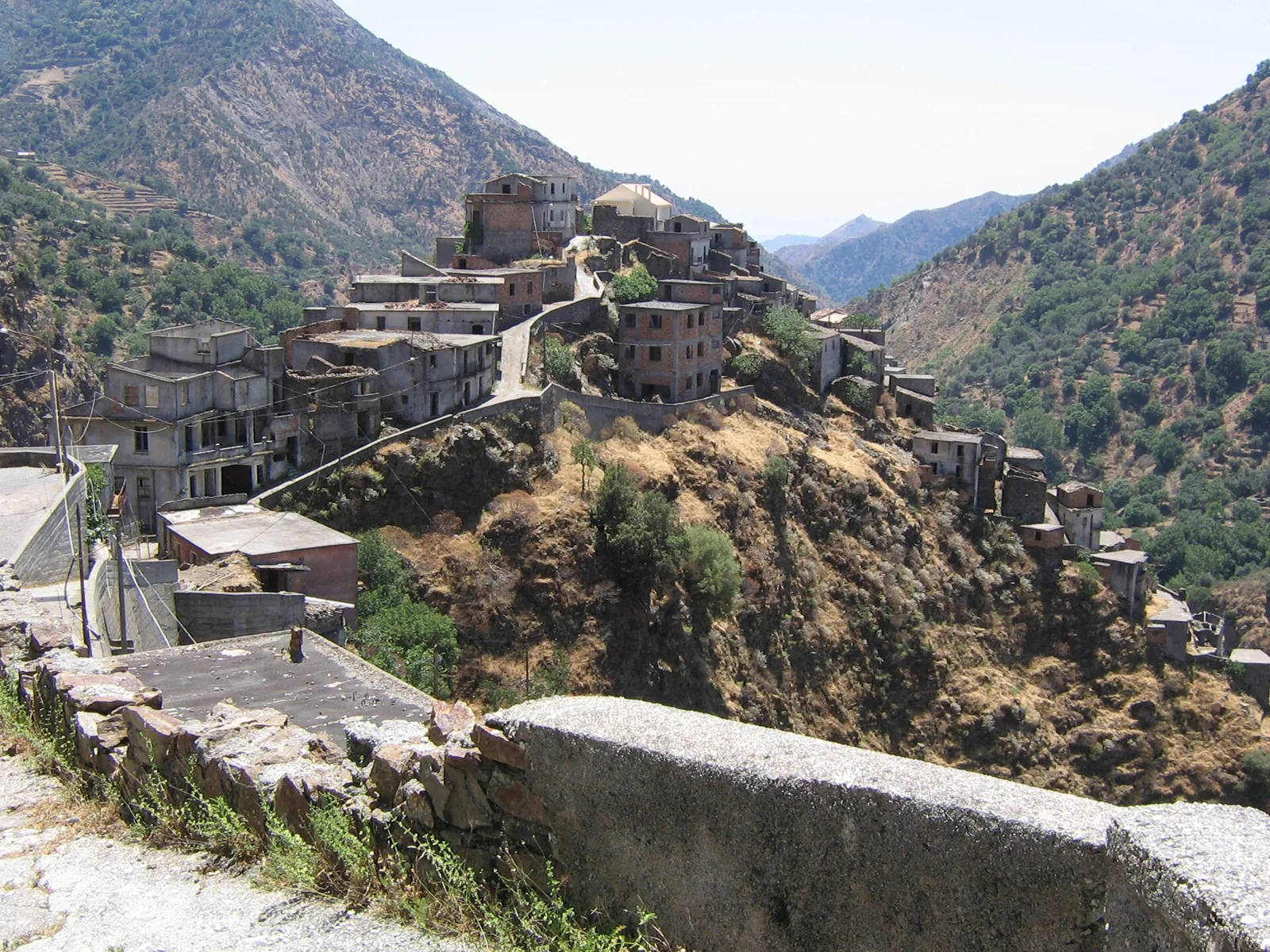
For a visitor, the mafia is in practice invisible. There are no no-go neighbourhoods, and outsiders are not targets – calm in the resort towns suits everyone who earns a living from tourism. The Aspromonte villages associated with the clans, such as San Luca and Platì, are to a visitor ordinary mountain settlements. The road to the sanctuary of Polsi and the trails of the Aspromonte National Park starts from San Luca, but the problem there is the road, not the mafia: it has been under reconstruction for years, and in June 2026 cars could get only as far as a place called Cano, with the rest of the way covered on foot along mountain paths (the unfinished stretch of road is about 8 km long). The works were due to finish in December 2027 at the earliest – check whether the road is open before you set off.
If you would like your money to end up in the right hands, look for products from cooperatives that farm land confiscated from the mafia: olive oil and preserves under the Libera Terra label (the Valle del Marro cooperative on the Gioia Tauro plain) and goods from the GOEL group near Locri.
Theft and cars – the real risk
With so few pickpockets about, one property risk is worth keeping in mind: your car. The UK Foreign Office warns that theft from parked cars is common across Italy, and Calabria’s vehicle theft figures are above the national average.
- Do not leave luggage in the car, not even out of sight in the boot – especially on arrival and departure days, when your suitcases come sightseeing with you.
- Park in well-lit, busy car parks; in Tropea, Scilla and Pizzo the paid car parks at the edge of the centre are the easiest option.
- With a hire car, check exactly what the theft cover includes and how large the excess is. We go through the details in our guide to car rental in Calabria.
- On the beach, do not leave your phone and documents unattended – advice that applies everywhere, not just here.
Keep documents and cash in separate places, and store a scan of your passport on your phone.
Roads – the biggest hazard of the trip
Statistically, the most dangerous thing you will do in Calabria is drive. According to ISTAT, the region recorded 5.2 road deaths per 100,000 residents in 2024, against a national average of 5.1. The gap is small, but the driving style and the state of the roads take some getting used to.
- The SS106 Jonica, which follows the Ionian coast from Reggio Calabria towards Taranto, has a grim reputation in Italy. The campaign group Basta Vittime sulla Strada Statale 106 counted 228 deaths on it between 2013 and 2023. Long stretches are an ordinary single-carriageway road running straight through towns; overtake only where you can see well ahead.
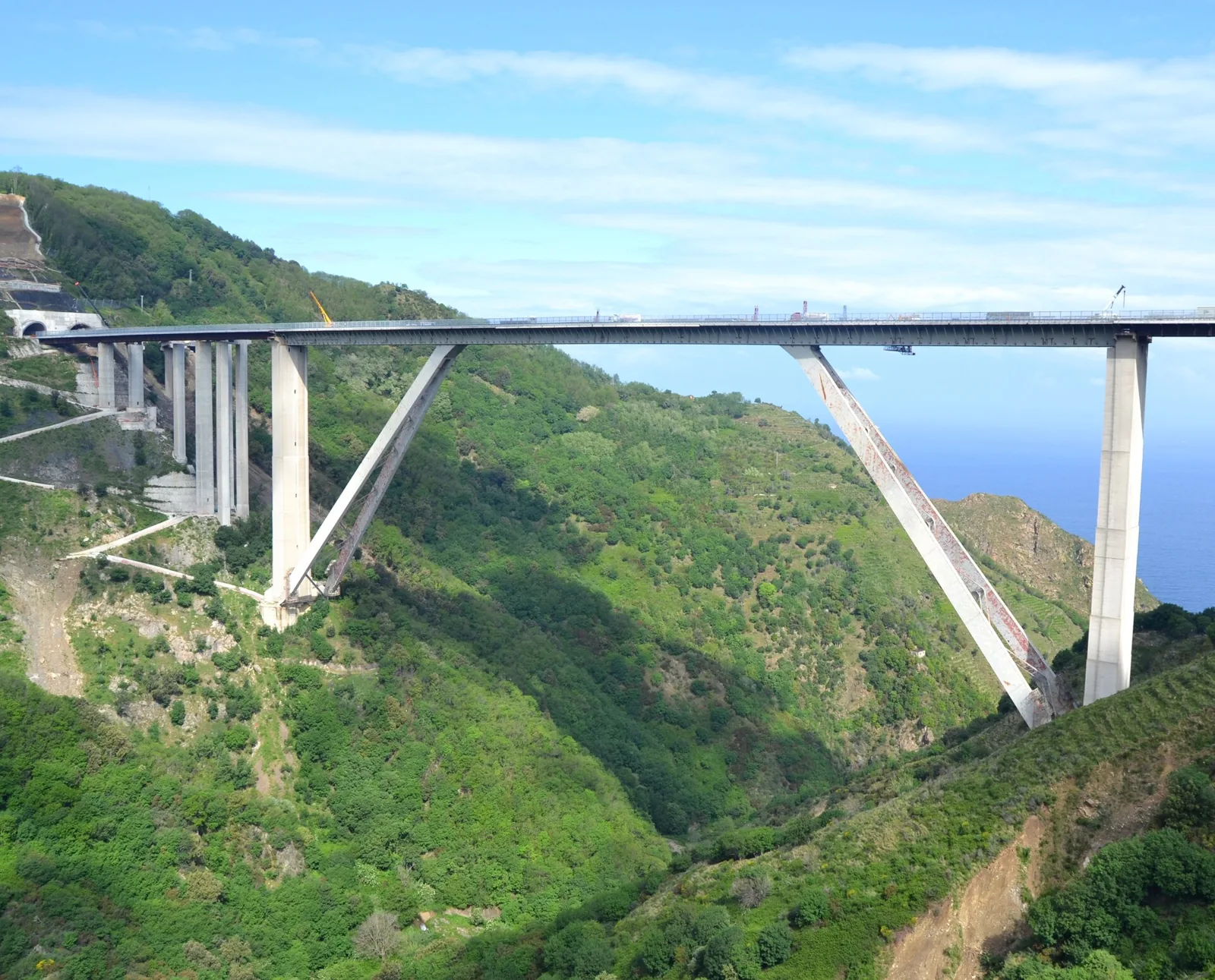
- The A2 motorway is toll-free and in good condition since its rebuilding, but it crosses mountains – dozens of tunnels and viaducts, with snow possible in winter on the stretch through the Pollino massif.
- Mountain roads to Bova, Gerace or Stilo are narrow and winding. Plan on an average of 40–50 km/h and do not trust sat-nav timings to the minute.
- At night, roads outside towns are often unlit, and animals stray onto the carriageway.
- Historic centres have limited traffic zones (ZTL) enforced by cameras – the fine reaches the hire company months later.
For routes and realistic driving times between towns, see getting to Calabria and Calabria in 7 days.
Wildfires, earthquakes and storms
Wildfires. Calabria is among the Italian regions hit hardest by fire every year. According to ISPRA, 143 km² had burned here by mid-September 2025, including 26 km² of forest. In August 2021, fire in the Aspromonte came close to the ancient beech forests that had been added to the UNESCO list a few weeks earlier, and four people died in the region. In summer, check the alerts before setting off on a trail, do not park on dry grass and do not light fires. Report a forest fire on 1515 or 112.
Earthquakes. Calabria is one of the most seismically active regions in Europe – every one of its municipalities falls into the top two hazard zones of Italy’s four-tier classification. The earthquake of 28 December 1908 destroyed Reggio Calabria and Messina, and the sequence of 1783 devastated much of southern Calabria, which is why so many towns have relatively recent buildings. Strong quakes are rare; weak ones are regular and usually harmless. At your hotel, check the evacuation route, and after a tremor you can feel, move to open ground away from building fronts.
Storms. In autumn, especially on the Ionian coast, short cloudbursts turn riverbeds that are dry for most of the year (fiumare) into torrents. Summer storms in the mountains do the same: on 20 August 2018 a sudden surge in the Raganello gorge in the Pollino massif killed ten people. Regional warnings in four colours are issued by ARPACAL; under an orange or red alert, skip routes through gorges and along rivers. For more on seasonal rainfall, see Calabria weather by month.
Heat. Heatwaves with temperatures of 35–38°C occur every July and August. Plan sightseeing for the morning and evening, and at midday do what the locals do – take a break.
The sea and the beaches
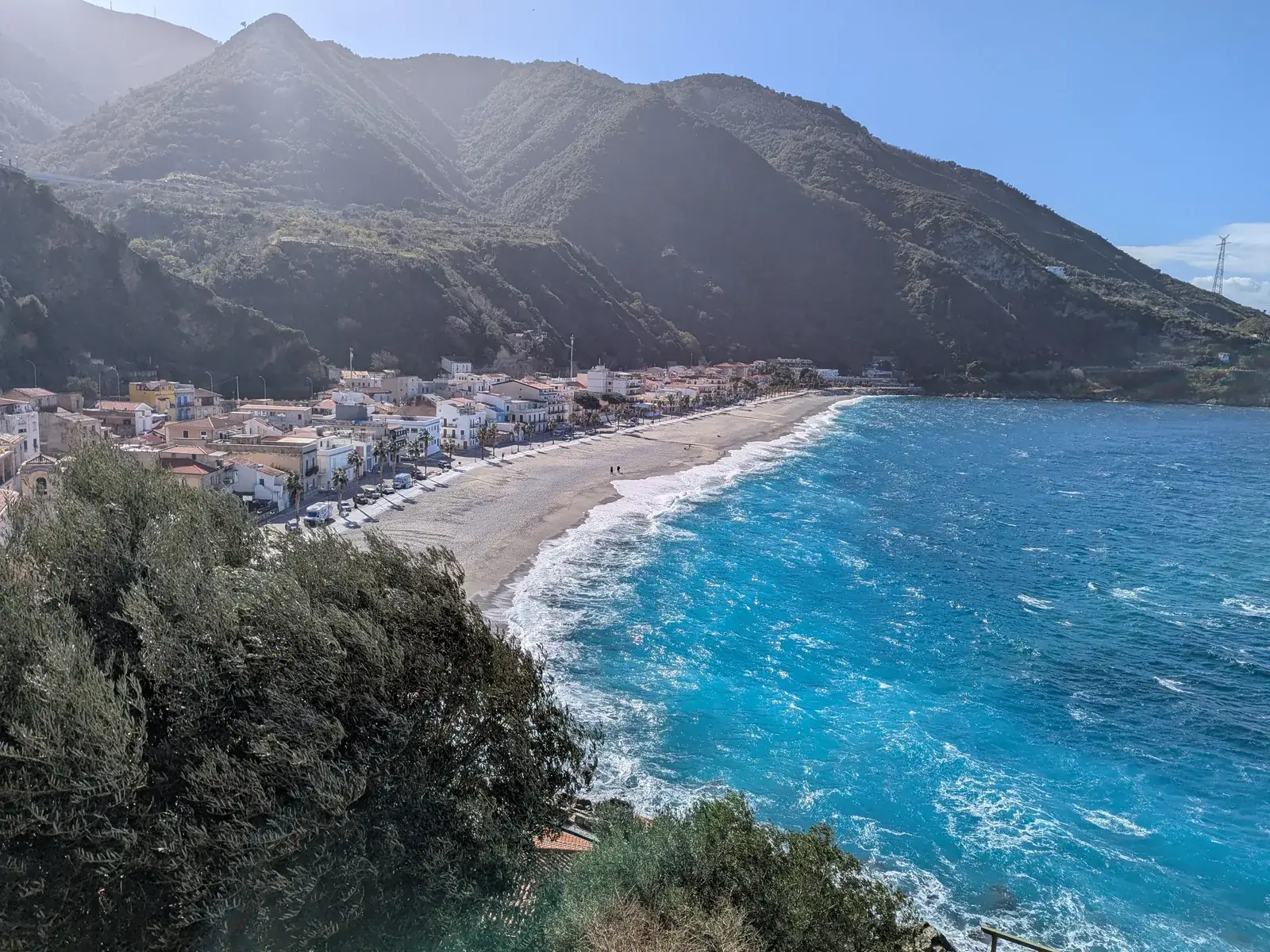
The sea in Calabria is generally calm and clean, but it has its traps.
- Flags. Paid beach clubs (lidi) use a flag system: red means no swimming. Free beaches (spiagge libere) usually have no lifeguards.
- Currents. In the Strait of Messina – between Scilla, Villa San Giovanni and Reggio – tidal currents reverse several times a day and can be very strong. Swim close to shore and stay inside the buoys.
- The seabed. On the pebble beaches and in the rocky coves of the Tyrrhenian coast, the seabed can shelve steeply just a few metres out – check the way in before taking children into the water. Wide sandy beaches, such as those in Tropea and along the Ionian coast, tend to be gentler.
- Rocks and sea urchins. In coves with a rocky bottom, water shoes are useful.
Our guide to the beaches of Calabria describes the seabed and access at each one.
Healthcare and insurance
Public healthcare is the region’s weak point. Calabria has been short of doctors for years – since 2023 its hospitals have relied on medics brought in from Cuba, more than 200 of them by summer 2026. For a visitor this means long waits in A&E (pronto soccorso) and a limited range of departments in small hospitals; more serious cases are sent to Reggio Calabria, Catanzaro or Cosenza.
- EU residents should carry a European Health Insurance Card (EHIC), UK residents a GHIC. Both give access to public healthcare on the same terms as Italians, which means co-payments (ticket) for some services.
- Take out private travel insurance that covers medical repatriation – the EHIC and GHIC do not. Visitors from outside the EU and the UK need full medical cover.
- Pharmacies (farmacia) are well stocked and pharmacists advise on minor ailments. Bring a spare supply of any regular medication.
- Tap water is drinkable in most towns, though supply interruptions do occur in the resorts in summer.
Emergency numbers
| Number | Service |
|---|---|
| 112 | single European emergency number – an operator at the Catanzaro call centre passes the call to the police, Carabinieri, ambulance or fire service |
| 118 | ambulance |
| 115 | fire brigade (Vigili del Fuoco) |
| 113 | state police |
| 1530 | coastguard (Guardia Costiera) – emergencies at sea |
| 1515 | forest fires and environmental emergencies |
The single 112 number was switched on in Calabria in December 2023 and extended to the whole region over the following months; the other numbers still work.
Report stolen documents at a Carabinieri or police station and ask for a copy of the report (denuncia) – you will need it for your insurer and for an emergency travel document. Your embassy in Rome handles consular matters for Calabria.
If you are still at the planning stage, have a look at our list of 25 places worth the trip in Calabria and the guide to where to stay.
Frequently asked questions
Is Calabria safe for tourists?
Yes. In Il Sole 24 Ore's 2025 crime index the Calabrian provinces rank between 47th and 99th out of 106, and pickpocketing and robbery are many times rarer than in Rome, Florence or Milan. The main things to watch are the roads and anything left in a parked car.
Is the mafia in Calabria a danger to tourists?
Not directly. The ’Ndrangheta makes its money from drug trafficking, extortion and public contracts, and its violence is directed at rival clans and local businesses. Tourists are not targets and will not come across it in any visible way in the resort towns.
Is Tropea safe?
Yes. Tropea is in the province of Vibo Valentia, which has the lowest rate of reported pickpocketing in Italy. In high season the real problems are crowds, traffic on the SS522 and the shortage of parking.
Is Calabria safe for solo female travellers?
Yes. Reported sexual offences are well below the national average in four of the five provinces. The usual rules apply: in the evening, stay on the lit streets of the centre and the seafront, and visit remote beaches and trails in daylight.
Is it safe to drive in Calabria?
Yes, but it needs concentration. Most accidents happen on the SS106 along the Ionian coast. Mountain roads are narrow and winding, and poorly lit at night – plan your driving for daylight and leave spare time.
What number do I call in an emergency in Calabria?
Call 112, the European emergency number. The ambulance service is on 118, the fire brigade on 115 and the coastguard on 1530.
Sources
We checked the information in this article against the following sources:
- Il Sole 24 Ore – Indice della criminalità 2025 – reported crimes per 100,000 residents in 106 provinces (2024 data, retrieved 9 October 2026)
- Direzione Investigativa Antimafia – Relazioni semestrali – six-monthly reports on organised crime
- L'Unione Sarda – Maxi-processo ’ndrangheta: 207 condanne – first-instance verdict in the Rinascita-Scott trial, 20 November 2023
- L'Indipendente – Rinascita-Scott in appello – appeal ruling, December 2025
- GOV.UK – Italy travel advice: Safety and security – theft from cars, wildfires, earthquakes
- ISTAT – Incidenti stradali regionali – road death rate in 2024
- Il Fatto Quotidiano – Scontro frontale sulla Ionica – deaths on the SS106, 2013–2023
- ISPRA – Aggiornamento incendi 2025 in Italia – area burned in Calabria
- AGI – Le Foreste Vetuste dell'Aspromonte minacciate dagli incendi – the fires of August 2021
- Regione Calabria – Delibera G.R. n. 47/2004 – seismic classification of municipalities
- Avvenire – Il paradosso del Santuario di Polsi – state of the road to the sanctuary, 27 June 2026
- Sky TG24 – Tragedia Gole del Raganello – the flash flood of 20 August 2018 and the May 2026 verdict
- Ministero dell'Interno – Attivo in Calabria il 112 NUE – the single emergency number in Calabria
- ARPACAL – Centro Funzionale Multirischi – regional weather warnings
- Euronews – La Calabria si affida ai medici cubani – Cuban doctors in Calabrian hospitals, July 2026