
Aspromonte National Park (Parco Nazionale dell'Aspromonte) is a true gem of southern Calabria, offering breathtaking views and an opportunity to immerse yourself in wild nature. Established in 1989, it covers approximately 641.5 square kilometres within the Metropolitan City of Reggio Calabria, forming the southernmost tip of the 1,200-kilometre Apennine chain. Its waterfalls, scenic peaks and ancient ruins attract lovers of history, nature and mountain hiking. With a wide variety of trails and a wealth of landscapes, the park is an ideal destination for those wishing to discover the unspoiled side of this region of Italy.
| Feature | Statistical and geographical description |
|---|---|
| Year established | 1989 |
| Area | 641.5 km² (approx. 248 sq miles) |
| Highest point | Montalto (1,956 m a.s.l.) |
| UNESCO status | Global Geopark (since 21 April 2021) |
| Number of municipalities | 37 (Province of Reggio Calabria) |
Flora and fauna of Aspromonte National Park – the natural treasures of southern Calabria
Aspromonte National Park is a prime example of wild nature in southern Italy, and its name literally translates as "rough mountain". While waterfalls and ancient ruins are the main attractions, its flora and fauna offer an equally fascinating experience for nature lovers. The massif shows greater structural similarity to the Alps than to the rest of the Apennines, making it a unique fragment of the lithosphere in the Mediterranean basin.
The park is characterised by diverse natural habitats resulting from the presence of numerous streams and water formations known as fiumare. The vegetation is extremely rich due to the large altitudinal gradient, from sea level to nearly 2,000 m a.s.l. Of particular significance are the beech forests of Valle Infernale, which represent the southernmost stands of this type in the whole of Europe.
Aspromonte offers spaces where monumental trees – living natural monuments – can be found. The most famous specimen is the Demetra Oak (Quercia Demetra), estimated to be around 1,000 years old, making it one of the oldest sessile oaks on the continent. In the lower areas, typical Mediterranean flora dominates, including cork oaks and rare tropical ferns such as Woodwardia radicans.
The park's fauna is equally impressive. One of its most iconic inhabitants is the Apennine wolf (Canis lupus italicus), which has successfully recovered within the park's boundaries, playing a key role in regulating wild boar populations. In the sky, golden eagles and the extremely rare Bonelli's eagle can be observed, using the massif's cliffs for nesting.
Traces of ancient Greece in the heart of Aspromonte
Aspromonte National Park is a place where the present merges with history, and the territory is home to a unique linguistic minority. Among its lush forests and impressive waterfalls, archaeological traces of ancient Greece can be found. The area known as Bovesia is a stronghold of Greco-Calabrian culture, where the Griko dialect – a direct continuation of the Byzantine-era language – is still spoken today.
The park is one of those places where the traces of Greeks who settled these lands during the era of Magna Graecia are still alive. The town of Bova, considered the capital of this culture, is listed among the most beautiful villages in Italy and offers a glimpse into ancient architecture and traditions.
Fascinating ghost towns such as Pentedattilo, perched on a rock resembling five fingers of a hand, and Roghudi Vecchio, dramatically situated on a rocky promontory, draw visitors from across the world. The Sanctuary of Madonna di Polsi, hidden in an inaccessible valley, remains the spiritual heart of the massif, attracting thousands of the faithful during September processions. It is a place where religiosity blends with folk legends of shepherds and miraculous apparitions.
Hiking in Aspromonte National Park – trails and experiences
Aspromonte National Park is a paradise for hikers, offering a remarkable variety of trails from short walks to multi-day expeditions. The most recognisable symbol of the park is Pietra Cappa – a gigantic monolith nearly 170 metres tall that dominates the Valley of Great Stones.
Among the most interesting routes is the trail to Punta Ruffo and the demanding ascent of Montalto (1,956 m a.s.l.). The latter rewards the effort with a panoramic view of the Tyrrhenian Sea and the smoking crater of Etna in Sicily. Particularly cherished is the Sentiero dell'Inglese (the Englishman's Trail), commemorating the journey made by Edward Lear in 1847 through the most picturesque villages of the region.
- Pietra Cappa Loop – a 12-kilometre route passing the monolith and caves carved by Basilian monks.
- Sentiero del Brigante – a long-distance historical trail linking Aspromonte with the Serre mountains, following in the footsteps of outlaws.
- Cascate del Maesano – an easier 1.5-hour hike to a three-tiered waterfall forming natural rock pools.
- Monte Tre Pizzi – a short but spectacular trail offering a breathtaking panorama of the Ionian Sea.
Planning a visit requires considering the season – the best period runs from May to October. Most trails are waymarked by the Club Alpino Italiano (CAI), though given the wildness of the terrain, using GPS maps or local guides is strongly recommended.
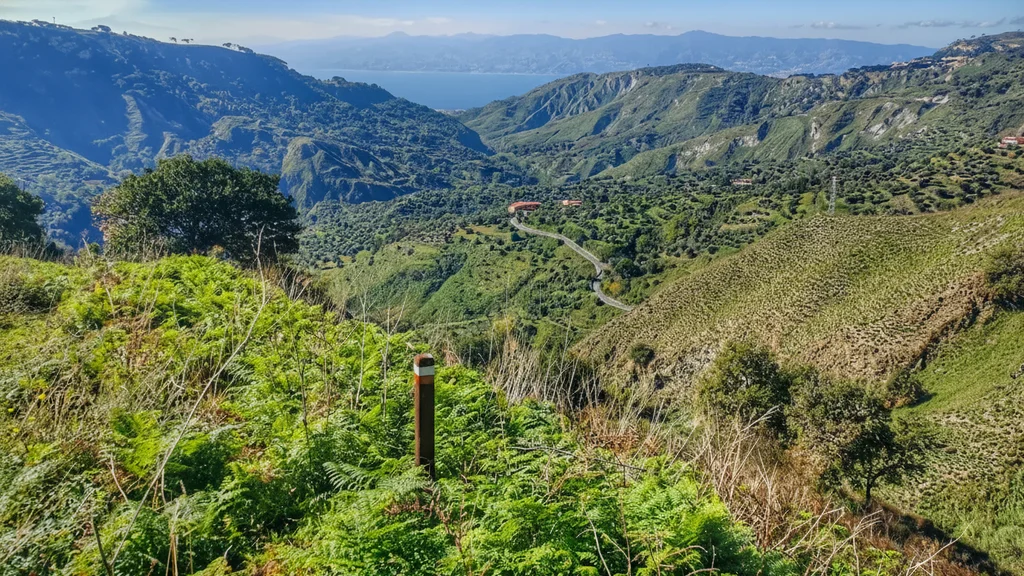
Tourism and its impact on the Aspromonte ecosystem
The growth of tourism in Aspromonte National Park is an important element in supporting the local economy, but it also poses ecological challenges for park managers. In 2021, Aspromonte joined the UNESCO Global Geoparks Network, which raised the region's profile but also placed greater responsibility on the protection of unique geological formations.
Trails leading to popular waterfalls such as Cascate Forgiarelle attract large numbers of visitors, which can lead to soil erosion. The excessive human presence in fragile mountain ecosystems affects wildlife habitats, including the elusive European wildcat. Ecosystem safety is crucial to maintaining the biosphere reserve status and protecting deadwood in beech forests, which promotes insect biodiversity.
Sustainable tourism strategies must combine the promotion of the region with the protection of its resources, so that visitors can enjoy the park's natural wonders without harming its pristine state.
Aspromonte – cultural heritage and social role
Aspromonte National Park is a place where culture and tradition meet raw nature. The area, inhabited by Calabrian Greeks, is a stronghold of ancient customs, and the Griko language is listed by UNESCO as endangered. Local traditions such as the dynamic tarantella dances reflect the deep Greco-Byzantine heritage that has survived in isolated mountain villages.
The region is rich in folklore, steeped in tales of historical brigands and legends of witches known as janare. The works of authors such as Corrado Alvaro document these stories, promoting their significance in world literature. In San Luca, visitors can explore the house-museum of this distinguished writer, whose work captured the harshness and beauty of the Calabrian landscape.
The park plays a vital role in the lives of around 50,000 inhabitants, serving as a source of local identity. The identity and heritage of the park make it a key point of reference for the region, attracting those who seek authenticity off the beaten track.
Tourist infrastructure in Aspromonte – nature above convenience
Tourism in Aspromonte National Park is largely focused on contact with pristine nature. The main base and gateway to the park is the village of Gambarie, known as a ski resort, offering views of the sea.
For those travelling without a car, the main hub is Reggio Calabria, from where ATAM buses run to Gambarie and trains serve the coastal town of Bova Marina. Accommodation options include hotels in Gambarie as well as mountain huts such as Rifugio Il Biancospino.
| Destination | Transport | Journey time |
|---|---|---|
| Gambarie | ATAM Bus (Line 319) | approx. 75 min |
| Bova Marina | Trenitalia train | approx. 35 min |
| Pentedattilo | Car / Taxi | approx. 50 min |
Frequently Asked Questions
Where is Aspromonte National Park located?
The park is situated in the southern part of the Calabria region, in the Province of Reggio Calabria, making it the southernmost national park in continental Italy.
What can you see in Aspromonte National Park?
The main attractions include the Pietra Cappa monolith, the Maesano waterfalls, the ghost town of Pentedattilo, the highest peak of Montalto, and Greco-Calabrian villages such as Bova.
How to get to Aspromonte?
The best way is to travel to Reggio Calabria by train or plane, and then rent a car or take local buses to Gambarie or Bova Marina.
What hiking trails are there in Aspromonte?
The park offers the Sentiero dell'Inglese (Englishman's Trail), the Sentiero del Brigante (Brigand's Trail) and numerous routes to waterfalls and the summit of Montalto at varying difficulty levels.
What animals live in Aspromonte Park?
The park is home to the Apennine wolf, the European wildcat, the Italian roe deer and numerous birds of prey, including the golden eagle and the peregrine falcon.
Top Attractions of Aspromonte Park
Pietra Cappa
A gigantic 170-metre monolith dominating the Valley of Great Stones. Nearby – caves carved by Basilian monks.
Montalto (1,956 m a.s.l.)
The highest peak in the park with panoramic views of the Tyrrhenian Sea and the volcano Etna in Sicily.
Pentedattilo
An abandoned ghost town on a rock resembling five fingers – one of the most dramatic sights in Calabria.
Cascate del Maesano
A three-tiered waterfall with natural rock pools – a perfect spot for a refreshing stop on a hot day.
Bova – capital of Calabrian Greeks
One of Italy's most beautiful villages and a stronghold of Griko culture and language dating back to Byzantine times.
Sanctuary of Madonna di Polsi
Hidden in an inaccessible valley, this is the spiritual heart of the massif, drawing thousands of the faithful during September processions.
How to get to Aspromonte Park
The nearest airport is Aeroporto dello Stretto in Reggio Calabria, with connections from Milan and Rome. From the airport, rent a car or take a bus into the park.
The most convenient option. From Reggio Calabria via the SS183 to Gambarie (approx. 30 km, 45 min). Car hire is available at the airport and city centre.
ATAM Bus Line 319 from Reggio Calabria to Gambarie (approx. 75 min). A convenient option for visitors without a car.
Trenitalia to Bova Marina (approx. 35 min from Reggio Calabria). From coastal stations, the best onward connection is by taxi or local bus.