
Catanzaro is a city full of history, culture and natural beauty, situated in the heart of southern Italy. As the capital of the Calabria region, Catanzaro offers visitors a unique combination of historic monuments, scenic landscapes and local cuisine. The city, historically known for its position on the isthmus as the "City of Two Seas", invites exploration of its medieval roots and modern dynamism. It is also frequently referred to as the "City of Three Vs", a reference to wind (Vento), velvet (Velluto) and its patron saint Vitalianus (San Vitaliano). Discover what makes Catanzaro a place well worth visiting during a holiday in southern Italy.
Silk-making in Catanzaro – From Byzantine Roots to Contemporary Heritage
Catanzaro, known as "La Città della Seta", played a decisive role in the development of silk production in Europe. From Byzantine times to the present day, the city was at the heart of silk manufacturing thanks to its strategic location and favourable climatic conditions. The very name of the city may derive from the Byzantine word Katartárioi, meaning silk spinners.
Medieval Flourishing
Silk-making in Catanzaro was initiated by Byzantine monks fleeing iconoclastic persecution. They brought to Calabria silkworm eggs and white mulberry seedlings, without which production would have been impossible. The influence of the Arabs, who founded the emirate of Qaṭanṣār here in the 9th century, further strengthened this tradition in subsequent centuries. This transformed the city into a strategic point on the Mediterranean trade route for luxury fabrics.
During the Norman period, under the ruler known as Roger II, silk production was widely supported and Catanzaro became a significant export centre. Documentation from 1095 confirms the existence of weavers' guilds, attesting to an impressively organised socio-economic structure in the city.
The Golden Age
The city experienced its absolute golden age in the 14th and 15th centuries. Production reached around 8,000 kg per year, initially representing one third and at its peak even half of total Italian and European supply. Catanzaro obtained royal privileges that significantly supported the growth of the industry, attracting Spanish, Venetian and Dutch merchants. Professional guilds rigorously controlled the quality of the fabrics on offer, such as the luxury velvet known as velvetto catanzarese.
The Decline of Tradition
In the 19th century, relentless competition from mechanised production in Lyon and England caused significant losses to Catanzaro's traditional economy. Additionally, plagues decimating agricultural crops and silkworm breeding dealt a final blow to local craftsmen. Despite ambitious revival attempts, such as the founding of the Scuola Serica in 1870, production gradually faded. Ultimately, following the destruction of World War II, mass silk production in the region collapsed almost entirely.
Heritage and the Present Day
Today silk-making in Catanzaro is remembered as the region's proud cultural heritage. In the nearby village of San Floro, the cooperative Nido di Seta has successfully restored the full production cycle. Young Calabrians there combine historic techniques with a modern approach to sustainable development, captivating tourists who discover the age-old secrets of luxury fabric production.
Monuments of Catanzaro – The Architectural Treasures of Calabria
Catanzaro, as the regional capital, is distinguished not only by its topography but also by the richness of its monuments. At the heart of the historic centre, set on three hills, stands the Cathedral (Duomo di Catanzaro), originally built on Norman foundations from 1121. The church, rebuilt in 1960 following wartime bombing, reflects centuries of diverse cultural influences. Romanesque, Gothic and Baroque styles merge here into a coherent whole, and inside are treasures such as an 18th-century Assumption painting and a bust of Saint Vitalianus.
An equally important landmark on the spiritual map is the 13th-century Basilica Minore di Maria SS. Immacolata, which houses a wooden statue of the Madonna dressed in red silk. Nearby stands the Archaeological Museum, which opens a broad window onto the region's rich past. Here you will find numerous artefacts from ancient times, illustrating the civilisational development of Catanzaro from the Iron Age. For lovers of more recent art, the museum MARCA, opened in 2008, is a must-visit, presenting among others the avant-garde works of Mimmo Rotella.
Strolling through the historic centre of Catanzaro, one encounters numerous buildings reflecting a mixture of architectural styles from different eras. The Bisantis Bridge, more widely known as the Viadotto Morandi, is a particularly striking symbol of modern engineering. Completed in 1962, it creates an interesting contrast with the historic buildings, rising 120 metres above the floor of the Fiumarella valley. This site is not only an important transport link but also an outstanding work of engineering art, resistant to the strong winds of the isthmus.
| Bridge Technical Parameter | Value | Functional Significance |
|---|---|---|
| Height above valley floor | 120 m | Symbol of the city's modernity and resilience |
| Span length | ~400 m | Key link between city centre and the Due Mari road |
| Wind resistance | >140 km/h | Adaptation to the city's characteristic winds |
| Construction type | Concrete-steel arch | Monument of 20th-century engineering |
Catanzaro captivates not only its residents but also the many visitors seeking authentic experiences. The climate encourages year-round strolls through its picturesque streets, where history is literally within reach. It is also worth visiting the International Sculpture Park integrated with the Mediterranean Biodiversity Park, which features installations by world-renowned contemporary artists such as Antony Gormley and Tony Cragg.
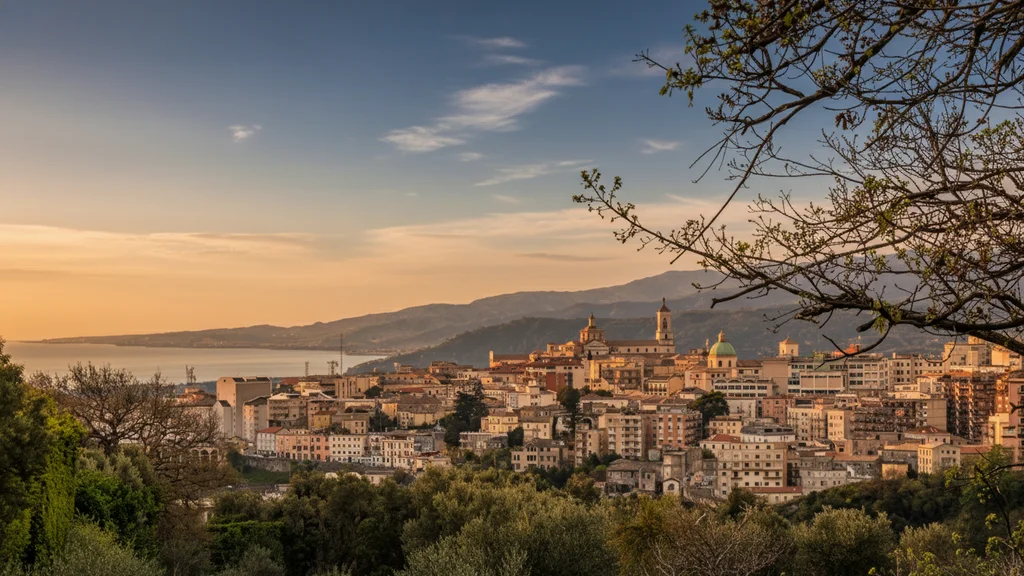
Earthquakes and the Modern Reconstruction of Catanzaro
Earthquakes have played a key role in shaping the history and modern urban fabric of Catanzaro. This city, known for its cultural wealth, has repeatedly experienced the destructive forces of nature, including powerful tremors in 1638, 1783 and 1832. These cataclysms not only destroyed the physical structure of buildings, but also forced inhabitants to rebuild with extraordinary courage and determination.
The historical context of destruction stretches deep into the past, periodically interrupting the dynamic development of the region. The most memorable, however, remains the 1908 earthquake, which completely devastated the city and forced the authorities to intervene comprehensively. By adopting a grid plan, popular in contemporary urban planning, Catanzaro acquired a new, orderly spatial structure. This well-considered street grid still defines the architectural landscape of the central districts today.
During reconstruction, the Liberty style was adopted, bringing aesthetic diversity to the city. The finest example of this is Villa Zerbi, which combines elegant neo-Byzantine and neo-Venetian forms with practical design. The earthquakes, despite their destructive nature, paradoxically contributed to the cultural enrichment of Catanzaro, making it a great attraction today for tourists interested in the unusual evolution of urban architecture.
Similar patterns of reconstruction were visible in surrounding localities, such as Pentedattilo, which underwent relocation and the creation of new settlements after the 1960s. The legacy of these dramatic events remains to this day the absolute foundation for understanding the mechanisms of social and spatial resilience in Catanzaro.
The Economy of Catanzaro – Between Tradition and Modernity
Catanzaro, as the administrative centre of Calabria, is a city with a diverse economy combining traditional agriculture with modern services. Leveraging its strategic position on the narrowest isthmus in Italy, separating the Ionian from the Tyrrhenian Sea, it offers unique development opportunities. In 1970, the city was officially designated as the regional capital, cementing its role as the political heart of Calabria. It is home to the prestigious Cittadella Regionale and the campus of the Magna Graecia University.
- Agriculture – cultivation of high-quality citrus fruits and olives for foreign export.
- Food industry – processing of local crops and production of traditional Calabrian specialities.
- Service sector – development of public administration and medical and legal sciences at the local university.
The local economy is still fundamentally based on agriculture, which benefits from the mild Mediterranean climate. Catanzaro is renowned for its highest-quality olive oils, supporting the growth of local family businesses and lucrative exports to European countries. The developed service sector, with a strong emphasis on higher education and administration, is the most important element stabilising the labour market.
The city is also committed to the consistent development of modern technology under EU support programmes. The unemployment rate, hovering at 15–20%, is unfortunately typical of southern Italy. However, wise investments from European funds give real hope for improving this difficult situation in the coming decades.
Catanzaro also invests in tourism, showcasing its monuments and the seaside district of Catanzaro Lido. With wide beaches, views of the Gulf of Squillace and the Lungomare promenade, Lido draws tourists from around the world.
Culture and Festivals in Catanzaro – From Culinary Traditions to Jazz Rhythms
Catanzaro is a place where history and culture blend into a fascinating mosaic of tradition and modernity. The city has for centuries drawn on the rich heritage of Byzantine generals, Norman knights and Italian craftsmen. This creates a unique Calabrian identity in which everyone will find something for themselves.
The Flavours of Calabria
Cuisine in Catanzaro is undoubtedly one of the strongest pillars of the entire region's culture. Known for its simplicity, it is based on local products such as spicy peperoncino, bergamot and the iconic 'nduja. The most iconic culinary highlight is however morzello (in dialect u morzeddhu catanzarisa), a spicy offal stew made from veal innards. This soup, rooted in the culture of the "fifth quarter", was according to legend invented by a poor widow named Chicchina.
- Morzello – spicy veal offal stew served in traditional pitta bread.
- 'Nduja – spicy, spreadable pork sausage, the basis of many dishes and snacks.
- Maccaruni with purpette – homemade pasta served with small meatballs of Arab origin.
Traditionally morzello is eaten in special bread from which the thick sauce must practically drip. Sweet bergamot, meanwhile, reigns in local desserts and liqueurs presented with pride at the Festa della Bergamotta.
Traditional Craftsmanship
Catanzaro is also renowned for its unique craftsmanship, including intricate filigree work and products made from plant fibres. Filigrana catanzarese, delicate silver jewellery, is internationally recognised, and its traditional workshops can be found in the Ghetto del Rione Lido district. Interestingly, in nearby Tiriolo the art of weaving from broom plant fibres (ginestra) is still cultivated, producing the characteristic vancale shawls.
Music and Events
The city literally lives and breathes music, as is perfectly evident during its numerous summer and autumn festivals. One of the most important events in the calendar is the Catanzaro Jazz Fest, which every year attracts outstanding musicians from across Italy. Summer evenings are filled with music as part of the Estate a Catanzaro series, offering an extraordinarily rich programme of classical and modern music in the open air.
Tourist Facilities
The rich cultural heritage of Catanzaro readily attracts tourists seeking authentic experiences in southern Europe. The Cathedral, the Archaeological Museum and the monumental Bisantis Bridge are just some of the many impressive attractions. The city continually develops its offering while maintaining pride in its historic roots and artisanal excellence. Its inhabitants passionately cultivate local traditions, proving that the true soul of Calabria still pulses with life in the narrow vicoli alleyways.
Frequently Asked Questions
Where is Catanzaro located?
Catanzaro is located in southern Italy, in the Calabria region, of which it is the capital. The city is uniquely situated on a rocky promontory within the Catanzaro Isthmus, the narrowest point of the Italian Peninsula, separating the Ionian Sea from the Tyrrhenian Sea.
What is Catanzaro famous for?
The city is famous above all for its rich history of silk production, which earned it the title of the European capital of luxury fabrics. It is also known as the "City of Three Vs" (Vento, Velluto, San Vitaliano), for the impressive Bisantis Bridge, and for its spicy cuisine.
What are the most important monuments in Catanzaro?
The most important monuments include the Cathedral (Duomo di Catanzaro) with its precious works of art, the 13th-century Basilica Minore di Maria SS. Immacolata and the remains of the Norman castle. The modern Bisantis Bridge and the Archaeological Museum are also well worth seeing.
How do I get from Catanzaro to the sea?
From Catanzaro's historic centre, the easiest way to reach the sea is to head for the Catanzaro Lido district, approximately 15 kilometres away. This district lies directly on the Gulf of Squillace and offers wide beaches and the Lungomare seafront promenade.
What is the weather like in Catanzaro?
Catanzaro enjoys a mild Mediterranean climate, characterised by warm summers and gentle winters. Due to its position on the isthmus, the city is known for strong winds (sea and mountain breezes) that pleasantly cool the air on hot summer days.
What should I eat in Catanzaro?
While in Catanzaro, you absolutely must try morzello – the traditional spicy stew of veal offal served in pitta bread. Also popular are dishes featuring Calabrian peperoncino, spicy 'nduja sausage and local cheeses from the Sila plateau.
Top Attractions
Getting There
Lamezia Terme Airport (SUF) — 30 km, transfer approx. 30 min
From Reggio Calabria approx. 2h; from Naples approx. 5h; Catanzaro Lido station + shuttle
A2 motorway from Naples approx. 4h; from Reggio Calabria via E90 approx. 1h
FlixBus to Lamezia Terme, then transfer or train to Catanzaro